Edible Mushrooms for Beginners: 10 Safe Species to Start Foraging
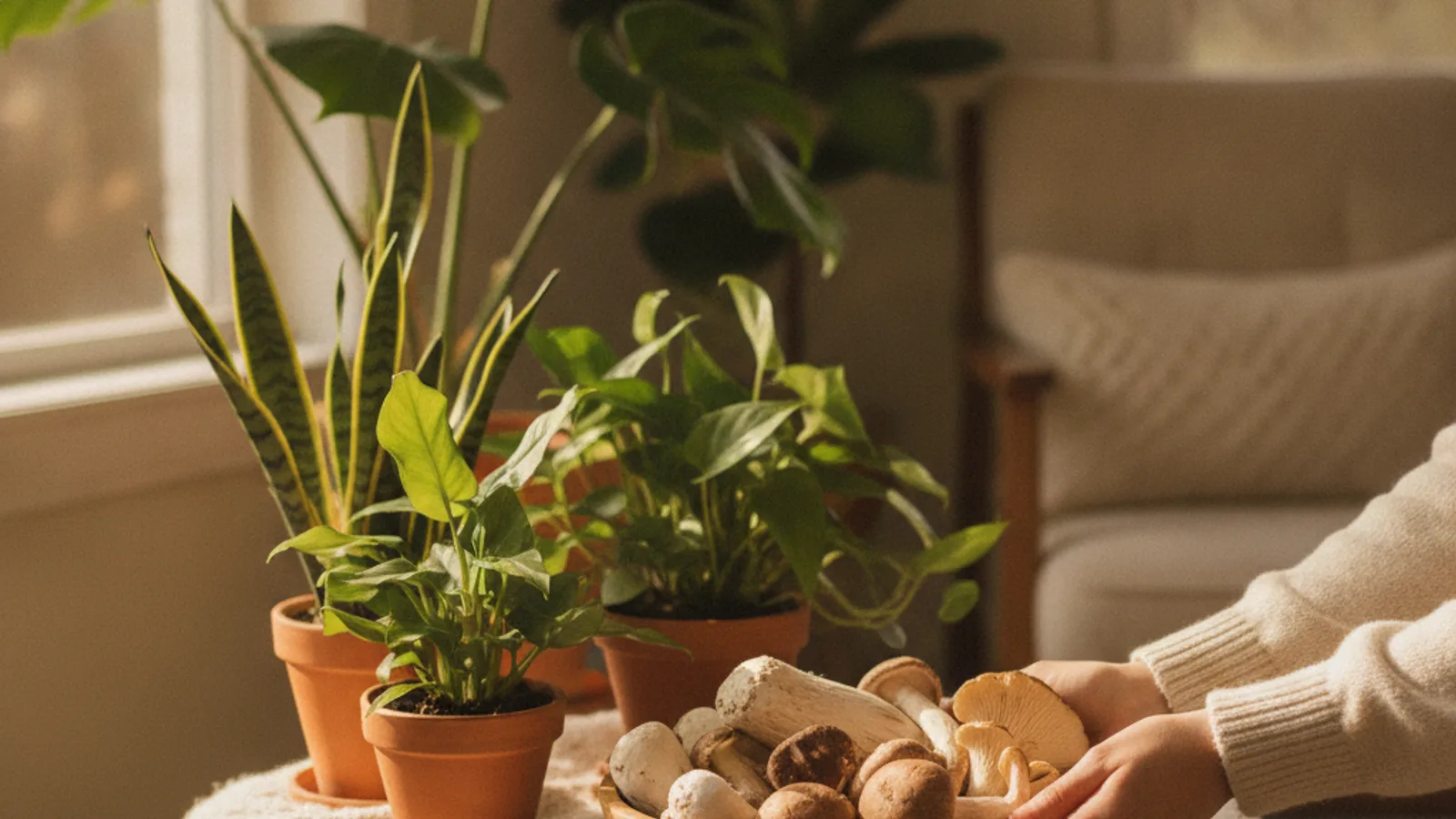
Critical Safety Warning: Never eat a wild mushroom unless you are 100% certain of its identification, not 90%, not 99%. Some deadly mushrooms closely resemble edible species. This guide introduces beginner-friendly species, but it is not a substitute for hands-on learning with an experienced forager, multiple field guides, and proper spore prints. When in doubt, throw it out.
Mushroom foraging has grown dramatically in popularity over the past decade, and for good reason. There is something deeply satisfying about finding your own food in the forest, a chanterelle or a hen of the woods that you located, identified, and brought home. But the hobby's growth has also brought a surge in poisonings among people who moved too fast.
The key to starting safely is simple: begin only with species that are highly distinctive and have few dangerous lookalikes. The ten mushrooms in this guide were chosen specifically because they are difficult to confuse with anything deadly when you learn their key features properly. Save the tricky ones for later, after you've spent time learning from experienced foragers in person.
The Beginner's Rule
Before the list, internalize this rule: Only eat mushrooms you can identify with 100% certainty. Not mushrooms you think are probably the right species. Not mushrooms that look like the photo in the app. Mushrooms you can identify by at least three independent features, that you've cross-referenced in at least two field guides, and ideally that an experienced forager has confirmed.
This rule sounds strict until you consider the alternative. The Death Cap reportedly tastes delicious, people who have survived poisoning describe eating it enthusiastically. Good taste is not a safety signal.
10 Beginner-Friendly Edible Mushrooms
1. Chicken of the Woods (Laetiporus sulphureus / L. cincinnatus)
Key ID features: Unmistakable bright orange and sulfur-yellow shelf fungus growing in overlapping brackets directly on standing or fallen trees. Has a pore surface (tiny holes) on the underside, not gills. Young edges are thick and tender; older edges become tough and chalky.
Where and when: Found on oaks, cherries, maples, and other hardwoods from spring through fall. Often returns to the same tree year after year.
Cooking: Slice and saute in butter with garlic. Texture is genuinely chicken-like. Freezes well after cooking.
Cautions: Cook thoroughly, raw specimens cause GI distress in many people. Specimens growing on locust, eucalyptus, or conifers cause adverse reactions in some individuals. Stick to oak and fruit trees as a beginner.
2. Giant Puffball (Calvatia gigantea)
Key ID features: Large white ball growing from soil in fields and forest edges, ranging from softball to soccer ball or larger. No stem, cap, or gills visible externally.
The mandatory cut test: Always slice the mushroom in half before eating. The interior must be pure, uniform white, like a marshmallow, with no visible structure. Any purple, brown, or yellow coloration, or any visible outline of a developing mushroom inside, means do not eat.
Where and when: Grassy meadows, forest edges, and disturbed soils from late summer through fall.
Cooking: Slice into 1-cm slabs and pan-fry like French toast. Absorbs flavors well. Eat only young, firm, pure-white specimens.
Cautions: Smaller puffball species exist and some may cause reactions. When in doubt about size or purity of the interior, pass.
3. Morel (Morchella species)
Key ID features: Distinctive honeycomb-patterned cap fused to the stem at the base. Cap surface is deeply pitted with a grid-like network of ridges and pits. Color ranges from gray-black to tan to yellow depending on age and species.
The hollow test: Cut in half from tip to base. A true morel is completely hollow, a single continuous air space from the top of the cap to the base of the stem. No cottony fibers, no partial walls.
Where and when: Spring only, typically March through May depending on region. Found near dying elms, old apple orchards, and recently burned areas.
Cooking: Saute in butter or stuff and grill. Among the most prized edible fungi in North America.
Cautions: Always cook, raw morels cause illness. Distinguish from false morels (Gyromitra) by the hollow interior and fully attached cap.
4. Chanterelle (Cantharellus cibarius and relatives)
Key ID features: Golden to egg-yolk yellow, vase-shaped cap with a wavy, inrolled margin. The underside has forking ridges (false gills), blunt, forked, and running partway down the stem, rather than true, blade-like gills. Strong fruity, apricot-like aroma.
Where and when: Summer through fall under oaks, beeches, and conifers. Usually grow scattered, not in dense clusters.
Cooking: Saute gently, chanterelles release a lot of moisture. Excellent in pasta, eggs, and risotto.
Cautions: The Jack O'Lantern mushroom is the primary lookalike. Key differences: chanterelles have false gills (ridges), Jack O'Lanterns have true sharp gills; chanterelles grow singly from soil, Jack O'Lanterns cluster from buried wood or tree bases.
5. Lion's Mane (Hericium erinaceus)
Key ID features: Cascading mass of white, downward-hanging teeth or spines, growing as a single clump on the trunks of living or dead hardwoods. No cap, stem, or gills. Resembles a white pom-pom or a miniature polar bear.
Where and when: Late summer through fall on wounds of living oaks, beeches, and maples. Also on fallen logs.
Cooking: Slice into steaks and pan-fry in butter until golden. Texture is similar to scallops or crab meat. Also used medicinally for potential cognitive benefits.
Cautions: No dangerous lookalikes in North America. Other Hericium species (H. americanum, H. coralloides) have a similar branching structure and are also edible.
6. Oyster Mushroom (Pleurotus ostreatus and relatives)
Key ID features: Fan or oyster-shaped caps growing in overlapping clusters on dead or dying hardwood. White to light gray to tan. Gills run down a very short, off-center stem (decurrent gills). White spore print.
Where and when: Found on dead elms, beeches, and other hardwoods throughout spring and fall, and often through mild winter periods.
Cooking: Versatile, saute, roast, or add to soups. Slightly sweet, mild flavor. Widely cultivated and familiar to most cooks.
Cautions: Angel wings (Pleurocybella porrigens) is a small white species that grows on conifers and superficially resembles oyster mushrooms. It is suspected in fatalities. Key difference: oyster mushrooms grow on hardwoods, not conifers; oyster mushrooms are substantially larger.
7. Hen of the Woods / Maitake (Grifola frondosa)
Key ID features: Compact rosette of overlapping, fan-shaped caps emerging from a single base at the foot of oak trees. Caps are gray-brown to dark brown on top, with a white pore surface underneath. Can grow very large, specimens over 20 kg have been recorded.
Where and when: Late summer through fall, almost exclusively at the base of oaks. Often returns to the same tree for many years.
Cooking: Excellent in stir-fries, soups, and as a meat substitute. Highly valued in Japanese cuisine and used medicinally.
Cautions: Berkeley's Polypore is a lookalike, see the deadly lookalikes guide for details. It is edible but inferior in flavor. The main difference is color: Hen of the Woods is grayish-brown; Berkeley's Polypore is pale cream.
8. Shaggy Mane (Coprinus comatus)
Key ID features: White, cylindrical cap covered in shaggy, upturned scales. The cap auto-digests from the bottom up as it matures, turning black and inky (a process called deliquescence). Gills start white, turn pink, then black as the mushroom ages.
Where and when: Spring and fall in lawns, roadsides, and disturbed soils. Often appears in clusters after rain.
Cooking: Must be harvested young, before auto-digestion begins, and cooked within hours. The ink stage is not edible. When young, the flavor is mild and pleasant.
Cautions: Do not consume alcohol within several days of eating shaggy manes, a compound called coprine causes a disulfiram-like reaction. (Note: this applies more to the Inky Cap, Coprinopsis atramentaria, than to Shaggy Mane, but caution is warranted.)
9. Porcini / King Bolete (Boletus edulis and relatives)
Key ID features: Stout, brown cap with a sponge-like layer of tubes (pores) on the underside instead of gills. Thick, pale stem with a fine network pattern (reticulation) near the top. Flesh is firm, white, and does not change color when cut.
Where and when: Summer through fall in association with conifers, oaks, and birches. Found across temperate North America, Europe, and Asia.
Cooking: Exceptional flavor, used fresh, dried, or as a powder. Dries beautifully and the flavor concentrates.
Cautions: Several Boletus relatives are toxic. The key safety rule: avoid any bolete with red or orange pores or a stem with red coloring, and avoid any bolete whose flesh turns blue immediately when cut. Porcini pores are white to pale yellow, and flesh does not blush blue.
10. Black Trumpet (Craterellus cornucopioides)
Key ID features: Dark gray to black, hollow, funnel or trumpet-shaped mushroom with a wavy rim. The outer surface is smooth to slightly wrinkled, no true gills or pores. Grows from soil in clusters under oaks and beeches.
Where and when: Summer through fall in mixed hardwood forests, often hiding under leaf litter. Easy to walk past because the dark color blends into the forest floor.
Cooking: Intense, earthy, almost truffle-like flavor. Excellent dried and powdered. One of the best-tasting edibles in the forest.
Cautions: Essentially no dangerous lookalikes in North America. Possibly the safest wild mushroom for beginners in terms of misidentification risk.
Found a mushroom? Get a starting point.
Use Snap Plant to help narrow down your identification, then always verify with field guides before eating anything wild.
What NOT to Forage as a Beginner
Knowing what to avoid is as important as knowing what to seek. As a beginner, do not forage:
- Any white-gilled mushroom with a ring and a volva (cup) at the base. This description matches the Amanita genus, which contains the Death Cap and Destroying Angel. The volva is often buried. Always dig up the base before making any judgment about a white or pale mushroom in the ground.
- Little brown mushrooms. "LBMs", small brown-capped mushrooms, include Deadly Galerina and many other toxic species. Without expertise, they are impossible to distinguish reliably. Leave all small brown mushrooms alone.
- Any bolete with red pores or blue-staining flesh. Several species in this group cause severe poisoning.
- Any mushroom based on a single identification feature. Color, shape, or habitat alone is never enough.
Mushroom foraging is best learned in person, alongside experienced mentors. Local mycological societies run forays and identification workshops in most regions. No guide, app, or book replaces the hands-on experience of learning with someone who has already made all the mistakes safely.
Related: How to Identify Mushrooms: A Beginner's Guide · 7 Deadly Mushroom Lookalikes Every Forager Must Know · Mushroom Foraging by Season
Related Articles
How to Identify Mushrooms: A Beginner's Guide Cap shape, gills, spore prints, the fundamentals of safe mushroom ID. 7 Deadly Mushroom Lookalikes Every Forager Must Know The dangerous pairs that cause most mushroom poisonings. Mushroom Foraging Calendar: What to Find in Every Season Spring morels to winter oysters, when and where to look.- Know your plants 🌿 -
Upload a Photo