How to Plant Lavender: Drainage, Soil pH and Choosing a Hardy Variety
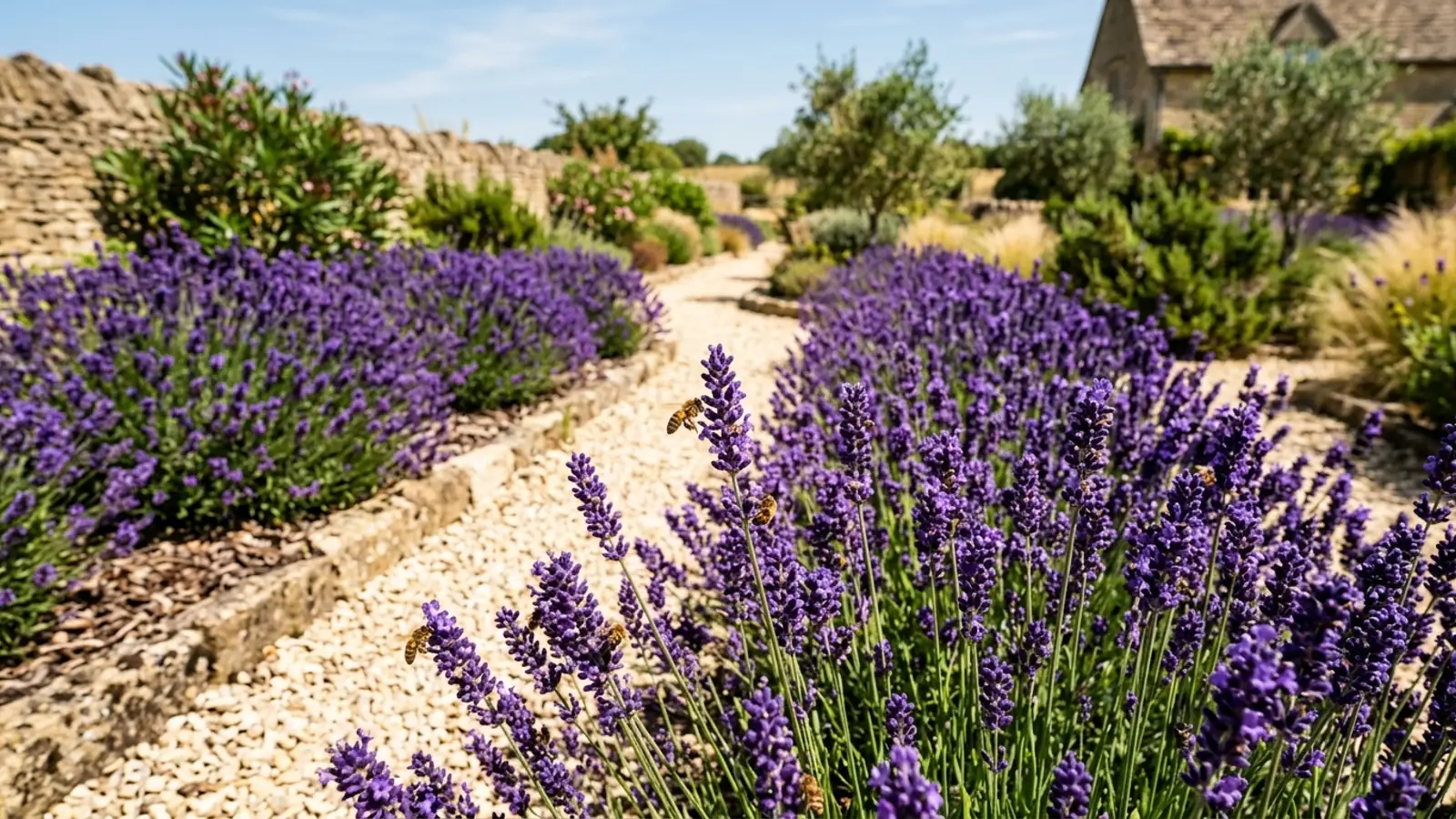
Lavender has a reputation for being difficult that it does not really deserve. It is a Mediterranean shrub from thin, rocky, alkaline hillsides, and almost every lavender that dies in a garden dies for the same reason: it was too wet, not too cold. Fix drainage and choose a variety suited to your winters, and it is close to unkillable.
Choose a variety that survives your winter
This decision matters more than anything else you will do, and it is the one most often skipped at the garden centre.
| Type | Hardiness | Notes |
|---|---|---|
| English (Lavandula angustifolia) | Roughly zone 5 and warmer | The hardy group. Best choice for cold winters and for culinary use. |
| Lavandin (L. x intermedia) | Roughly zone 5 to 6 and warmer | Larger plants, strong fragrance, the type grown for oil. |
| French (L. dentata) | Roughly zone 8 and warmer | Toothed leaves, long bloom, not winter hardy in most of the country. |
| Spanish (L. stoechas) | Roughly zone 7 or 8 and warmer | Distinctive petal "ears" on top of the flower head. |
If you are in zone 5 or 6 and the label just says "lavender," assume it is the tender kind unless it names an English variety such as Munstead or Hidcote. Plenty of lavender sold in spring is grown as a seasonal annual.
Drainage: plant high, not deep
Lavender roots must never sit in standing water, and winter is the dangerous season because the plant is dormant and using very little water while the soil stays saturated.
- Plant slightly proud of the surrounding soil. Set the crown an inch or so above grade, or plant on a low mound or slope so water sheds away from the base.
- Amend heavy soil with grit, not compost. Coarse sand, fine gravel, or pumice opens up clay. Rich compost holds exactly the moisture you are trying to avoid.
- In real clay, use a raised bed or a container. That is a more reliable fix than trying to reform the whole bed.
Mulch with gravel, never with bark. Bark and wood chips hold moisture against the crown and are a common cause of rot. A pale gravel mulch sheds water, reflects heat up into the plant, and suits it far better.
Soil pH and feeding
Lavender prefers neutral to slightly alkaline soil, around pH 6.7 to 7.3. Much of the country has acidic soil, where lavender grows sulkily and never quite thrives.
A cheap soil pH test kit tells you where you stand. If your soil is acidic, work garden lime in before planting according to the product rate for your soil type, and retest the following season.
Do not enrich the soil. Lavender evolved on poor ground, and fertile soil produces soft, leafy growth with fewer flowers and worse fragrance. Skip fertilizer almost entirely; at most, a light dressing in early spring.
Sun, spacing and planting
Full sun, six to eight hours minimum. Lavender in partial shade grows leggy, flowers poorly, and stays damp longer after rain, which brings you back to the rot problem.
Space plants two to three feet apart depending on the mature size of the variety. That gap is about airflow as much as room to grow: crowded lavender holds humidity between plants and is far more prone to fungal problems.
To plant, dig a hole no deeper than the rootball and roughly twice as wide, tease the roots apart if they are circling, set the plant slightly high, backfill with the gritty mix, and water it in once to settle the soil. After that, water only when the top few inches are dry through the first season while it establishes. Once established, lavender wants far less water than most gardeners give it.
Pruning: never cut into old wood
Pruning is what keeps lavender from turning into a sprawling woody mess with a bare centre, and there is one rule that matters above all others.
Never cut back into bare old wood. Lavender does not reliably regenerate from it, and a hard cut into the woody base often kills the stem or the whole plant. Always leave green growth on every stem you shorten.
- After flowering, shear off spent flower stalks plus about an inch of leafy growth.
- In early spring, shape the plant by cutting back roughly a third, always stopping above green shoots.
Clean, sharp bypass shears matter here because crushed stems invite disease. A Felco F2 or a Fiskars bypass pruner both cut cleanly. Wipe blades between plants if you are working through several.
An old, woody, hollow-centred plant usually cannot be rescued by hard pruning. Take cuttings from it in summer and start again.
Frequently Asked Questions
Why did my lavender die over winter?
Almost always wet roots rather than cold. Dormant lavender uses very little water, so saturated winter soil rots the crown. Plant slightly above grade in gritty soil, mulch with gravel rather than bark, and confirm your variety is hardy in your zone, since French and Spanish lavender are not winter hardy in most of the country.
Can I grow lavender in a pot?
Yes, and in heavy clay soil a pot is often the better option. Use a terracotta pot with a large drainage hole and a gritty, free-draining mix. Containers dry faster, which suits lavender, but in cold zones the rootball is more exposed to freezing, so move pots to a sheltered spot over winter.
What kind of soil does lavender need?
Poor, gritty, free-draining soil at roughly pH 6.7 to 7.3, so neutral to slightly alkaline. Add lime if your soil is acidic. Do not enrich with compost or fertilizer, since rich soil produces leafy growth, fewer flowers and weaker fragrance.
When should I plant lavender?
Spring after the last frost is best in cold regions, giving the plant a full season to establish before winter. In mild-winter areas autumn planting also works. Avoid planting into cold, wet soil at either end of the season.
How do I prune lavender without killing it?
Never cut into bare woody stems, because lavender rarely regrows from old wood. Always leave some green growth on each stem. Shear lightly after flowering, then shape in early spring by removing up to a third, cutting just above green shoots.
- Know your plants 🌿 -
Upload a Photo