How to Plant Tulip Bulbs: Depth, Timing and the Cold Rule
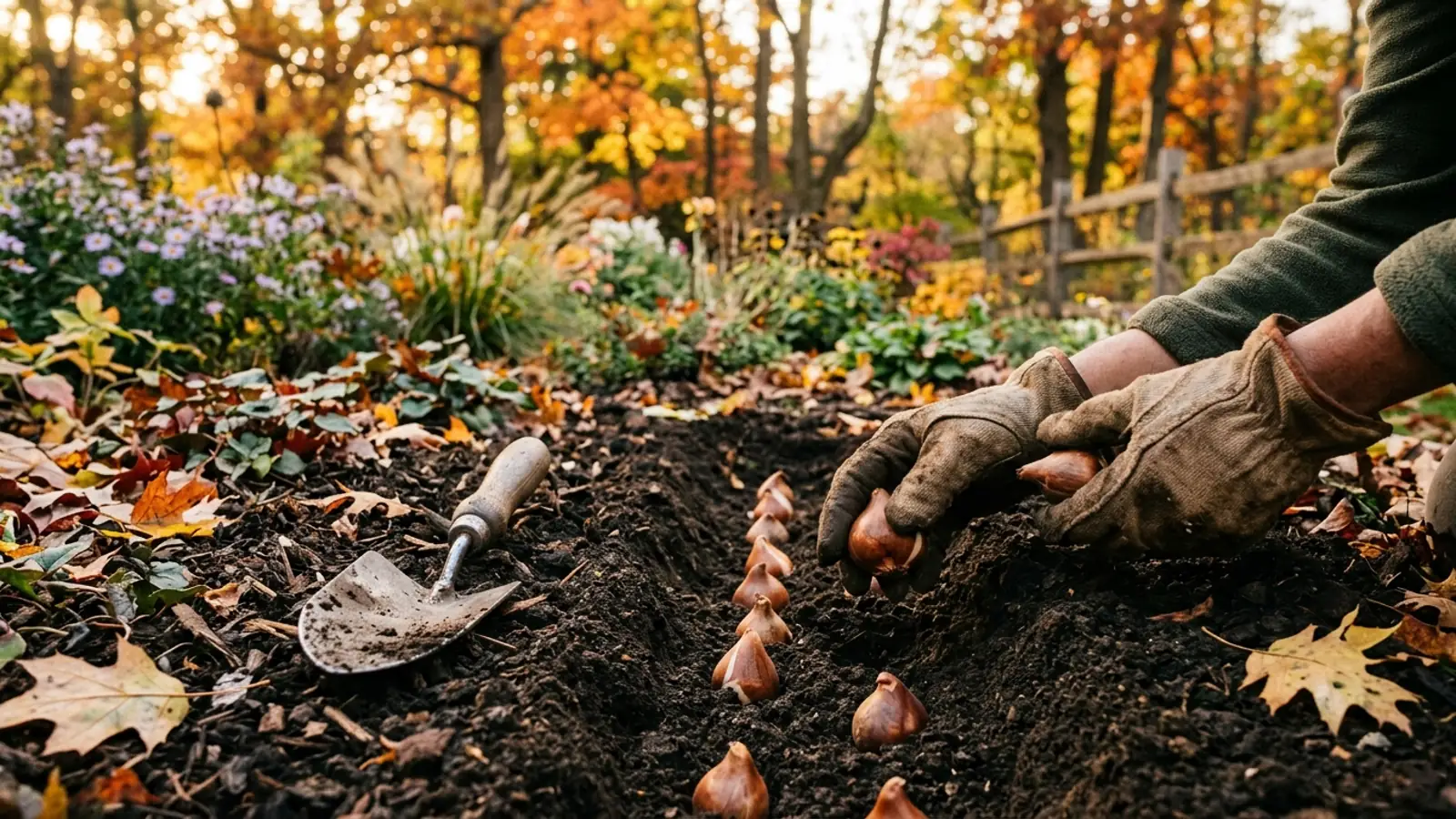
Tulips are close to foolproof if you get three things right: plant them in autumn, plant them deep enough, and plant them somewhere that drains. Nearly every failed tulip traces back to one of those three. This guide covers the depth, the timing for your climate, and the reason tulips in warm regions need a stint in the refrigerator before they will ever bloom.
When to plant tulip bulbs
Tulip bulbs go in the ground in autumn, roughly six to eight weeks before your ground freezes. They need a long cold period to trigger the chemistry that produces a flower stem, so a bulb planted in spring will not bloom that year.
The reliable signal is soil temperature rather than the calendar. Wait until soil at planting depth is consistently below 60°F (15°C). Planting into warm soil encourages rot and premature top growth.
| USDA zone | Typical planting window |
|---|---|
| Zones 3 to 4 | Late September through early October |
| Zones 5 to 6 | October |
| Zone 7 | Late October into November |
| Zone 8 | November into early December, pre-chilled bulbs |
| Zones 9 to 10 | December into January, pre-chilled bulbs only |
If you are late, plant anyway. A bulb in the ground in December has a far better chance than a bulb left in a bag in the garage.
How deep to plant tulip bulbs
The rule is three times the height of the bulb. For a standard tulip bulb around two inches tall, that means a hole six to eight inches deep, measured to the base of the bulb rather than the top.
Depth is not fussiness. Shallow bulbs are the ones that get pushed up by frost heave, cooked by early warmth, and dug up by squirrels. Depth is also what lets tulips return for a second and third year instead of exhausting themselves in one season.
- Pointed end up. The tip is the growing point; the flat, slightly rough end grows roots.
- Space four to six inches apart. Closer looks better in year one, but crowded bulbs compete and shrink.
- Plant in groups, not rows. Clusters of seven to fifteen read as intentional; single-file soldiers do not.
Not sure which way is up on an odd-shaped bulb? Plant it on its side. The shoot will correct itself.
Soil and drainage, the part that actually kills tulips
Tulips are native to dry, mountainous regions with sharp drainage. They tolerate cold far better than they tolerate wet. A bulb sitting in soggy winter soil rots before spring.
Before planting, check where water sits after heavy rain. Any spot that stays puddled is the wrong spot. In heavy clay, work in compost and coarse grit, or plant in raised beds or containers instead. A long-stem soil moisture meter such as the REOTEMP 17-inch garden and compost meter tells you what is happening down at bulb depth, which is not always what the surface suggests.
Skip fresh manure and heavy nitrogen feeds. If you want to feed, work a little bone meal or a bulb-specific fertilizer into the bottom of the hole and cover it with an inch of soil so the bulb is not sitting directly on it.
Warm climates: the refrigerator step
In zones 8 and warmer, winters never get cold enough for long enough. Bulbs there need 12 to 14 weeks in a refrigerator at 40 to 45°F before planting, then go into the ground in December or January and are treated as annuals.
One thing that catches people out: keep bulbs away from ripening fruit. Apples and pears give off ethylene gas, which destroys the flower bud inside the bulb. You will pull out a perfectly healthy-looking bulb months later that produces leaves and no flower. Use a separate drawer or a sealed paper bag on a different shelf.
Squirrels, and how to actually stop them
Squirrels dig tulip bulbs. Two things work reliably:
- Physical barrier. Lay chicken wire or hardware cloth over the planted area and cover with soil or mulch. Stems grow through the mesh; paws do not get past it.
- Cleanliness. Remove papery bulb skins and any bulb fragments from the surface after planting. That scent is the advertisement.
Daffodils are toxic to rodents and are ignored entirely. Planting a perimeter of daffodils around tulips reduces losses without any hardware.
After they bloom
What you do in spring decides whether you get flowers next year.
- Deadhead the spent flower so the plant does not put energy into seed.
- Leave the foliage alone until it yellows and collapses, usually about six weeks. Those leaves are recharging the bulb. Cutting or braiding them early is the single most common reason tulips fail to return.
- Stop watering once the foliage dies back. Bulbs want a dry summer dormancy.
Even done perfectly, most large hybrid tulips fade after two or three years. Species and Darwin hybrid types are the ones that genuinely naturalize.
Frequently Asked Questions
Which end of a tulip bulb goes up?
The pointed end goes up and the flat, rougher end goes down, since that is where roots emerge. If a bulb is misshapen and you cannot tell, plant it on its side. The shoot will find its way up on its own.
How deep should tulip bulbs be planted?
Plant them about three times as deep as the bulb is tall, which is roughly six to eight inches for a standard tulip bulb, measured to the base of the bulb. Shallow planting leads to frost heave, squirrel damage, and bulbs that do not return the following year.
Can I plant tulip bulbs in spring?
They will not bloom that year. Tulips need 12 to 14 weeks of cold to form a flower stem, which normally happens over winter in the ground. A bulb planted in spring has not had that cold period, so it typically produces leaves only. Either pre-chill in a refrigerator or wait until autumn.
Why did my tulips only produce leaves?
The usual causes are a missed or interrupted cold period, foliage cut back too early the previous spring, planting too shallow, or bulbs stored near ripening fruit, whose ethylene gas destroys the flower bud inside the bulb.
Do tulips come back every year?
Some do. Species tulips and Darwin hybrids naturalize reasonably well when planted deeply in soil that drains. Most large showy hybrids weaken after two or three seasons and are best treated as short-lived, with fresh bulbs added periodically.
- Know your plants 🌿 -
Upload a Photo