Pictures of Weeds: Complete Visual Guide to Common Garden and Lawn Weeds
Understanding Weeds Through Visual Identification
When it comes to maintaining a healthy garden or pristine lawn, knowing your enemy is half the battle. Pictures of weeds serve as invaluable tools for gardeners, landscapers, and homeowners who want to identify problematic plants quickly and accurately. Visual identification is often the fastest and most reliable method for determining which unwanted plants have invaded your outdoor spaces.
Weeds are simply plants growing where they're not wanted, but their impact on cultivated areas can be significant. They compete with desired plants for nutrients, water, and sunlight, often growing more aggressively than the plants you actually want to nurture. By learning to identify common weeds through pictures, you can take swift action to control their spread and protect your garden's health.
Most Common Lawn Weeds in Pictures
Dandelion (Taraxacum officinale)
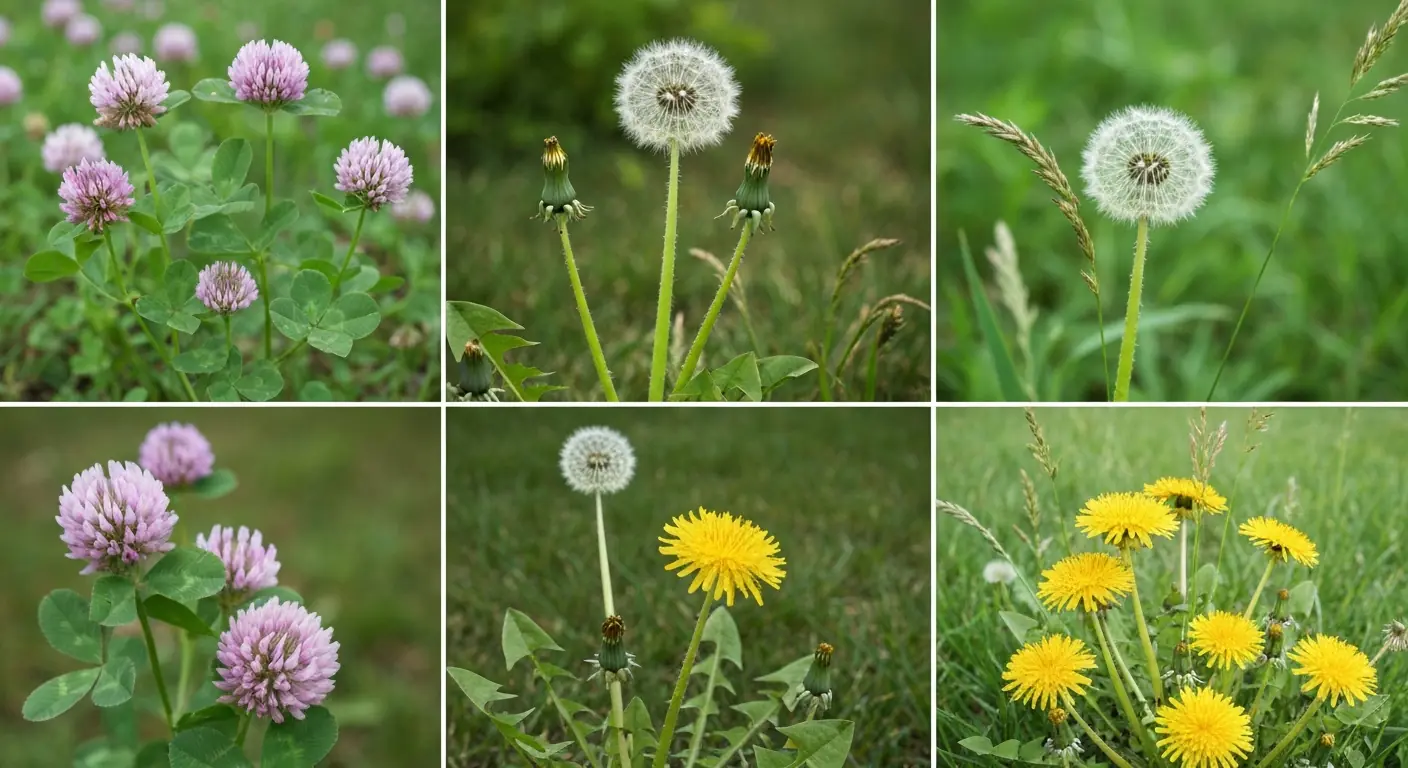
Perhaps the most recognizable weed in North America, dandelions are easily identified by their bright yellow flowers and distinctive deeply-lobed leaves. In pictures of weeds, dandelions stand out with their rosette growth pattern, where leaves radiate from a central point close to the ground. The leaves have irregular, sharp-toothed edges that give them their name – from the French "dent de lion" meaning lion's tooth.
Dandelion flowers appear on hollow stems that can reach 2-18 inches tall. After flowering, they transform into the familiar white, spherical seed heads that children love to blow. These seeds are easily dispersed by wind, making dandelions one of the most persistent lawn weeds.
Crabgrass (Digitaria sanguinalis)
Crabgrass appears in pictures of weeds as a low-growing grass with wide, flat blades that spread outward like crab legs – hence the name. This annual grass weed is particularly problematic in lawns because it grows much faster than most turfgrasses and has a lighter green color that makes it stand out conspicuously.
The plant forms dense mats that can quickly overtake thin or stressed areas of lawn. Crabgrass thrives in hot weather and full sun, germinating when soil temperatures reach about 55-60°F. In identification pictures, you'll notice that crabgrass blades are wider than most desirable lawn grasses and have a distinctive folded appearance when young.
White Clover (Trifolium repens)
White clover is easily recognizable in weed identification pictures by its distinctive three-leaflet structure and small, white, ball-shaped flowers. Each leaf typically displays a characteristic white or light green "V" marking. The plant grows low to the ground with creeping stems that root at nodes, allowing it to spread rapidly across lawn areas.
While some homeowners appreciate clover's ability to fix nitrogen in the soil and provide food for pollinators, others consider it a weed that disrupts the uniform appearance of their lawn. In pictures, white clover appears as patches of bright green foliage that stays green even during dry periods when surrounding grass may brown.
Garden Bed Weeds: Visual Identification Guide
Chickweed (Stellaria media)
Chickweed appears in pictures of weeds as a low-growing plant with small, oval leaves and tiny white, star-shaped flowers. The stems are weak and trailing, often forming dense mats in garden beds and disturbed soil areas. A key identifying feature visible in detailed pictures is the single line of hairs running up one side of the stem.
This cool-season annual thrives in moist, fertile soil and can germinate in fall, winter, or spring. In identification photos, chickweed's leaves appear bright green and smooth-edged, growing opposite each other along the stem. The small flowers have five deeply notched white petals that can appear to be ten separate petals.
Purslane (Portulaca oleracea)
Purslane is distinctive in weed pictures due to its thick, succulent leaves and reddish, prostrate stems. The leaves are paddle-shaped, smooth, and somewhat glossy, growing alternately along stems that radiate from a central taproot. This warm-season annual forms circular mats that can spread up to 16 inches across.
In pictures of weeds, purslane's succulent nature is obvious – the thick, fleshy leaves store water, allowing the plant to thrive in hot, dry conditions where other plants struggle. Small yellow flowers appear at stem tips and in leaf axils, though they're often missed because they open only in sunny conditions and close by midday.
Lamb's Quarters (Chenopodium album)
Lamb's quarters appears in identification pictures as an upright plant with diamond-shaped leaves that have a distinctive white or silvery coating on their undersides. Young plants show a characteristic white, mealy coating on new growth, which is clearly visible in detailed pictures of weeds. The leaves are irregularly toothed and alternate along the stem.
This annual weed can grow quite tall – up to 6 feet in ideal conditions – and produces small, inconspicuous green flowers in dense clusters. In garden settings, lamb's quarters often appears in recently cultivated soil and can quickly overwhelm desired plants if left unchecked.
Seasonal Weed Identification Through Pictures
Spring Weeds
Spring brings a flush of cool-season weeds that gardeners need to identify quickly. Pictures of weeds taken during spring often show henbit, with its square stems and heart-shaped, scalloped leaves topped by small purple flowers. Dead nettle appears similar but with more triangular leaves and different flower arrangements.
Spring identification photos also commonly feature wild garlic and wild onion, both showing thin, grass-like leaves that emit a strong onion odor when crushed. These bulbous perennials are particularly troublesome in lawns because their growth habit differs so dramatically from surrounding grass.
Summer Weeds
Summer weed pictures typically showcase heat-loving species like spurge, which appears as a low-growing plant with small, oval leaves and a milky sap that's visible when stems are broken. Prostrate spurge forms flat mats, while spotted spurge grows more upright but still maintains a relatively low profile.
Foxtail grasses are prominent in summer pictures of weeds, identifiable by their distinctive seed heads that resemble bottle brushes or fox tails. These annual grasses can be particularly problematic in vegetable gardens and newly seeded lawn areas.
Fall and Winter Weeds
Cool-season weeds dominate fall and winter weed identification pictures. Annual bluegrass (Poa annua) appears as a light green, fine-textured grass that often stands out against dormant warm-season lawns. Its boat-shaped leaf tips and tendency to produce seed heads even when mowed short make it easily identifiable.
Winter annual broadleaves like hairy bittercress show up in pictures as small rosettes with compound leaves. These weeds germinate in fall, overwinter as small plants, then rapidly grow and flower in early spring before most people think about weed control.
Using Pictures for Accurate Weed Identification
Key Features to Observe
When using pictures of weeds for identification purposes, focus on several key plant characteristics. Leaf shape, arrangement, and margins are crucial identifying features. Note whether leaves are simple or compound, how they attach to the stem (opposite, alternate, or whorled), and whether leaf edges are smooth, toothed, or lobed.
Flower characteristics visible in identification pictures provide valuable clues. Pay attention to flower color, size, shape, and arrangement. Some weeds have very distinctive flowers that make identification straightforward, while others have small, inconspicuous flowers that require closer examination.
Growth habit is another important factor clearly shown in comprehensive weed pictures. Does the plant grow upright, prostrate, or in a rosette pattern? Is it annual, perennial, or biennial? These characteristics help narrow down identification possibilities and inform control strategies.
Taking Your Own Identification Photos
When documenting weeds in your own garden, take multiple pictures from different angles. Include close-ups of leaves, flowers, and overall plant structure. Photograph the entire plant as well as details, and include something for scale – a coin or ruler works well.
Consider the plant's environment when taking identification photos. Pictures of weeds should show where the plant is growing – lawn, garden bed, pavement cracks, etc. Environmental context often provides important clues for accurate identification and suggests appropriate control methods.
Digital Resources for Weed Identification
Modern technology has revolutionized how we use pictures of weeds for identification. Smartphone apps can analyze photos and provide instant identification suggestions, while online databases offer extensive collections of weed images searchable by various characteristics.
When using digital identification tools, remember that accuracy depends on photo quality and the completeness of the database. Cross-reference results with multiple sources, and don't hesitate to consult local extension services or master gardener programs for confirmation of unusual or difficult-to-identify weeds.
Building your own digital library of local weed pictures can be invaluable for future reference. Document weeds as they appear throughout the growing season, noting their locations, growth stages, and any control measures attempted. This personal database becomes increasingly valuable as you learn which weeds are most problematic in your specific growing conditions.
Effective Weed Management After Identification
Once you've successfully identified problematic weeds using pictures, developing an appropriate management strategy is crucial. Different weeds require different approaches, and accurate identification helps you choose the most effective and efficient control methods.
Annual weeds like crabgrass and purslane can often be controlled through pre-emergent herbicides applied before seeds germinate, while established perennial weeds may require post-emergent treatments or physical removal. Understanding a weed's life cycle, clearly illustrated in comprehensive pictures of weeds, helps time control efforts for maximum effectiveness.
Prevention remains the best long-term strategy for weed management. Maintaining healthy, dense turf and garden plantings reduces opportunities for weed establishment. Regular monitoring using visual identification skills developed through studying weed pictures allows for early intervention when control efforts are most successful and least costly.
Frequently Asked Questions
How can I tell the difference between grass weeds and broadleaf weeds in pictures?
Grass weeds have long, narrow leaves with parallel veins and typically grow from a central growing point. Broadleaf weeds have wider leaves with branching vein patterns and more varied leaf shapes. In pictures, grass weeds often appear more uniform and upright, while broadleaf weeds show more diverse growth patterns and leaf arrangements.
What's the best time of year to take pictures of weeds for identification?
The best time varies by weed species, but generally spring and early summer provide the most identifying features. Many weeds flower during this period, and flowers are often the most distinctive identification feature. Take pictures when plants are actively growing and before they're stressed by heat or drought, as stressed plants may not show typical characteristics.
Can I identify weeds accurately using just pictures from the internet?
Pictures are an excellent starting point for weed identification, but local variations in appearance and growth habits mean you should verify identifications with multiple sources. Consider factors like your geographic region, soil type, and growing conditions. When in doubt, contact your local extension office with your own photos for professional identification assistance.