How to Plant Potatoes: Seed Potatoes, Depth and Why You Hill Them
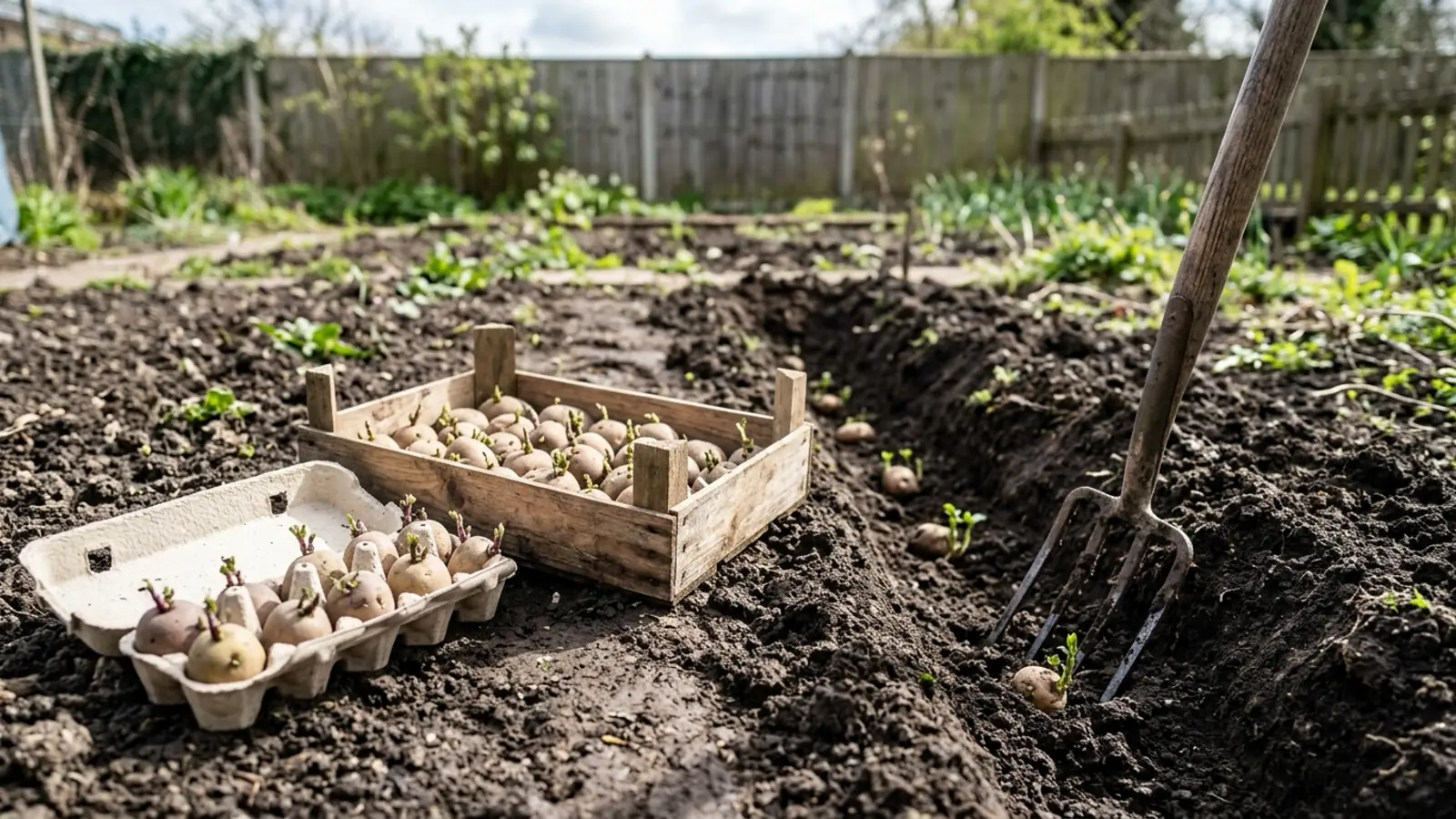
Potatoes are one of the most forgiving crops you can grow, and also one of the easiest to get subtly wrong. The three things that decide your harvest are what you plant, how deep you plant it, and whether you hill. Get those right and the rest is mostly waiting.
Start with seed potatoes, not supermarket ones
It is tempting to plant the sprouting potatoes in the back of the cupboard. Two reasons not to.
Most supermarket potatoes are treated with a sprout inhibitor. They will either fail to sprout or grow weakly and unevenly.
More importantly, they are not certified disease free. Potatoes carry soil-borne diseases such as blight, scab and ring rot, and planting untested tubers can introduce something into your soil that stays there for years and affects future crops. Certified seed potatoes are inspected specifically for this.
Pick a type by what you want to eat. Early varieties mature in 70 to 90 days and give waxy new potatoes. Maincrop varieties take 100 to 130 days, store far better, and are the floury ones for baking and mashing.
Chitting and cutting
Chitting is pre-sprouting before planting, and it buys you a couple of weeks of growing season. Two to four weeks before planting, stand the seed potatoes in an egg carton or shallow tray, the end with the most eyes facing up, somewhere cool and bright but out of direct sun. You want short, stubby, green-purple sprouts. Long pale sprouts mean it was too warm and too dark, and they snap off easily during planting.
Cutting: potatoes smaller than a hen's egg go in whole. Larger ones can be cut into pieces, each with at least two eyes and a decent chunk of flesh to feed the shoot.
After cutting, cure the pieces for two to three days somewhere dry and airy until the cut faces dry over and go slightly leathery. Planting a fresh wet cut into cold soil is the fastest route to rot.
When and how deep to plant
Plant two to four weeks before your last expected frost, once soil temperature reaches about 45 to 50°F (7 to 10°C). Cold wet soil rots seed pieces, so if spring is running late, wait. Potatoes planted into warm soil catch up quickly.
- Depth: about four inches, cut side down, sprouts facing up.
- Spacing: 12 inches apart within the row.
- Rows: 30 to 36 inches apart, which leaves you soil to hill with later.
Potatoes want slightly acidic soil, roughly pH 5.0 to 6.0. This is one of the few crops where you should not lime, since alkaline soil encourages scab. Avoid fresh manure for the same reason.
A long-probe meter such as the REOTEMP garden and compost meter is useful for checking that the bed is not waterlogged before you commit seed pieces to it.
Hilling, and why it decides your yield
This is the step beginners skip, and it costs them most of the crop.
Tubers form above the seed piece, along the buried section of stem, not below it. That means the amount of stem you bury is roughly the amount of potato you get. It also means any tuber that ends up exposed to light turns green and produces solanine, which is bitter and mildly toxic. Green potatoes should not be eaten.
So: when the shoots reach about eight inches tall, mound soil, straw or compost up around them, leaving the top four inches or so of leaves showing. Repeat every two or three weeks until the plants flower or the hill is around a foot high.
In fabric grow bags the same principle applies. Start with the bag rolled down and only a few inches of soil, then unroll and add more as the plant climbs. This is genuinely the best method for a patio or a small yard.
Watering, and when to harvest
Potatoes need consistent moisture, roughly an inch of water a week, and they are most sensitive from flowering onward, which is when tubers are actually bulking up. Erratic watering, going bone dry and then soaking, causes hollow centres and knobbly, misshapen tubers.
Stop watering once the foliage begins to yellow and die back naturally. That signals the crop is maturing and the skins are setting.
- New potatoes: harvest about two to three weeks after flowering. Thin skins, best eaten within days, do not store.
- Maincrop for storage: wait until the foliage has died back completely, then leave the tubers in the ground another two weeks to toughen their skins.
Lift on a dry day with a fork, working well outside the hill so you do not spear them. Let them dry on the soil surface for a few hours, then cure for one to two weeks somewhere dark, humid and around 50 to 60°F. Do not wash them before storage; soil brushed off dry protects the skin. Store in the dark, since light is what turns them green.
Frequently Asked Questions
Can I plant potatoes from the grocery store?
It is not recommended. Most are treated with a sprout inhibitor and will grow poorly, and they are not certified disease free. Planting them risks introducing soil-borne diseases such as blight or scab that persist in your soil for years. Certified seed potatoes are inspected for exactly this.
How deep do you plant potatoes?
About four inches deep, with the cut side down and the sprouts facing up, spaced roughly 12 inches apart in rows 30 to 36 inches apart. Depth at planting matters less than hilling afterwards, since tubers form along the buried stem above the seed piece.
Why do you hill potatoes?
Tubers develop above the seed piece along the buried stem, so mounding soil up the stem increases the space where potatoes can form and therefore your yield. Hilling also keeps developing tubers covered, and any tuber exposed to light turns green and produces solanine, which is bitter and should not be eaten.
Can I grow potatoes in a container or grow bag?
Yes, and fabric grow bags work very well in small spaces. Start with only a few inches of soil in the bottom with the bag rolled down, then add soil and unroll as the plant grows, following the same hilling principle. Containers need more consistent watering than ground beds because they dry out faster.
When should I plant potatoes?
Two to four weeks before your last expected frost, once soil has warmed to about 45 to 50 degrees Fahrenheit. Cold, wet soil rots seed pieces, so it is better to wait for the soil to warm than to plant on a calendar date.
- Know your plants 🌿 -
Upload a Photo