Overwatered vs. Underwatered Plants: How to Tell the Difference and Fix It
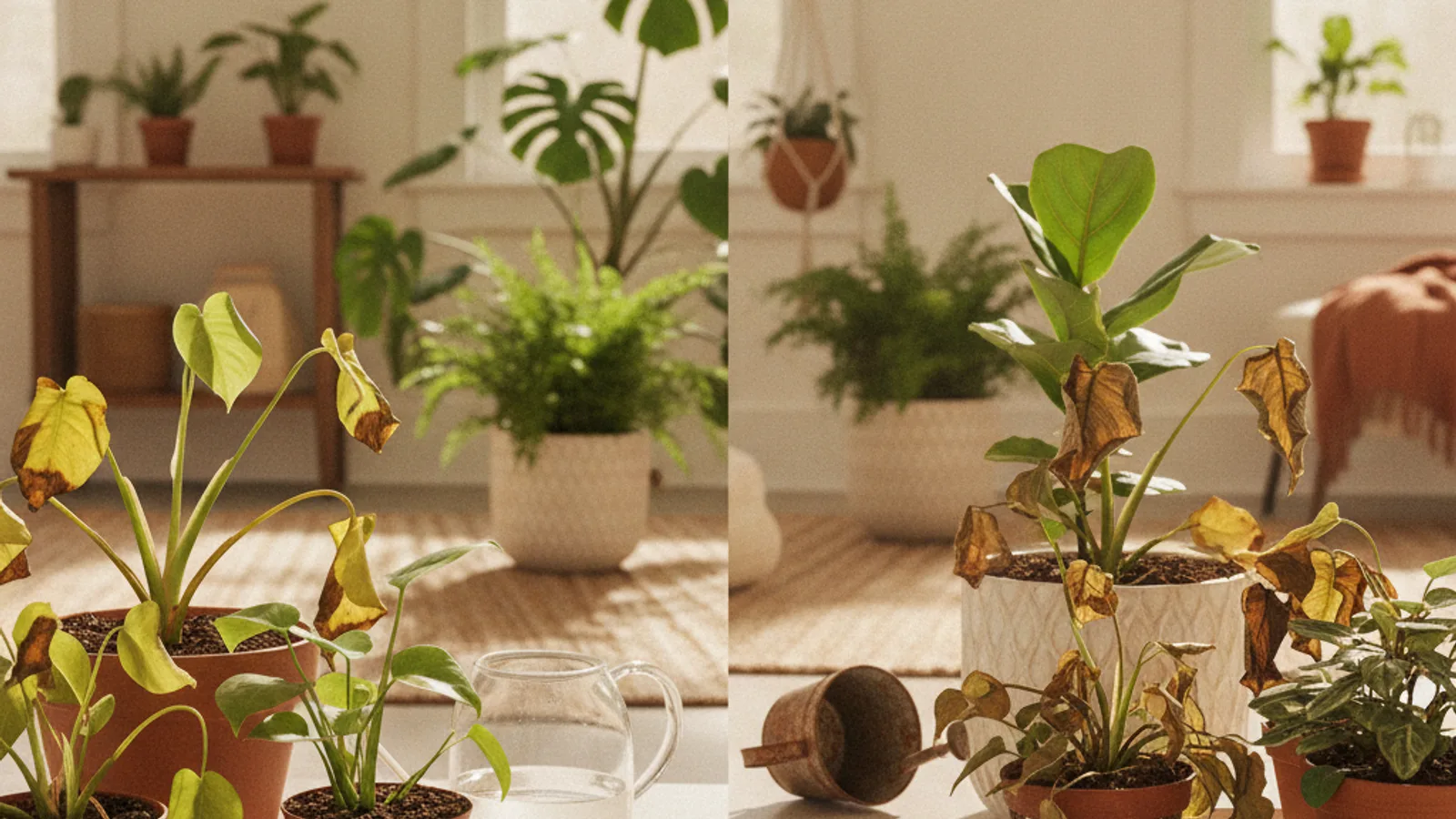
Your plant is drooping. Or the leaves are turning yellow. Or there are brown, crispy tips spreading from leaf to leaf. Your first instinct might be to water more, but that can be exactly the wrong move. Overwatering and underwatering produce many of the same symptoms, and treating one problem with the other's fix can kill a plant that was on its way to recovering.
This guide walks through every symptom, how to diagnose which problem you actually have, step-by-step fixes for each, and how to prevent both from happening again. We'll also cover how different plant types should change your approach.
Quick Reference: Overwatered vs. Underwatered
| Symptom | Overwatered | Underwatered |
|---|---|---|
| Soil feel | Soggy, wet, may smell sour | Bone dry, cracked, pulling from pot edges |
| Pot weight | Noticeably heavy | Noticeably light |
| Drooping | Soft, limp, mushy stems | Limp but crisp stems, lighter pot |
| Yellow leaves | Soft, mushy, often starting at base | Dry, crispy at edges |
| Brown leaves | Brown + soggy/translucent | Brown + dry, crispy, crunchy |
| Leaf texture | Soft, water-soaked, squishy | Dry, papery, curling inward |
| Roots | Brown/black, mushy, smelly | White/tan, dry, possibly brittle |
| Soil surface | Algae, mold, fungus gnats | Pulling away from pot, very dusty |
| Leaf drop | Both green AND yellow leaves drop | Only oldest/yellowed leaves drop |
Diagnosing the Problem: The Three-Test Method
Before doing anything else, run through these three checks in order.
Test 1: The Finger Test (Most Reliable)
Push your finger 1–2 inches (2–5 cm) into the soil, not just touching the surface, but actually into the mix.
- Feels wet, soggy, or cold: Overwatered. Do not water.
- Feels slightly damp but not wet: Leave it another day or two.
- Feels dry and dusty, or the soil pulls away from the pot edge: Underwatered. Water now.
The finger test is reliable for most standard houseplants. It won't work well for succulents and cacti, they need the soil to dry much deeper before watering, so use the pot-lift method below instead.
Test 2: The Pot Lift
Pick up the pot. A well-watered pot feels substantial. A pot that's almost alarmingly light is a dry pot, the soil has given up most of its moisture.
With practice, you'll know immediately whether your plant needs water just by feel. This is especially useful for succulents, cacti, and any plant in a small pot where the finger test may not reach the root zone.
Test 3: Visual Root Check
If the finger test and pot lift don't give you a clear answer, or you suspect root rot, gently remove the plant from its pot. Healthy roots are white, cream, or light tan, firm to the touch, and smell like clean earth. Problem roots look like this:
- Overwatered roots: Brown or black, mushy, slimy, fall apart when you touch them, may smell sour or rotten.
- Underwatered roots: White or tan but very dry, brittle, possibly pulling back from the sides of the root ball.
Symptoms of Overwatering, In Detail
Overwatering is the number one killer of houseplants, and the reason is biology: roots need oxygen as much as they need water. Saturated soil pushes out all the air pockets, suffocating the roots. Dying roots can't deliver water to the plant, so paradoxically, an overwatered plant may look exactly like a thirsty plant.
One of the most common symptoms. Yellow leaves from overwatering tend to feel soft and slightly mushy. They often start on older, lower leaves and progress upward. Important distinction: underwatered yellow leaves feel papery and dry at the edges.
If your plant is wilting but the soil is soggy, that's a red flag for overwatering. The roots have failed and can't move water to the leaves, so the plant droops despite having plenty of water around its roots.
Overwatered leaves sometimes develop brown patches that look water-soaked, almost translucent or mushy, rather than the dry crispy brown of underwatering.
These tiny flies love consistently moist soil. If you see small flies hovering around your plant or crawling on the soil, overwatering is almost always involved. Their larvae feed on roots and organic matter in wet soil. Letting the soil dry out is the primary fix.
A white fuzzy film or green algae on top of the soil means the surface never fully dries between waterings. It's a sure sign of chronic overwatering.
Less common but distinctive: small raised bumps or blisters on the underside of leaves, often looking corky or tan. This is edema, cells have taken up more water than they can hold and burst. It occurs when the soil is too wet relative to the light level.
If the base of the stem (at soil level) feels mushy, collapses when pressed, or has turned dark, root rot has spread to the crown. This is serious. Immediate unpotting and root surgery are needed.
Symptoms of Underwatering, In Detail
Underwatered plants are easier to rescue than overwatered ones, because dry soil kills roots slowly and reversibly. Once you add water, recovery begins quickly, sometimes visibly within a few hours.
The classic sign of underwatering. Brown that's dry, papery, and crunchy, not mushy, starting at leaf tips and edges and spreading inward. Often accompanied by a noticeably light pot.
The plant is wilting because there's genuinely no water to move through the stems. Pick up the pot, it will be much lighter than you expect. The soil will be pulling away from the pot edges.
Many plants curl their leaves to reduce surface area and conserve moisture when water is scarce. Calathea, Monstera, and Prayer plants do this prominently. Curled leaves in dry soil = water immediately.
Severely dry potting mix shrinks as it dries, pulling away from the inner wall of the pot. You can see a visible gap around the edge. This also causes a watering problem, water runs down the gap and straight out the drainage hole without reaching the roots. Bottom watering fixes this.
A chronically underwatered plant stops growing. It has nothing to spend on new leaves. This symptom alone won't diagnose underwatering, but combined with other signs, it confirms the picture.
Some underwatered yellowing happens from the leaf tip inward, yellow-brown and papery, not soft. This looks different from the soft, mushy yellowing of overwatering and is often confined to specific leaves rather than widespread.
How to Fix an Overwatered Plant
The goal is to restore oxygen to the root zone and remove any rotting tissue before the damage spreads.
How to Fix an Underwatered Plant
Underwatering recovery is much more straightforward, plants bounce back from drought faster than from root rot. The main challenge is getting water into a severely dried-out root ball.
Special Cases: Plant-Specific Differences
Not all plants react the same way. Adjust your diagnosis based on the plant type.
Succulents and Cacti
These store water in their leaves and stems, so they can go weeks or months without water. The finger test doesn't apply in the same way, the entire root zone should dry out completely between waterings. Signs of overwatering in succulents: mushy, translucent leaves that feel like jelly; leaves that fall off when touched. Signs of underwatering: wrinkled, shriveled, or accordion-folded leaves. If succulent leaves are wrinkled AND soft, that's overwatering (the cells have given up their stored water due to root failure).
Tropical Aroids (Monstera, Pothos, Philodendron)
These handle irregular watering reasonably well but suffer quickly from constantly wet soil. Yellowing that starts on lower/older leaves in wet soil = overwatering. Yellowing starting at leaf tips in dry soil = underwatering. Monstera leaves with large brown patches that feel mushy = overwatering. Brown leaf edges that are dry and papery = underwatering or low humidity.
Ferns (Boston Fern, Maidenhair)
Ferns are among the most drought-sensitive houseplants. They do NOT tolerate drying out, even briefly. If fern fronds crisp up quickly or entire fronds die off, underwatering is almost always the cause. However, root rot from poor drainage is also common. Ferns need consistently moist (but never soggy) soil and high humidity. Check daily and water when the top half-inch becomes dry.
Snake Plant and ZZ Plant
Both store water in their rhizomes/leaves and are famous for tolerating neglect. Overwatering is by far the more common problem. Yellow, mushy base leaves or a mushy central rosette = overwatering. Wrinkling or shriveled leaf edges = underwatering (unusual, but possible if severely neglected). These plants should dry out almost completely between waterings, every 2–6 weeks depending on season and light.
Peace Lily
Peace lilies are the most dramatic wilters, they droop visibly when thirsty, then perk back up within an hour of watering. However, chronic overwatering causes yellowing leaves and root rot. Peace lily strategy: let it droop slightly (or check the soil), then water thoroughly. If it droops with wet soil, overwatering is the culprit.
Prevention: Getting the Watering Routine Right
The best way to avoid both problems is a consistent checking habit rather than a fixed schedule. Environmental factors, season, light, temperature, pot size, soil mix, humidity, affect how quickly soil dries out, and those factors change constantly.
What Actually Affects How Often to Water
- Pot size: Smaller pots dry out much faster than large ones. A 4-inch pot may need water every 3–5 days in summer; a 12-inch pot might go 2–3 weeks.
- Pot material: Terracotta dries out 2–3x faster than plastic or glazed ceramic. Both are fine, just adjust your expectations.
- Light level: Plants in bright light transpire more and use more water. A plant moved from low to bright light may need watering twice as often.
- Season: Most houseplants slow down in fall and winter. Water needs drop by 30–50% in winter even if indoor temperatures stay consistent.
- Soil mix: Heavy, dense potting soil stays wet much longer than a well-aerated mix with perlite. If your plant keeps getting overwatered, consider switching to a mix with 20–30% perlite added.
- Humidity: In very dry homes (under 30% humidity), plants lose moisture from leaves faster. In humid rooms, soil stays wet longer.
Building a Checking Habit
Rather than watering on a fixed schedule (every Sunday, for example), check your plants every 3–4 days and water based on soil feel. Group your plants by watering needs: check the fast-dryers (small pots, bright light, terracotta) more often. This prevents both overwatering from a rigid schedule and underwatering from forgetting.
The Moisture Meter Option
A basic soil moisture meter removes the guesswork entirely. Insert the probe 2–3 inches deep. A reading of 1–3 on most scales means "water now"; 4–6 means check again soon; 7–10 means definitely do not water. Especially useful for large pots where the top 2 inches can be dry while the bottom is still saturated. The 3-in-1 versions also measure light and soil pH. See our full moisture meter guide for detailed picks by use case.
Tools That Make Watering Easier
- Pots with drainage holes: Non-negotiable. Never plant directly in a pot without drainage unless you are expert at reading soil moisture, it's almost impossible to avoid overwatering.
- Well-draining soil: Standard potting mix + perlite is excellent for most tropicals. A 20–30% perlite mix-in dramatically improves aeration and drainage, making root rot far less likely between waterings.
- Self-watering pots: These have a reservoir at the bottom and wick water up as needed. Great for plants that like consistent moisture, like ferns and peace lilies. Not good for succulents or drought-tolerant plants. A self-watering planter ($15–35) paired with a moisture meter nearly eliminates overwatering as a failure mode for moisture-sensitive species.
- Bottom watering trays: Useful for plants that dislike wet leaves (African violets, for example) and ensures the whole root zone gets moisture evenly.
When Your Plant Still Isn't Recovering
If you've diagnosed and addressed the water issue but the plant isn't improving after 2–4 weeks, consider these other possibilities:
- Pests: Spider mites, mealybugs, scale, and root mealybugs cause yellowing and decline that mimics water problems. Check leaf undersides and the soil.
- Wrong light: A plant too far from light may yellow and decline slowly regardless of watering. Move it closer to a window.
- Root bound: A severely root-bound plant (roots circling the inside of the pot, growing from drainage holes) can't absorb water efficiently. Repot up one pot size.
- Fertilizer burn: White crusty buildup on soil surface plus brown leaf tips can indicate salt accumulation from fertilizer. Flush the soil thoroughly with water to leach the salts, or repot in fresh soil.
- Natural aging: Bottom leaves yellowing and dropping on an otherwise healthy plant is normal, the plant is redirecting energy to newer growth. This isn't a watering problem.
Identify Your Plant →
Essential Supplies for Getting Watering Right
- Soil moisture meter (SONKIR MS02 3-in-1, ~$12–15), The single most useful tool for avoiding both overwatering and underwatering. Insert the probe 2–3 inches into the soil for an exact moisture reading, rather than relying on finger-feel alone. The 3-in-1 model also reads light intensity and pH. See our full moisture meter guide.
- Perlite (~$10–15 for a large bag), Mix 20–30% perlite into any standard potting mix to create the well-draining, aerated soil that makes root rot nearly impossible. Essential for repotting any plant that has suffered from overwatering.
- Clean pruning shears (~$12–25), Necessary for root surgery on overwatered plants. Sharp, clean cuts heal faster and reduce disease spread. Sterilize between cuts with rubbing alcohol when treating root rot.
- Cactus & succulent potting mix (~$8–14), Purpose-made gritty mix for cacti and succulents; use it straight or blend with perlite for drought-tolerant species that are chronically overwatered in standard potting soil.
- Self-watering planter ($15–35), For plants that like consistent moisture (peace lily, ferns, calathea), a reservoir-based pot maintains the right moisture level without any guesswork. The plant draws water up as needed, preventing both soggy roots and drought stress.
- Terracotta pots with drainage holes (~$8–20), Terracotta is the most forgiving pot material for overwatering-prone growers. The porous clay wicks moisture away from the root zone and dries out 2–3× faster than plastic or glazed ceramic, building in a natural buffer against chronic overwatering.
Losing track of which plant you watered when? My Greenhouse tracks how long since you last checked each plant and keeps its watering rule right next to it, so you get reminded to look rather than to water on a timer. Free, no account.
Frequently Asked Questions
How do I know if I'm overwatering or underwatering my plant?
Check the soil first. Soggy, wet, or smelly soil = overwatering. Bone-dry, cracked, pulling-from-pot soil = underwatering. Yellow mushy leaves with soft stems = overwatering. Dry, crispy, curled leaves with brittle stems = underwatering.
Can a plant recover from overwatering?
Yes, if caught before more than half the roots are rotted. Unpot, trim all mushy brown roots, dust with cinnamon, repot in fresh dry soil, and don't water for 3–5 days. Most plants recover within 2–4 weeks if the crown is still firm.
How often should I water my houseplants?
There's no single answer. Use the finger test, water when the top 1–2 inches of soil are dry. Most tropicals every 7–14 days in summer, less in winter. Succulents every 2–6 weeks. Ferns every 3–5 days.
Why are my plant's leaves drooping?
Drooping can be either overwatering or underwatering. Check the soil: soggy + drooping = overwatering (failing roots). Bone dry + drooping = underwatering. Always diagnose the soil, not just the leaves.
What does root rot look like?
Root rot roots are brown or black, mushy, slimy, and may smell sour. Healthy roots are white or light tan and firm. To fix: cut all dark mushy roots to white tissue, treat with cinnamon, repot in fresh soil.
Related reading: Houseplant Care Guide for Beginners · Indoor Plants Safe for Cats · Plants Toxic to Cats: Complete List
Related Articles
Houseplant Care Guide for Beginners Everything you need to keep your first plants alive, watering, light, soil, and more. Indoor Plants Safe for Cats Beautiful houseplants that won't harm your feline friends. Plants Toxic to Cats: Complete List Know which houseplants are dangerous before you bring them home.- Know your plants 🌿 -
Upload a Photo