Best Terrarium Kits 2026: Closed, Open, Hanging & Wardian Cases Compared

A terrarium is a sealed or partially sealed glass container that creates its own microclimate for plants. Done correctly, a closed terrarium can go weeks without watering as the moisture cycles between the plants, glass walls, and substrate. An open terrarium filled with succulents or air plants is a low-maintenance display piece that needs watering once every one to three weeks and thrives in the same conditions as the plants it holds. Either way, the container and the substrate system you build inside it are what determine whether the terrarium stays healthy or crashes within a month.
The core decisions are: open versus closed, container size versus the plants you intend to keep, and whether you want a complete kit (container plus substrate supplies included) or just the glass. Open terrariums suit succulents, cacti, and air plants because these plants need airflow and will rot in trapped humidity. Closed terrariums suit ferns, moss, tropical ground covers, and miniature plants that thrive in consistent humidity and low-to-moderate light. The substrate layering system inside both types, drainage pebbles at the base, activated charcoal above that, and appropriate potting mix on top, is not optional: glass containers have no drainage holes, and without the charcoal layer a closed terrarium develops an anaerobic smell within weeks.
At a Glance
 Cute Farms Terrarium Starter Kit with Glass | Moss,...
 Cute Farms Terrarium Starter Kit | Moss, Vermiculite,...
 Mkono 3 Pcs Small Hanging Glass Terrarium Geometric...
 HighFree Glass Terrarium with Metal Tray, Glass...
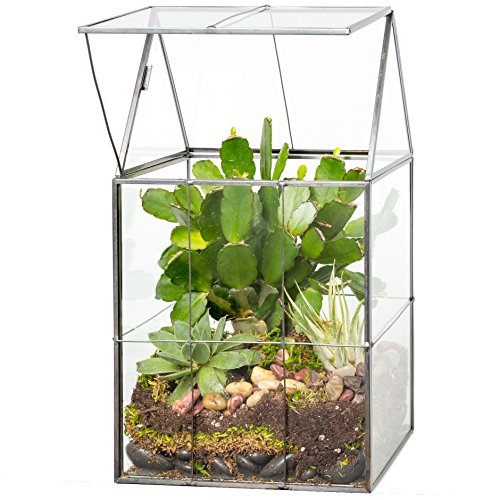 D'Eco Large Glass Plant Terrarium, Centerpiece &...
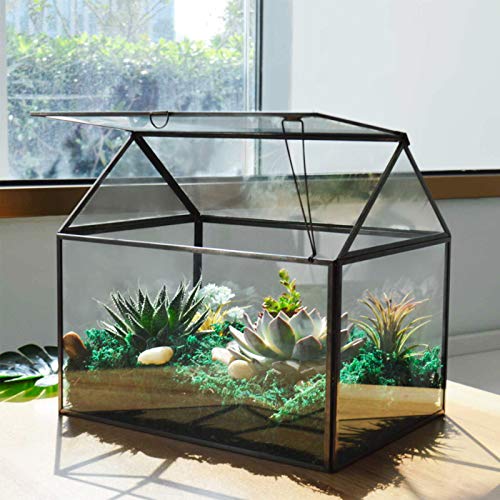 Black 1 Large Glass Plant Terrarium Kit with Lip...
Product images and titles from Amazon. As an Amazon Associate we earn from qualifying purchases.
Quick Picks: Best Terrarium Kits 2026
| Use Case | Top Pick | Why It Wins | Est. Price |
|---|---|---|---|
| Best overall complete kit | Cute Farms Terrarium Starter Kit with Glass | Container plus all substrate layers included, beginner-proof instructions | $30–40 |
| Best budget supplies kit | Cute Farms Large Terrarium Starter Kit | Every substrate layer included; bring your own glass vessel | $18–25 |
| Best hanging terrarium | Mkono 3 Pcs Hanging Glass Geometric Terrarium | Three geometric shapes with chains; display piece for air plants | $18–26 |
| Best tabletop geometric set | Mkono 4" Mini Geometric Terrarium Set of 3 | Globe, teardrop, and bowl shapes; gold accents; shelf-ready | $15–22 |
| Best open greenhouse style | HighFree Glass Terrarium Large (9.45" x 11.8") | Metal tray, swing lid, waterproof interior, large enough for a mixed planting | $28–38 |
| Best mid-size hinged geometric | D'Eco Glass Geometric Terrarium with Hinged Roof | 6x5x11 inches, hinged top for easy access, black accent frame | $22–32 |
| Best large open house terrarium | Large Glass Plant Terrarium with Lip | House-shape greenhouse design, removable lid, wide enough for small plant collection | $25–35 |
| Best premium Wardian case | H Potter Glass Terrarium Wardian Case (10.5") | Real glass panels, hinged roof, metal base, heirloom quality for a permanent living display | $50–70 |
Best Overall Complete Kit: Cute Farms Terrarium Starter Kit with Glass
The Cute Farms kit with the bubble glass sphere is the strongest recommendation for anyone building their first terrarium. It includes the glass container and every substrate layer you need in premeasured quantities: reindeer and forest moss, potting soil blended with activated charcoal, gardening vermiculite, pea pebbles, plant food, tongs, a brush, miniature decor, and both a build guide and a plant care guide. The only thing missing is the plants themselves, which is intentional, because shipping live plants with a glass kit creates too many dead-on-arrival scenarios.
The bubble glass sphere is a rounded, near-closed shape that creates a high-humidity microclimate suitable for moss, nerve plant, and small ferns. The opening is large enough to add plants and adjust the arrangement with the included bamboo tongs, but small enough that the humidity cycle builds effectively. For a beginner who wants to understand how a closed terrarium ecosystem works before committing to a larger or more expensive container, this kit teaches all the substrate layering and plant placement decisions in a low-stakes format with every material provided.
Cute Farms Terrarium Starter Kit with Bubble Glass Sphere
The activated charcoal is blended into the potting soil in this kit, which simplifies the build process but means you are slightly less in control of layer depth than when adding charcoal separately. For a beginner terrarium this is fine; for a precision-built closed ecosystem with specific humidity targets, buying the substrate components separately gives more control. The kit is also available without the glass if you already have a suitable container.
Pros
- Complete kit: glass container plus all four substrate layers plus tools in one box
- Premeasured quantities sized for the included container; no guesswork on ratios
- Build and care guide included; correct starting point for first-time terrarium builders
- Made and packed in the USA; consistent quality control
Cons
- Charcoal pre-blended into soil; less control over individual layer depth vs. buying separately
- Plants not included; requires a separate sourcing step before building
Best Budget Supplies Kit: Cute Farms Large Terrarium Starter Kit
The large version of the Cute Farms substrate kit without glass is the right buy when you already have a container, or when you want to use a mason jar, fish bowl, or any glass vessel from around the house. It includes enough moss, vermiculite-amended potting soil, pea pebbles and river stones, and plant food for a 6 to 8 inch diameter open container. The bamboo tongs and natural hair brush are practical tools for placing plants and sweeping debris off glass walls once the terrarium is assembled. At $18 to $25, it is the most affordable entry point for a complete substrate system from a single trusted source.
The reindeer moss included is preserved rather than live, which means it will maintain its appearance for months without any care, making it ideal as ground cover and filler material in the decorative layer without requiring humidity to survive. If you want live moss in a closed terrarium, source it separately from a specialty plant nursery or online plant shop. The potting soil blend is designed to drain quickly while retaining enough moisture for succulent-type plants; it is not formulated for closed terrarium tropical plants, which need a more moisture-retentive peat or coco coir based mix.
Cute Farms Large Terrarium Starter Kit (Supplies Only)
The miniature dinosaur decor figures included are a detail that makes this kit popular as a gift for children or as a DIY project for teens and adults. They are also removable if you prefer a more minimalist aesthetic. The kit ships in a flat lay that is easy to store if you are building the terrarium over multiple sessions rather than all at once.
Pros
- $18–25 provides all substrate materials for an open terrarium using any glass vessel you own
- Works with upcycled containers: mason jars, fish bowls, apothecary jars
- Complete substrate system in one box; no separate charcoal or pebble sourcing needed
- Popular gift option for beginners and as a DIY activity kit
Cons
- Preserved moss, not live; not suitable as the sole planting material for a living closed terrarium
- Soil blend is succulent-weight drainage; not optimal for tropical or moisture-loving plants
Best Hanging Terrarium: Mkono 3 Pcs Small Hanging Glass Geometric Terrarium
The Mkono hanging set includes three geometric glass shapes, a pyramid, a teardrop, and a diamond, each with gold-tone metal frames and chains for ceiling or hook mounting. These are display pieces first: the openings are sized for a single air plant (Tillandsia), a small succulent cutting, or a few pebbles with moss, not for building a layered substrate ecosystem. The hanging terrarium format is ideal for air plants specifically because Tillandsia need airflow and indirect light and display beautifully when suspended at eye level or above a reading corner, shelf, or windowsill.
Each terrarium in the set is small, roughly 3 to 5 inches across the largest dimension, which limits the plant choices to very small or trailing plants. The chains are attached and included, so installation requires only a small ceiling hook or a command hook rated for the weight. The gold finish coordinates with warm-toned room aesthetics and modern plant shelf setups. For a dedicated air plant display or a boho shelf arrangement, the Mkono hanging set delivers more visual impact per dollar than any single terrarium container at this price.
Mkono 3 Pcs Small Hanging Glass Geometric Terrarium (Pyramid, Teardrop, Diamond)
Air plants placed in these terrariums need misting 2 to 3 times per week or a 20-minute soak in room-temperature water once per week, then shaken free of standing water and allowed to dry fully before going back into the container. Never let water pool inside a closed geometric terrarium with an air plant: trapped moisture causes the base of the plant to rot. The open-face geometric designs handle this correctly as long as the terrarium is not positioned in a dark corner with no airflow.
Pros
- Three shapes in one purchase create a layered display without buying separately
- Chains included; ready to hang with a single hook per terrarium
- Gold-tone frames photograph well for shelfie and room styling applications
- Under $25 for a complete three-piece hanging air plant display
Cons
- Too small for anything beyond a single air plant or small succulent cutting per container
- Not suitable for substrate layering or closed terrarium builds
Best Tabletop Geometric Set: Mkono 4" Mini Geometric Terrarium Set of 3
Where the hanging Mkono set is for air display, the 4-inch tabletop geometric set is for shelf and surface styling. The three shapes, a globe, a triangle teardrop, and an open bowl, sit flat on any surface and hold small succulents, air plants, pebble arrangements, or decorative moss. At 4 inches across, each container is large enough to hold a small potted succulent, a Haworthia, a Gasteria, or a single echeveria rosette with some decorative pebbles around it. The gold metal frame and clear glass are the same aesthetic as the hanging set, making them natural companions for a cohesive shelf arrangement.
These containers work best as display vessels rather than active growing environments. The glass walls create a mild temperature buffer and the open top means no humidity buildup, but the small volume limits how much substrate depth you can build and how large the root zone can grow. For succulents that thrive in constrained root environments, this is fine for 12 to 18 months before the plant outgrows the container. The set makes an excellent gift for plant lovers who already have a collection and want a display piece to feature a favorite small plant.
Mkono 4" Mini Glass Geometric Terrarium Container Set of 3 (Globe, Triangle, Bowl)
When planting succulents in these containers, use a cactus-specific potting mix with extra perlite mixed in at a 1:1 ratio to improve drainage. Water sparingly, once every 2 to 3 weeks maximum, and always let the soil dry completely before watering again. The glass base traps heat faster than a clay pot, so keep the containers out of direct south or west window sun to avoid cooking the roots. North or east-facing windowsills with several hours of indirect light are the correct placement for long-term succulent health in glass containers.
Pros
- Three complementary shapes create a layered shelf display without hunting for matching pieces separately
- 4-inch size holds most small succulents and Haworthia varieties comfortably
- Gold-tone frame and clear glass pair with most modern interior aesthetics
- Under $22 for a complete three-piece display set
Cons
- Too small for a layered substrate system; display and container use only, not an ecosystem build
- Glass base traps heat; requires careful placement away from direct sun
Best Open Greenhouse Style: HighFree Glass Terrarium Large (9.45" x 11.8")
The HighFree large glass terrarium is a house-shaped greenhouse design with a metal frame, a swing-open lid for access, and a waterproof metal tray with a secondary plastic insert that contains soil runoff. At 9.45 inches wide and 11.8 inches tall, it is large enough to house a meaningful plant arrangement: three to five small succulents or cacti, a single fern with supporting moss, or a mixed open terrarium with a decorative plant arrangement and ground cover. The swing lid can be left open for maximum airflow (for succulents) or closed partially to raise humidity (for tropical plants).
The metal tray is the most practically useful feature at this price point. Without a tray, soil runoff from watering stains the shelf or windowsill beneath the glass container. The HighFree's integrated tray catches all runoff and the removable plastic insert makes cleaning straightforward. This is the correct size for someone who wants a terrarium that actually functions as a growing environment rather than a decorative vessel for a single plant: the 9.45-inch width allows proper substrate depth and meaningful planting space, and the 11.8-inch height clears most small to medium houseplants.
HighFree Glass Terrarium with Metal Tray (9.45" x 5.7" x 11.8", Black Frame)
The swing lid design allows you to keep it closed during the day to build humidity for tropical plants and crack it open at night when evaporation slows. For a mixed terrarium with both succulents (which need airflow) and a fern background planting (which needs humidity), position the succulents at the front near the lid opening and the fern toward the back where humidity is higher. The black metal frame is more neutral than gold and works with both modern and industrial interior aesthetics.
Pros
- Large enough (9.45" x 11.8") for a real plant arrangement, not just a single specimen
- Integrated metal tray with removable insert prevents runoff staining on furniture
- Swing-open lid allows humidity control from fully open (succulents) to mostly closed (ferns)
- Waterproof interior; soil and water contained within the tray system
Cons
- 5.7-inch depth limits front-to-back layering; not suitable for large root-spreading plants
- Black frame suits modern or industrial aesthetics; less versatile in warm-tone or boho rooms
Best Mid-Size Hinged Geometric: D'Eco Glass Geometric Terrarium with Hinged Roof
The D'Eco terrarium is a 6x5x11 inch geometric glass container with a hinged roof panel that opens for plant access without removing the entire top. At mid-size between the small Mkono display pieces and the large HighFree greenhouse, it occupies the sweet spot for a single feature plant arrangement: a small fern with moss ground cover, a succulent arrangement with decorative pebbles, or a mixed planting centered around one statement plant. The black metal accent frame gives it a clean, architectural appearance that works on desks, bookshelves, and side tables.
The hinged roof design is more convenient than a fully removable lid for routine maintenance, especially misting: you can open the roof with one hand, mist the interior, and close it again without having to find a place to set down a loose lid. For a closed or semi-closed moss terrarium that needs misting every few days, this ergonomic detail reduces the friction of daily maintenance enough that the terrarium stays properly cared for instead of being neglected because watering feels like a production.
D'Eco Glass Geometric Plant Terrarium with Hinged Roof (6x5x11 inches)
The 6x5 inch footprint accommodates a layered substrate build (1 inch pebbles, thin charcoal, 2 to 3 inches potting mix) plus a fern or nerve plant with moss around it. Because the container is tall relative to its footprint (11 inches), choose trailing or upright plants rather than wide rosette forms that need horizontal spread. A single Fittonia with cushion moss is the ideal planting for this shape: the Fittonia grows upright, the moss fills the lower ground level, and the tall glass frame showcases the vertical growth.
Pros
- Hinged roof opens one-handed; easier routine misting than a fully removable lid
- 6x5x11 size fits a real layered substrate build plus a meaningful plant arrangement
- Black geometric frame is neutral enough for modern, industrial, and minimalist rooms
- Mid-size price ($22–32) between budget displays and premium Wardian cases
Cons
- Tall narrow footprint limits plant choices to upright or trailing forms; not for wide rosette plants
- No integrated tray; place on a waterproof surface or add a tray beneath it
Best Large Open House Terrarium: Large Glass Plant Terrarium with Lip
The house-shaped large glass terrarium with a lip is the widest open-style container in this guide, proportioned for a small mixed succulent or cactus collection rather than a single specimen. The removable glass roof panel with a lip retainer means you can run it fully open for maximum airflow, place the roof on for a semi-closed look that still allows air movement around the lip gap, or remove the roof entirely for a fully open planter. This flexibility is the defining advantage over the HighFree: you are choosing between an open planter and a decorative greenhouse display with the same container.
The black frame, reinforced glass panels, and house silhouette give it a high visual impact relative to its price. It reads as a decorative greenhouse on a shelf rather than a utilitarian container, which suits the aesthetic direction of most plant room setups without requiring the investment of a premium Wardian case. The interior space is wide enough to layer substrate properly and plant three to four succulents in a naturalistic arrangement with a top dressing of decorative pebbles or sand.
Large Glass Plant Terrarium with Lip (House Greenhouse Style, Black Frame)
Top-dress the substrate with 1/4 inch of coarse sand or fine gravel after planting your succulents. The top dressing layer prevents soil splash during watering, keeps the substrate surface looking clean against the glass, and helps the arrangement look like a naturalistic miniature landscape rather than a potted plant in a box. Avoid moist or fine-particle top dressings in open glass containers; they compact and signal overwatering even when the root zone is correct.
Pros
- Wide interior accommodates a genuine mixed succulent arrangement, not just a single plant
- Removable lip-retained lid allows open, semi-closed, or covered configurations
- House greenhouse shape has high decorative impact on shelves and windowsills
- Lower price than premium Wardian cases with similar interior volume
Cons
- Not suitable for closed terrarium/moisture ecosystem builds; lip gap limits humidity retention
- Reinforced glass is heavier than single-pane styles; check shelf weight limits before placing
Best Premium Wardian Case: H Potter Glass Terrarium Wardian Case
H Potter has been manufacturing glass terrariums and Wardian cases in the United States since 1997. The tabletop Wardian case with a hinged roof is their entry-level model: real glass panels (not acrylic), a solid metal base with ornamental details, a hinged roof that opens for access, and construction quality that is designed to last decades rather than seasons. At 10.5 inches tall, it is proportioned for a single statement plant arrangement, a small orchid with moss, a cluster of small ferns, or a miniature woodland scene with preserved moss and decorative elements.
The defining premium differentiator is the build material. Every container in this guide below the H Potter uses a metal wire frame holding glass panels in place with adhesive. The H Potter Wardian case uses proper metal channel framing, the same construction technique as architectural stained glass, with glass seated in channels rather than glued at edges. This means no cracking adhesive joints over time, no panels shifting or fogging at the seams, and no yellowing. If you want a terrarium that looks as good in ten years as it does today and will not need replacing when the adhesive fails, the H Potter is the buy-once choice.
H Potter Glass Terrarium Wardian Case with Hinged Roof (10.5 Inch Tall)
The Wardian case format is semi-closed by default: the hinged roof seals against the base well enough to raise humidity noticeably above ambient room air, but not enough to create the full self-watering cycle of a bubble glass closed terrarium. It is the correct format for orchids, maidenhair ferns, and other humidity-dependent plants that need consistent moisture in the air around their foliage but will rot if water cannot escape through any path at all. Close the roof to raise humidity during dry winter months and open it slightly during summer when room humidity is naturally higher.
Pros
- Real glass in channel frames, no adhesive joints to crack or yellow over years
- H Potter brand quality; the same model will look identical in 10+ years with basic cleaning
- Hinged roof design allows precise humidity control between fully open and semi-closed positions
- Metal base with ornamental details; reads as furniture-quality decor, not a garden supply item
Cons
- $50–70 is 2 to 3x the price of comparable-sized glass-and-adhesive terrariums
- 10.5 inches tall limits plant height; not suitable for plants that grow beyond 6 to 8 inches
Open vs. Closed vs. Wardian Case: Which Type to Build
| Type | Humidity Level | Best Plants | Watering Frequency | Best Container Here |
|---|---|---|---|---|
| Open terrarium | Low (ambient room) | Succulents, cacti, air plants, sand garden | Every 1–3 weeks | HighFree large or Mkono geometric |
| Closed terrarium | High (self-sustaining cycle) | Moss, fern, nerve plant, tropical ground covers | Monthly or less | Cute Farms with glass bubble |
| Semi-closed | Medium (elevated above room air) | Orchids, maidenhair fern, peperomia | Every 2–3 weeks | H Potter Wardian case or D'Eco hinged |
| Hanging display | Low (fully open) | Air plants (Tillandsia), small cuttings | Mist 2–3x per week | Mkono hanging 3-pack |
Terrarium Accessories: Substrate Layers and Tools
- Terrarium substrate layer kit: If you want to source layers individually rather than through an all-in-one kit, buy fine pea gravel (drainage), horticultural activated charcoal (odor and bacteria control), and cactus or tropical potting mix separately. Building with individual components lets you dial in layer depth and soil type for your specific plants.
- Terrarium tool set with long tweezers: Long-handled tongs and tweezers are essential for planting and arranging inside narrow-necked containers where your hand will not fit. A bamboo brush for sweeping soil off glass walls is equally useful. Most terrarium starter kits include basic versions; standalone sets offer longer handle lengths for deeper containers.
- Fine mist spray bottle: A fine mist bottle gives you precise moisture control for closed terrarium maintenance, moss watering, and air plant misting without overwatering. Standard spray bottles produce droplets too large for the precision watering a terrarium needs; look for a continuous-spray or pump-mist design with a fine nozzle.
- Mini LED grow light for terrariums: If your terrarium position does not receive 4 to 6 hours of indirect daylight, a small USB-powered LED grow light on a 10 to 12 hour timer provides enough light for moss, nerve plant, and low-light ferns. Look for a clip-on style with red and blue spectrum LEDs in the 5 to 10 watt range; full-spectrum options also work well for terrariums with mixed plant needs.
Frequently Asked Questions
What is the difference between an open and closed terrarium?
An open terrarium stays at ambient room humidity and suits succulents, cacti, and air plants. A closed terrarium traps moisture, creating a self-watering humidity cycle suited to moss, ferns, and tropical ground covers. The substrate layers matter in both: drainage pebbles below the soil plus activated charcoal above them prevent standing water and anaerobic odors in containers without drainage holes.
What plants grow best in a closed terrarium?
Moss is the most forgiving closed terrarium plant. Nerve plant (Fittonia), baby tears, miniature maidenhair fern, small peperomia, and selaginella also thrive. Avoid succulents, cacti, and air plants in closed environments. They need airflow and will develop root rot in trapped humidity within weeks.
Do terrarium kits need drainage holes?
No. Terrariums use a layered substrate instead: coarse drainage pebbles at the base act as a reservoir, activated charcoal above filters bacteria, and potting mix on top supports plant roots above the water level. Without the charcoal layer in a closed terrarium, the sealed environment will develop a sulfur smell as anaerobic bacteria multiply in stagnant water.
How often do you water a closed terrarium?
Monthly or less if the humidity cycle is working correctly. When condensation stops appearing on the inside glass walls, the terrarium needs a few mists of water. Overwatering is the most common failure: if condensation stays heavy on the glass all day, open the lid for a few hours to release excess moisture before resealing.
How much light does a terrarium need?
Bright indirect light, 4 to 6 hours per day, suits most closed terrarium plants. Direct sun through glass creates a heat trap that can cook plants. A north or east-facing windowsill is ideal for moss and fern terrariums. If natural light is insufficient, a small LED grow light on a 10 to 12 hour timer provides adequate light for low-to-medium light plants.
What substrate layers go in a terrarium kit?
From bottom to top: (1) coarse drainage pebbles, 1 to 2 inches; (2) activated charcoal, 1/4 to 1/2 inch; (3) optional mesh separator; (4) potting mix, 2 to 3 inches appropriate to your plant type. Complete kits like Cute Farms include all four components premeasured for the included container size.
Related Articles
Best Soil Moisture Meters for Houseplants 2026 XLUX T10, SONKIR MS02, ECOWITT WH51: know exactly when your terrarium or houseplant needs water, not when to guess. Best Pruning Shears 2026: Bypass Pruners, Snips & Ratchet Cutters Fiskars Softgrip, Felco 2, ARS HP-VS8Z: the right cutting tool for terrarium plant trimming and houseplant maintenance. Best Liquid Fertilizer for Houseplants 2026 Miracle-Gro, Dyna-Gro, Espoma Organic: the right NPK ratios for terrarium plants, foliage, and orchids.- Know your plants 🌿 -
Upload a Photo