Best Soil Moisture Meters for Houseplants 2026: Stop Overwatering for Good
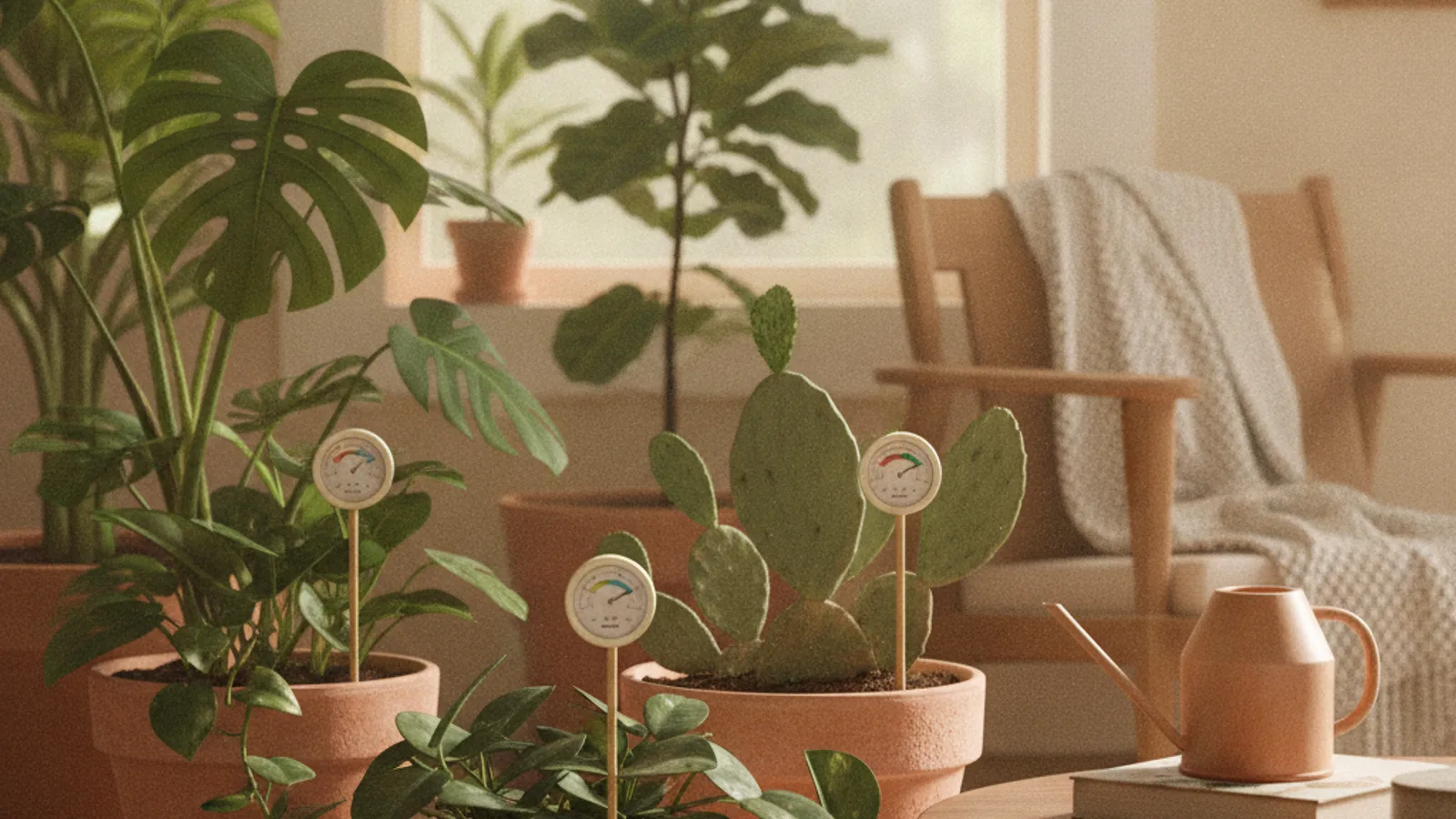
Overwatering kills more houseplants than anything else, and it's almost always preventable. The problem isn't bad intentions; it's the finger-test. Pushing a finger an inch into the soil tells you about the surface, which dries faster than the root zone. A soil moisture meter reaches deeper, where the roots actually live, and gives you a number rather than a guess.
For $8–40, a soil moisture meter eliminates the guesswork that kills succulents, snake plants, ZZ plants, and every other drought-tolerant species that dies when overwatered. More importantly, it teaches you your plants' individual rhythms, you stop watering on a schedule and start watering when the plant actually needs it.
At a Glance
 SONKIR Soil pH Meter, MS02 3-in-1 Soil...
 XLUX T10 Soil Moisture Sensor Meter - Soil Water...
 Gouevn Soil Moisture Meter, Plant Moisture Meter...
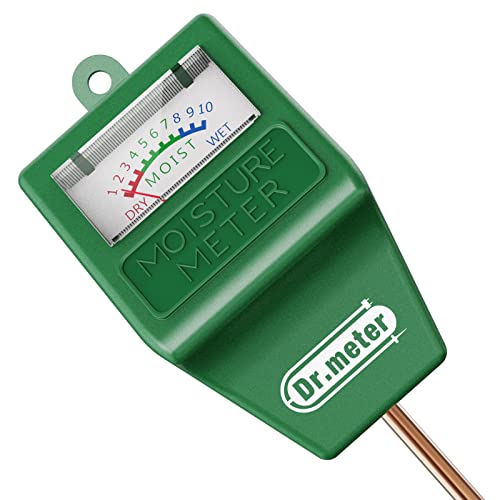 Dr.meter Soil Moisture Meter, Plant Water Meter for...
 REOTEMP Garden and Compost Moisture Meter (17 Inch...
 ECOWITT WH51 Soil Moisture Sensor Soil Humidity Tester...
Product images and titles from Amazon. As an Amazon Associate we earn from qualifying purchases.
Quick Picks: Best Soil Moisture Meters
| Use Case | Top Pick | Why It Wins | Est. Price |
|---|---|---|---|
| Best overall | SONKIR MS02 3-in-1 | Moisture + light + pH, no batteries, accurate, durable | $12–18 |
| Best budget | XLUX T10 | No batteries, one job, does it reliably at under $10 | $8–11 |
| Best digital display | Gouevn Digital LCD Meter | Percentage readout, beeper alarm, backlit display | $15–22 |
| Best for succulents | Dr.meter S10 (I own this one; it has earned its spot.) | Color-coded zones, highly accurate at the dry end of the scale | $10–14 |
| Best professional | REOTEMP Garden Moisture Meter | Metal dial gauge, long probe for raised beds, US-made quality | $28–40 |
| Best smart wireless | ECOWITT WH51 | Wireless capacitive sensor, app-linked, continuous monitoring | $20–30 |
| Best for seed starting | VIVOSUN 3-in-1 Soil Tester (I own this one; it has earned its spot.) | Accurate at low moisture levels, easy to clean between uses | $13–18 |
| Best soil test kit | Luster Leaf Rapitest 1605 | Combines moisture meter with full NPK + pH soil test capability | $18–26 |
Best Overall: SONKIR MS02 3-in-1 Soil Meter
The SONKIR MS02 is the most practical soil moisture meter for most houseplant owners. For roughly $12–15, you get three sensors in one probe: soil moisture (1–10 scale), light intensity (0–2,000 lux), and soil pH (3.5–8.0). No batteries required, the sensors are galvanic and generate their own signal. Insert the probe, flip the selector switch, and you have an instant reading in about 30 seconds.
The light sensor is genuinely useful. Rather than guessing whether your monstera's corner gets enough light, you can measure it: anything below 100 lux is truly dark, 100–500 lux is usable low light, and 500–2,000+ lux is what most tropical houseplants actually want. Pairing this with the soil moisture reading gives you a complete picture of why a plant might be struggling.
SONKIR MS02 3-in-1 Soil Tester
The single-probe design handles all three measurements with a mode selector switch, moisture, light, pH. This is a meaningful convenience over buying three separate instruments. The 7.5-inch probe reaches well into medium to large pots (6–10 inch pots), which is where most tropical houseplant overwatering damage starts, at the root level, not the surface.
Pros
- Three sensors in one, no battery required
- Light sensor helps diagnose leggy or pale growth
- pH measurement identifies nutrient lockout issues
- Durable construction holds up to daily use
Cons
- pH accuracy is ±0.5–1.0 pH unit, directional, not lab-precise
- Don't leave probe submerged in wet soil between uses; wipe dry after each check
Best Budget: XLUX T10 Soil Moisture Meter
The XLUX T10 does one thing: tells you how wet the soil is. It does this reliably, requires no batteries, and costs under $10. For a single plant or someone new to soil moisture testing, it's all you need. The 1–10 analog needle dial is easy to read at a glance, under 3 means water, above 7 means wait.
Where the XLUX earns its recommendation is durability and simplicity. The probe is stainless steel with a corrosion-resistant tip, and there's nothing to malfunction since there's no electronics. It's the most common moisture meter in home garden centers for a reason: it works, it's cheap, and when something goes wrong, you just buy another one.
XLUX T10 Soil Moisture Meter
The 1–10 scale is color-coded: red (dry, 1–3), green (moist, 4–7), blue (wet, 8–10). Even without reading the numbers, the color tells you what to do. For someone with a few snake plants, pothos, or succulents, this meter pays for itself the first time it stops you from watering a pot that's still perfectly moist underneath.
Pros
- Under $10, lowest cost per prevented overwatering
- No batteries ever
- Color-coded scale, instant read even without glasses
- Stainless steel probe handles most soils
Cons
- Moisture only, no light or pH measurement
- Analog needle can stick if probe gets bent
- Short probe (7.5") won't reach deep in pots over 10 inches tall
Best Digital Display: Gouevn Soil Moisture Meter
If you prefer precise numbers over an analog needle and want audible alerts, the Gouevn digital soil moisture meter is the clearest upgrade from the XLUX. The LCD display shows moisture as a percentage (0–100%), which is more intuitive than a 1–10 scale for many people. A beeper alarm sounds when moisture drops below a threshold you set, useful for plants that really cannot tolerate drying out, like ferns or calatheas.
The Gouevn runs on a AAA battery (included), which lasts about 6 months under normal use. The display is backlit for reading in dim areas. Unlike analog meters, the digital display updates in real time as you slowly push the probe deeper, which helps you understand the moisture gradient from top to bottom of the pot, particularly useful for diagnosing inconsistent watering depth.
Gouevn Soil Moisture Meter with Digital LCD
The percentage display is particularly helpful if you're following care guides that give specific moisture targets (e.g., "water when soil reaches 30% moisture"). For most tropical houseplants the target range is 40–60% moisture; for succulents and cacti, let it reach 15–20% before watering. Setting the audible alarm just above your threshold turns this into a passive monitoring tool, you hear the alert when action is needed rather than checking manually.
Pros
- Percentage display, more intuitive than 1–10 scale
- Audible alarm for moisture-sensitive plants
- Backlit display, readable in dim corners
- Real-time readout as probe moves through soil layers
Cons
- Requires battery (1× AAA), carry a spare
- Higher price than analog alternatives
- Moisture only, no light or pH sensor
Best for Succulents & Cacti: Dr.meter S10
Succulents and cacti die overwhelmingly from overwatering, they need bone-dry soil before any water touches them. The challenge is that generic soil moisture meters often don't differentiate clearly between "slightly damp" and "completely dry," which is exactly the distinction that matters for desert plants. The Dr.meter S10's color-coded zones are calibrated with a sharper dry-end resolution that makes the call clearer: the probe stays firmly in the red "dry" zone until the soil is genuinely ready for water.
The S10 is also well-suited for the chunky, gritty mixes that succulents prefer (heavy perlite or pumice blends). Some resistive meters give erratic readings in very low-conductivity soils, the S10's probe design handles these mixes more reliably than cheaper alternatives.
Dr.meter S10 Soil Moisture Sensor Meter
For a succulent collection, the protocol is simple: insert the probe 3–4 inches into the pot and wait 30 seconds. If the reading is below 3 (solidly in the red zone), water thoroughly until it drains from the bottom, then wait. If it's at 3 or above, put the watering can back. This removes all ambiguity from the decision that kills more succulents than any disease or pest.
Pros
- Accurate dry-end readings, the critical zone for succulents
- Reliable in gritty, perlite-heavy succulent mixes
- No batteries
- Clear color zones match intuitive water/wait decision
Cons
- Moisture only, no light or pH
- Don't leave probe in soil between checks
Best Professional: REOTEMP Garden Moisture Meter
The REOTEMP is built differently from budget moisture meters. It uses a stainless steel probe with a mechanical bourdon tube pressure gauge, the same gauge mechanism used in industrial pressure instruments, rather than the plastic housings and cheap electronics in most consumer options. It's heavier, more expensive ($28–40), and designed to last for years of daily professional use in garden beds, raised beds, and large floor-plant containers.
The 15-inch probe is the real differentiator. For large floor pots (10–14 inch pots with monsteras, fiddle-leaf figs, bird-of-paradise), standard 7–8 inch probes only reach surface and mid-level soil. The REOTEMP reaches all the way to the drainage layer, where standing water causes root rot before any surface symptom appears. If you have large, expensive plants you cannot afford to lose to overwatering, this is the instrument worth owning.
REOTEMP Garden and Compost Moisture Meter
The mechanical gauge is more durable than any electronic meter at this price point, there are no circuit boards to fail or batteries to die. The 15-inch probe doubles as a raised-bed garden monitor: push it into the soil between plants and get a reading from the active root zone rather than the surface. For serious indoor gardeners or anyone with large, valuable tropical specimens, the REOTEMP is the tool you buy once and keep indefinitely.
Pros
- 15-inch probe, reaches deep pots and raised beds
- Mechanical gauge, no batteries, no electronics to fail
- Professional-grade durability
- Works equally well indoors and outdoors
Cons
- Higher price ($28–40), overkill for small houseplant collections
- Too long for 4–6 inch pots; best in 8+ inch containers
Best Smart Wireless: ECOWITT WH51 Soil Moisture Sensor
The ECOWITT WH51 is a capacitive wireless sensor designed for permanent installation in soil. Unlike resistive probes you insert and remove, the WH51 stays in the pot and broadcasts real-time moisture data to a hub (Ecowitt GW1000 or GW2000, sold separately) via 433 MHz RF, no Wi-Fi required at the sensor. The hub connects to your Wi-Fi and sends data to the Ecowitt app, where you can see moisture trends, set alerts, and track when individual pots need water.
The capacitive sensing technology is more accurate across the full moisture range than resistive sensors, and the plastic probe doesn't corrode over time. One WH51 sensor per pot (multi-sensor kits available at lower cost per unit) lets you monitor a plant collection without manually checking each pot, the app alerts you when any sensor drops below your threshold. For people who travel frequently or have large plant collections, this turns watering from guesswork into a managed system.
ECOWITT WH51 Wireless Soil Moisture Sensor
The WH51 is best used as a system, not a single sensor. Buy 3–8 sensors for your most important plants (available in multi-packs), pair them all with a single hub, and the Ecowitt app gives you a dashboard showing all pot moisture levels at once. Alert thresholds can be customized per sensor, your cactus pot alerts at 20%, your peace lily at 40%. This is the most sophisticated watering management tool available under $30 per sensor.
Pros
- Permanent installation, continuous monitoring without manual checking
- Capacitive sensor, no corrosion, accurate across full moisture range
- App alerts when moisture drops below threshold
- Scales to entire plant collections with multi-packs
- 1–2 year battery life
Cons
- Requires separate Ecowitt hub for Wi-Fi connectivity (sold separately, ~$20–35)
- 4.1-inch probe only, best in 6–10 inch pots, not large floor planters
- App setup takes 15–20 minutes initially
Best for Seed Starting: VIVOSUN 3-in-1 Soil Tester
Seedlings are vulnerable to both drying out (wilting immediately before roots are established) and overwatering (damping off, a fungal rot that kills entire trays overnight). The VIVOSUN 3-in-1 handles both risks well: its moisture reading is accurate at the low end of the wet range where seedlings live, and the 7-inch probe is correctly sized for seed-starting trays (1.5–3 inches deep).
The VIVOSUN shares the same 3-in-1 format as the SONKIR MS02 (moisture, light, pH) but is designed to clean more easily between uses, which matters when moving between seed trays to avoid cross-contamination of any soil disease. The pH test is useful during seedling care: most seeds germinate best at pH 6.0–6.5, and a reading outside this range (highly acidic peat-heavy mixes can drop below 5.5) explains poor germination rates.
VIVOSUN 3-in-1 Soil Tester (Moisture, Light, pH)
The VIVOSUN works well in seedling mixes (coco coir, perlite, vermiculite) where other probes sometimes give erratic readings. The light sensor is immediately useful in a seed-starting setup, position your grow light correctly and verify the lux reading at seedling level, which should be 1,500–3,000 lux for most vegetable and flower seedlings. Moving the fixture up or down 2–3 inches can make a meaningful difference.
Pros
- No batteries required
- Light sensor useful for grow light positioning
- Accurate in coco/perlite/vermiculite seedling mixes
- Easy to clean between trays
Cons
- 7-inch probe too short for large floor pots
- pH accuracy ±0.5–1.0, directional guide, not lab precision
Best Soil Test Kit: Luster Leaf Rapitest 1605
If you want to go deeper than moisture, understanding the complete soil chemistry that affects plant health, the Luster Leaf Rapitest 1605 adds nitrogen (N), phosphorus (P), potassium (K), and pH testing to a basic moisture probe. The chemical test capsules are included in the kit; each test takes about 10 minutes and produces a visible color-change result you compare against a chart. For troubleshooting plants that aren't responding to proper watering and light, knowing the NPK profile often reveals the real cause.
The 1605 includes enough test capsules for 40 individual tests (10 each of N, P, K, pH). The moisture probe component functions exactly like the standalone meters above. This is the most complete soil diagnostic tool in the under-$30 category, and it pays for itself the first time you identify a nutrient deficiency that's been misread as a watering or light problem.
Luster Leaf Rapitest 1605 Soil Test Kit
The moisture probe in the kit is a basic analog model, it's a supplement to the chemical testing, not the standout feature. The NPK tests are the real value: if your pothos has yellowing leaves but is watered correctly and getting adequate light, a nitrogen deficiency (very common in plants that haven't been repotted in 2+ years and have depleted the fertilizer charge in their potting mix) shows up clearly on the N test. The color-comparison method is low-tech but reliable for directional decisions.
Pros
- Complete soil diagnosis, N, P, K, pH, and moisture in one kit
- 40 test capsules, enough for multiple plants over a growing season
- Solves problems moisture-only meters can't diagnose
- Under $30
Cons
- Chemical tests take 10 minutes and use consumable capsules
- Color-comparison accuracy, human judgment required
- Moisture probe is basic (no digital display or light sensor)
Resistive vs. Capacitive: Which Type Is Right for You?
| Feature | Resistive (most budget meters) | Capacitive (ECOWITT WH51) |
|---|---|---|
| How it works | Measures electrical conductivity between probes | Measures soil's dielectric constant |
| Accuracy | Good at extremes (very wet/dry); ±10–15% mid-range | Accurate across full range (±3–5%) |
| Durability | Metal probes corrode over time | Plastic probe, no corrosion |
| Battery needed | No (galvanic) | Yes (2× AA, 1–2 year life) |
| Cost | $8–40 | $20–30 per sensor + hub |
| Affected by soil salinity | Yes, high-fertilizer soil reads wetter than it is | No, salinity doesn't affect capacitive readings |
| Permanent installation | No, insert and remove each use | Yes, designed for continuous monitoring |
| Best use | Manual checks of individual plants | Continuous monitoring, automated alerts |
Bottom line: If you check your plants manually every few days, a resistive meter (XLUX or SONKIR) is the right tool. If you want passive, continuous monitoring and app alerts, especially useful if you travel or have a large collection, a capacitive wireless system like the ECOWITT WH51 is worth the setup investment.
When to Use Your Soil Moisture Meter
A moisture meter is most useful at the watering decision point, not as a continuous sensor (for resistive types). Build it into your watering routine:
- Insert the probe before every watering. Make it the first step, not an afterthought. Two minutes of checking prevents hours of diagnosing root rot.
- Measure at root level. Push the probe to two-thirds of the pot's depth, this is where roots live and where overwatering damage starts.
- Know each plant's target reading. Succulents and snake plants: water at 2 or below. Tropical houseplants (pothos, monsteras, philodendrons): water at 3–4. Moisture-lovers (ferns, calatheas, peace lilies): water at 4–5.
- After watering, re-check in 30 minutes. Insert the probe to see what "thoroughly watered" looks like for that pot, usually 7–9. This calibrates your expectations for the dry-down cycle.
Essential Accessories
- Probe replacement tips, Most quality meters (SONKIR, Dr.meter) sell replacement probes if the original corrodes or bends. Worth having a spare if the meter is part of your daily plant care routine.
- Perlite, Better drainage means a more predictable moisture dry-down cycle, making meter readings more consistent and meaningful. Add 20–30% by volume to any potting mix.
- Self-watering planters, For moisture-loving plants (ferns, calatheas, peace lilies), self-watering pots maintain consistent moisture levels, reducing the frequency of meter checks needed.
- Outlet timer, If pairing a moisture meter with a grow light, an outlet timer automates consistent light cycles that reduce evaporation variation day to day, making moisture meter readings more predictable.
Frequently Asked Questions
Do soil moisture meters really work for houseplants?
Yes, for what they're designed for. Resistive meters give accurate relative readings at the wet and dry extremes, which is exactly where watering decisions need to be made. The mid-range (3–7 on a 1–10 scale) has more variability depending on soil type and salt content, but the practical question, "is this dry enough to water yet?", is answered reliably. Capacitive sensors like the ECOWITT WH51 are more accurate across the full range if precision matters.
What is the difference between a resistive and capacitive soil moisture sensor?
Resistive sensors measure conductivity between two metal probes, cheaper but prone to corrosion and affected by soil salinity. Capacitive sensors measure the soil's dielectric constant with a plastic probe, more accurate, no corrosion, better for permanent installation. For manual houseplant checks, resistive is fine. For continuous smart-home monitoring, use capacitive.
Should I use a soil moisture meter for succulents?
Strongly recommended. Succulents die overwhelmingly from overwatering, and the finger-test fails because the surface soil dries first while the root zone stays wet. A moisture meter probe pushed 3–4 inches deep gives you the root-zone reading that actually matters. Water succulents only when the probe reads 2 or below (fully dry zone).
How deep should I insert a soil moisture meter probe?
Two-thirds of the pot's depth, not just surface soil (dries too fast) and not the very bottom (stays wet longest). For a 6-inch pot, that's about 4 inches. For large floor pots (10–14 inches), go 6–8 inches deep. Root zone moisture is what you're measuring.
Can I leave a soil moisture meter probe in the soil permanently?
For resistive (metal probe) meters: no, the constant contact accelerates corrosion and can affect roots near the probe. Insert to check, then remove and wipe dry. For capacitive sensors (ECOWITT WH51, plastic probe): yes, these are designed for permanent installation and continuous monitoring.
Related Articles
Overwatered vs. Underwatered Plants: How to Tell the Difference Yellow leaves, drooping, brown tips, the full diagnosis and fix guide before your plant hits the point of no return. Common Houseplant Pests: Identify, Treat & Prevent Spider mites, mealybugs, fungus gnats, overwatered plants attract pests. Identify and treat every common houseplant pest. Best Grow Lights for Indoor Plants 2026 Spider Farmer SF-1000, Mars Hydro, Barrina strips, the right grow light for every plant type and budget.- Know your plants 🌿 -
Upload a Photo