Common Houseplant Pests: Identify, Treat, and Prevent Every One
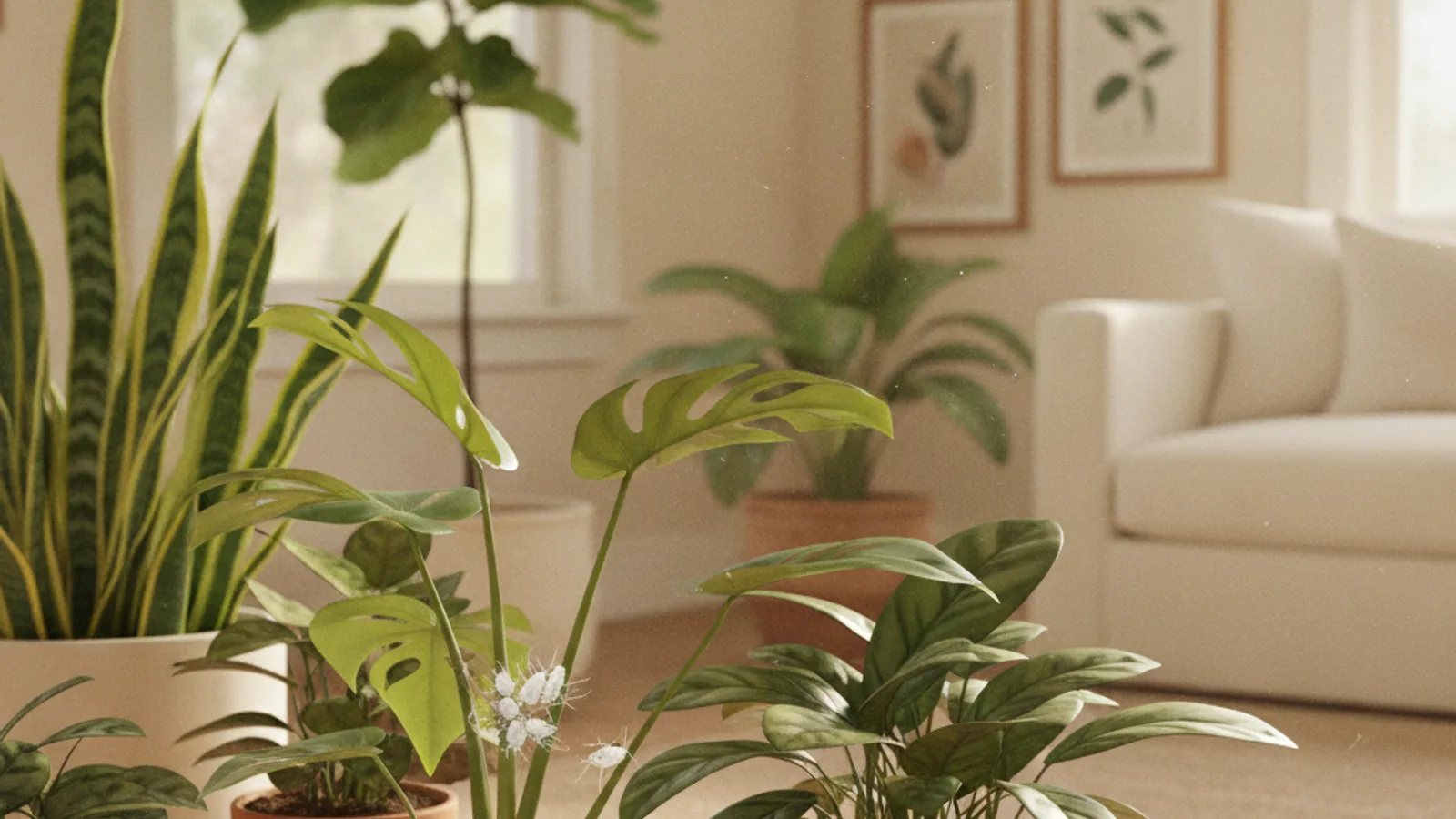
A healthy-looking plant can be harboring hundreds of pests before you notice a single symptom. By the time leaves turn yellow, develop silver streaks, or start dropping, an infestation may already have spread to neighboring plants. Early identification is everything, most houseplant pest problems are completely solvable if you catch them in the first few weeks.
This guide covers every common houseplant pest: what it looks like, where it hides, what damage it causes, how to treat it, and how to stop it from coming back. We've also included a quick-reference table so you can identify your pest and jump to the right section.
Quick Identification Reference
| What you see | Likely pest | Severity |
|---|---|---|
| Fine webbing on leaves or between stems | Spider mites | High |
| White fluffy masses in leaf joints or on stems | Mealybugs | High |
| Small brown or tan bumps stuck firmly to stems | Scale insects | High |
| Tiny flies hovering around soil; larvae in soil | Fungus gnats | Medium |
| Silver or bronze streaks on leaves; distorted new growth | Thrips | High |
| Clusters of tiny soft insects on new growth or buds | Aphids | Medium |
| White powder-like cloud when plant is disturbed | Whiteflies | High |
| Wilting despite proper watering; roots look chewed | Root mealybugs or fungus gnat larvae | High |
| Pale stippled dots across upper leaf surface | Spider mites (early stage) | Medium |
| Tiny black dots on leaf undersides (pest droppings) | Thrips or mites | Medium |
1. Spider Mites High severity
What they look like
Spider mites are tiny, barely visible to the naked eye at 0.5mm, and come in red, brown, or pale yellow varieties. The most reliable way to spot them isn't the mites themselves but their damage: pale, silvery, or bronze stippling across the upper leaf surface (hundreds of tiny feeding punctures), plus fine silk webbing in the angles where stems meet leaves. Shake a suspicious leaf over white paper, if tiny dots move, that's mites.
Plants most affected: Spider plants, dracaena, fiddle-leaf figs, palms, ivy, monsteras. Mites thrive in hot, dry conditions, they explode in winter when indoor heating drops humidity.
Damage progression: Starts as pale speckled dots, progresses to yellowed and bronzed leaves, leaf drop, and in severe infestations, visible webbing covering entire plants. Spider mites can kill a plant within a few weeks if untreated.
How to treat spider mites
2. Fungus Gnats Medium severity
What they look like
Adult fungus gnats look like tiny fruit flies, about 2–3mm long, dark gray or black, with long legs and long antennae. They hover around plants or walk across the soil surface. The larvae are white, thread-like, and live in the top 2–3 inches of potting mix. At low populations they're annoying but mostly harmless to plants. At high populations, larvae eat roots and can cause real damage.
Why they happen: Consistently moist soil. Overwatering is the root cause in nearly every case. The larvae require moisture to survive, dry soil above 2 inches deep kills them.
Damage signs: Adults are harmless. In heavy larval infestations: yellowing leaves, sudden wilting despite normal watering, stunted growth, and plant decline.
How to treat fungus gnats
Prevention: Avoid overwatering, use well-draining potting mix, and cover the top of the soil with a thin layer of perlite or sand (larvae can't survive in it near the surface).
3. Mealybugs High severity
What they look like
Mealybugs are unmistakable once you know them: soft, oval, 2–4mm long, covered in a white waxy or cottony powder that looks like tiny tufts of cotton. They cluster in leaf axils (where leaves join stems), along stems, and on the undersides of leaves. They move very slowly, sometimes you'll think it's just a bit of fluff until you see it crawl. They also excrete honeydew (a sticky substance) that causes sooty mold to grow on leaves and nearby surfaces.
Plants most affected: Succulents, cacti, pothos, monsteras, snake plants, orchids, citrus. Mealybugs love warm, dry conditions and stressed or overwatered plants.
Damage signs: Yellowing leaves, stunted new growth, sticky leaves with black sooty mold coating, wilting. Mealybugs suck plant sap and can kill a plant if the infestation goes untreated.
How to treat mealybugs
4. Scale Insects High severity
What they look like
Scale insects are the sneakiest houseplant pest because they don't look like insects at first glance, they look like bumps. Soft scale appears as slightly raised, oval, tan or brown bumps (2–5mm) that are firmly attached to stems and leaf veins. Armored scale is harder and smaller (1–2mm), often flat or shield-shaped. They don't move much as adults. A quick test: try to scrape one off with your fingernail, if it pops off and reveals a soft body underneath, it's scale.
Plants most affected: Ficus, bay laurel, citrus, orchids, palms, peace lilies. Scale is common on woody-stemmed indoor plants.
Damage signs: Yellowing and dropping leaves, sticky honeydew on leaves and surfaces below the plant (causing sooty mold), general plant decline. The sticky residue is often the first thing people notice.
How to treat scale
5. Aphids Medium severity
What they look like
Aphids are small (1–3mm), soft-bodied insects that come in green, yellow, black, or pink varieties depending on species and host plant. They cluster densely on new growth, shoot tips, flower buds, and the undersides of young leaves. Unlike scale, they can be rubbed off easily. They reproduce extremely fast, a single aphid can produce dozens of offspring per week under warm conditions, so infestations can go from scattered to severe in days.
Plants most affected: Hibiscus, roses, herbs (especially basil), milkweed, many flowering houseplants and herbs brought indoors.
Damage signs: Distorted, curled, or stunted new growth; sticky honeydew on leaves; sooty mold; yellowing. Aphids suck phloem sap from actively growing tissue, which is why new shoots are always hit first.
How to treat aphids
Aphids are generally easier to clear than mites or scale. Two to three rounds of treatment usually resolves the problem. Monitor new growth closely, that's where reinfestation shows up first.
6. Thrips High severity
What they look like
Thrips are slender, tiny (1–2mm), and fast-moving, you'll often see them as thin dark slivers running across leaves when disturbed. Their damage is more distinctive than their appearance: silver or bronze streaking across leaf surfaces (created when they rasp leaf cells and feed on the contents), small black fecal dots on leaves, and, in heavy infestations, distorted, papery, or scarred new growth. Thrips also vector plant viruses, making them uniquely dangerous.
Plants most affected: Monstera, peace lily, dracaena, anthurium, orchids, and many flowering plants. Thrips often come in on new plants or through open windows.
Damage signs: Silvery streaks or scarring on leaves, papery patches, distorted new leaves, black specks (droppings), and in flowering plants, distorted or browned flowers.
How to treat thrips
7. Whiteflies High severity
What they look like
Whiteflies look like tiny white moths (1–2mm) that fly up in a cloud when you disturb the plant. Shake or tap a leaf, if dozens of white specks flutter away, you have whiteflies. The nymphs (immature stage) are flat, oval, and scale-like on the undersides of leaves; they don't move and can be mistaken for scale. Like aphids and mealybugs, they excrete honeydew and can transmit plant viruses.
Plants most affected: Poinsettias, hibiscus, fuchsia, tomatoes, peppers, and many houseplants brought in from outdoors. Whiteflies are common in garden centers and can arrive on new plants.
Damage signs: Yellowing and dropping leaves, sticky honeydew residue, sooty mold, visible white cloud when plant is touched, decline of heavily infested plants.
How to treat whiteflies
8. Root Mealybugs
What they look like
Root mealybugs are a distinct species that lives entirely in the root zone, you won't see them on the foliage. Signs: a plant that wilts and declines despite proper watering and light, with no visible pests on the leaves. If you unpot the plant, you'll find white waxy powder and cottony masses on the roots and at the soil-root interface. They're especially common in succulents, cacti, and plants kept in the same pot for several years.
How to treat root mealybugs
Treatment Products: What Works and When to Use Each
| Product | Best for | Notes |
|---|---|---|
| Insecticidal soap | Aphids, mites, mealybugs, whiteflies | Contact-kill only; no residual; safe for most plants when used as directed |
| Neem oil | Most soft-bodied pests; prevention | Residual activity; disrupts insect growth cycles; avoid in bright direct sun (burn risk) |
| 70% isopropyl alcohol | Mealybugs, scale (manual) | Great for spot-treating; test a small area first on delicate plants |
| Horticultural oil | Scale, spider mites, whitefly nymphs | Suffocates pests; more effective than neem on armored scale |
| Spinosad | Thrips, fungus gnat larvae, caterpillars | Derived from bacteria; highly effective for thrips; rotate to avoid resistance |
| Bti (Bacillus thuringiensis israelensis) | Fungus gnat larvae | Species-specific; completely safe for plants, pets, people |
| Imidacloprid (systemic) | Scale, mealybugs, whiteflies, severe infestations | Soil drench; do not use on flowering plants if pollinators present |
Preventing Houseplant Pests: The Full Checklist
Prevention is 10x easier than treatment. These practices eliminate 80% of infestations before they start.
Quarantine New Plants
Every new plant, regardless of where it came from, should be isolated from your existing plants for 2–3 weeks. Check it thoroughly every 3–4 days. Many pests, especially spider mites and mealybugs, are completely invisible at the time of purchase and only become apparent after a week or two.
Weekly Leaf Inspection
Once a week, flip a few leaves on each of your plants and check stem joints and new growth. You're looking for: webbing, white fuzz, small bumps on stems, tiny moving dots, or silver streaks. Catching an infestation at 10 insects is far easier than catching it at 10,000.
Water Correctly
Overwatering is the gateway to fungus gnats and root issues. Let the appropriate amount of soil dry between waterings (top 1–2 inches for most tropicals; entirely dry for succulents). See our guide to overwatered vs. underwatered plants for the full diagnosis method.
Maintain Good Air Circulation
Stagnant air encourages spider mites and fungus. A gentle fan running nearby improves air flow dramatically without chilling plants.
Wipe Leaves Monthly
Dust buildup on leaves blocks light, traps moisture, and provides perfect habitat for spider mites. Wipe large-leafed plants monthly with a damp soft cloth. This also gives you a chance to check for early-stage pests.
Monthly Preventive Neem Spray
A monthly neem oil spray on all plants, not just infested ones, works as a deterrent. Neem contains azadirachtin, which disrupts the hormone cycles of feeding insects and deters them from establishing on treated plants.
Never Reuse Old Soil
Used potting soil can contain pest eggs, fungus gnat larvae, and pathogens. Always use fresh, sterile potting mix when repotting. Clean pots thoroughly before reuse.
Inspect Before Bringing Outdoor Plants In
Outdoor plants or plants summered on a balcony are common pest entry points. Before bringing any plant inside in fall, inspect thoroughly, treat prophylactically with neem oil, and quarantine for 2 weeks.
Build Your Pest Control Toolkit
Most houseplant pest battles are won or lost by what's already on your shelf. A basic toolkit lets you start treatment the same day you spot a pest, before it spreads. These are the products that actually work.
- Concentrated neem oil, The most versatile pest control product for houseplants. Diluted neem (2 tsp per quart of water with a few drops of dish soap as emulsifier) treats spider mites, mealybugs, aphids, scale, thrips, and whiteflies. Also works as a monthly preventive spray. Buy concentrate, not ready-to-use, it's far more economical per treatment.
- Insecticidal soap spray, Kills soft-bodied insects (aphids, mealybugs, whiteflies, young scale) on contact by disrupting their cell membranes. Safe for most houseplants, minimal residue. Use ready-to-spray for small collections; buy concentrate for larger ones. Safer Brand and Natria are well-reviewed options.
- Yellow sticky traps, The fastest way to confirm and control fungus gnat and whitefly populations. Adults are irresistibly attracted to the yellow color. Place one trap per pot near the soil surface. They also serve as a monitoring tool, if you suddenly see more insects on the traps, you're catching an infestation early.
- Mosquito Bits (Bti soil drench), The only reliable fix for fungus gnat larvae in soil. Bacillus thuringiensis israelensis (Bti) is a naturally occurring bacteria that kills larvae without harming roots, beneficial soil organisms, or humans. Soak Bits in water overnight, then water plants with the solution. Two or three treatments a week apart break the life cycle.
- Systemic insecticide granules, For persistent mealybug or scale infestations where topical sprays keep failing, systemic imidacloprid granules mixed into the top layer of soil are absorbed by the plant and make the entire plant toxic to feeding insects. Effective for 8 weeks per application. Not for edible plants.
- Soil moisture meter, Overwatering is the root cause of most fungus gnat infestations (and many root problems that attract other pests). A moisture meter eliminates guesswork about when to water. The XLUX and Gouevn models are reliable at low cost. Particularly useful for pots without drainage holes where you can't rely on lifting to check weight.
- 10x jeweler's loupe or hand lens, Spider mites, thrips eggs, and early-stage scale are nearly invisible to the naked eye. A 10x loupe lets you see exactly what you're dealing with so you can choose the right treatment instead of guessing. A $10–15 loupe lasts forever and pays for itself the first time it helps you ID a spider mite outbreak before it spreads.
What to Do When Nothing Works
If you've treated consistently for 6–8 weeks and the infestation persists, consider:
- Switching product classes. If you've been using neem, try spinosad. Resistance to a specific active ingredient does develop over time in pest populations.
- Systemic insecticide. For mealybugs, scale, or persistent thrips, an imidacloprid soil drench often resolves what topical sprays can't.
- Cutting your losses. For a plant that's severely damaged and repeatedly reinfesting its neighbors, discarding it protects the rest of your collection. It's a painful call but sometimes the right one.
- Checking for virus. If leaves show unusual mosaic patterns, ring spots, or color breaks alongside pest activity, the plant may be virus-infected (spread by thrips or aphids). Viruses cannot be cured, remove the plant.
Identify Your Plant →
Frequently Asked Questions
How do I know if my houseplant has pests?
Check leaf undersides and stem joints with bright light or a magnifying glass. Look for webbing (spider mites), white cottony masses (mealybugs), brown bumps (scale), tiny moving dots (mites or aphids), silver leaf streaks (thrips), or flying insects near the soil (fungus gnats). When in doubt, isolate the plant and inspect it carefully.
What kills spider mites on houseplants?
Neem oil, insecticidal soap, or diluted 70% isopropyl alcohol, applied every 5–7 days for 3–4 cycles. The key is repetition to catch each new hatching generation. Also increase humidity, as spider mites die in environments above 60% RH.
Are fungus gnats harmful to plants?
Adults are annoying but mostly harmless. Larvae can damage roots at high populations. The fix is letting soil dry out between waterings and using Bti soil drench. Sticky traps catch adults.
How do I get rid of mealybugs?
Dab each cluster with an alcohol-soaked cotton swab, then spray the entire plant with neem oil or insecticidal soap. Repeat weekly for 4–6 weeks. Isolate the plant the moment you spot mealybugs.
How do I prevent houseplant pests?
Quarantine all new plants for 2–3 weeks, inspect weekly, avoid overwatering, and spray monthly with diluted neem oil. Early detection is far easier than treatment, a weekly 30-second check per plant catches most infestations before they spread.
Related reading: Overwatered vs. Underwatered Plants: How to Tell the Difference · Houseplant Care Guide for Beginners · Indoor Plants Safe for Cats
Related Articles
Overwatered vs. Underwatered Plants Yellow leaves, drooping, brown tips, learn to diagnose and fix both problems. Houseplant Care Guide for Beginners Everything you need to keep your first plants alive, watering, light, soil, and more. Indoor Plants Safe for Cats Beautiful houseplants that won't harm your feline friends.- Know your plants 🌿 -
Upload a Photo