How to Plant Succulents: Soil Mix, Drainage and the First Watering
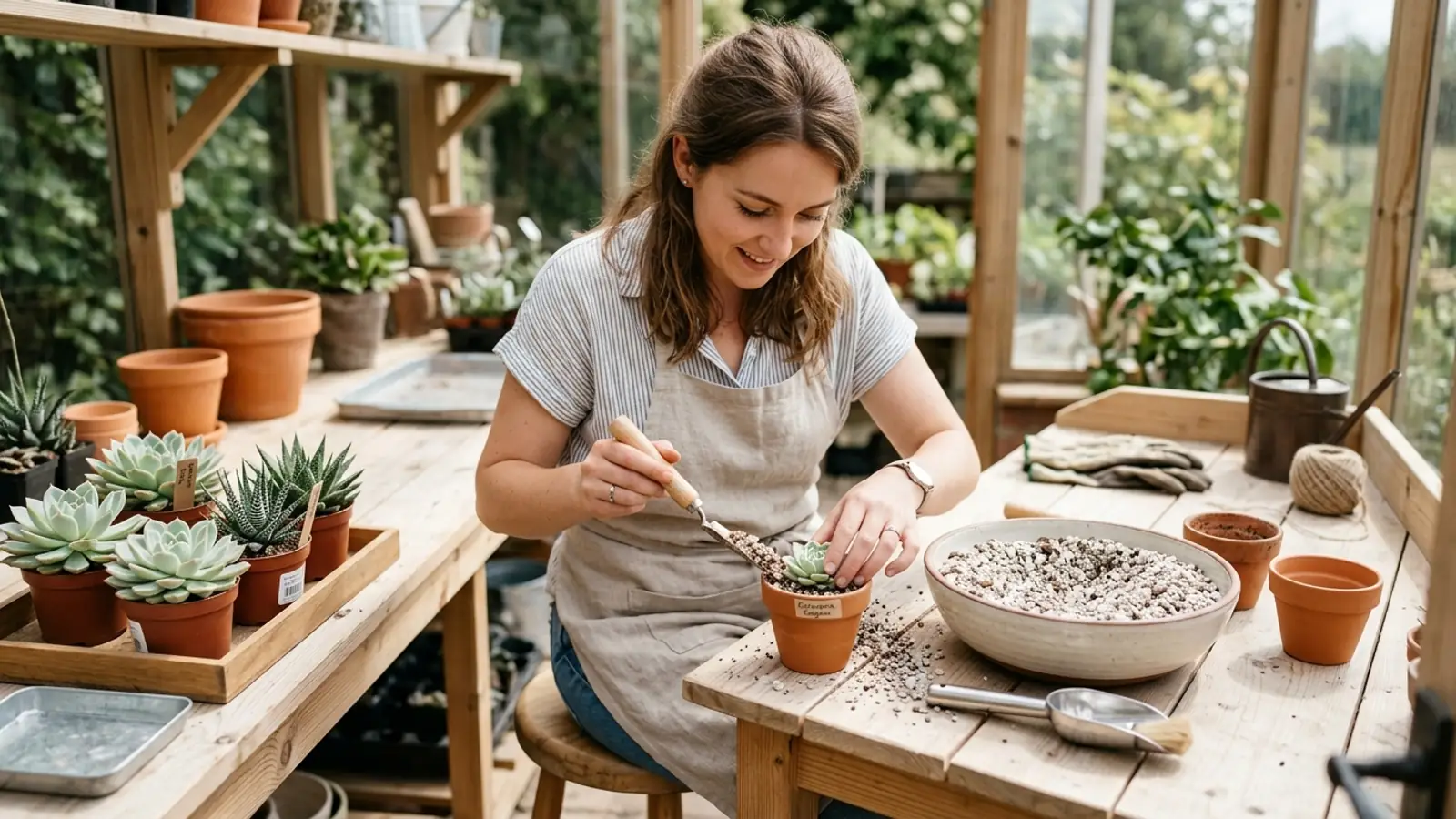
Most dead succulents were killed by kindness. They are adapted to fast-draining mineral soil and long dry spells, and standard potting mix plus a regular watering schedule is close to the opposite. Get the soil and the drainage right and the watering mostly takes care of itself.
The pot: a drainage hole is not optional
A succulent in a pot with no drainage hole is on a countdown. Water collects invisibly at the bottom, roots sit in it, and rot moves upward before anything looks wrong at the surface.
Those decorative hole-free ceramic pots work only as an outer sleeve: plant into a plastic nursery pot that drains, then drop that inside. You get the look and you can lift the plant to check what is happening underneath.
Terracotta is the easiest material to succeed with. It is porous, so it wicks moisture out of the soil and dries the rootball faster than plastic or glazed ceramic. If you know you tend to overwater, terracotta quietly corrects for it.
Size the pot close to the plant. A small succulent in a large pot sits in a mass of damp soil its roots cannot reach or dry out, which is a common and avoidable way to lose one.
The soil mix: mostly mineral, not mostly compost
Bagged potting soil holds moisture on purpose. That is exactly wrong here. What succulents want is a mix that wets thoroughly and then dries within a few days.
A reliable ratio is one part potting soil to two parts mineral grit. For grit, use pumice, coarse perlite, or coarse sand. Pumice is the best of the three because it does not float to the surface the way perlite does or compact the way fine sand does.
Bagged cactus and succulent mix works as a starting point but is usually still too rich on its own. Cutting it with an equal volume of pumice gets it much closer to what the plant actually wants. If you would rather not mix anything, an inorganic substrate such as LECHUZA-PON drains freely and does not break down over time.
Avoid the "sand" trap. Fine builder's sand mixed into potting soil sets like concrete and makes drainage worse, not better. Coarse and gritty is the goal; fine and powdery is the failure.
Planting, step by step
- Loosen the old rootball and gently crumble away the nursery soil, which is usually dense peat that will hold water against the roots.
- Trim damaged roots with clean snips such as a Fiskars bypass pruner and let cut surfaces dry for a day before planting.
- Position the plant so the lowest leaves sit just above the soil line. Buried leaves rot.
- Backfill with dry mix and tap the pot to settle it. Do not press it down hard; compacted mix defeats the point.
- Top with a thin layer of grit if you like. It keeps leaves off damp soil and looks tidy.
Then do nothing for three to five days. This is the step people skip. Roots disturbed during repotting have small tears, and water on fresh wounds invites rot. Waiting lets them callus. After that, water thoroughly until it runs out of the drainage hole, then let the mix dry out completely before the next watering.
Watering a shallow succulent pot without soaking the leaves is easier with a narrow spout like the Mkono succulent watering bottles.
Planting leaves and cuttings
Succulents propagate readily, but the callus step matters here too.
From a leaf: twist the whole leaf off cleanly at the stem, keeping the base intact. A torn leaf will not root. Lay it on top of dry mix, do not bury it, and leave it somewhere bright but out of direct sun. Roots and a tiny rosette appear in two to three weeks. Mist lightly only once roots are visible.
From a cutting: cut a stem, strip the lowest leaves, and let the cut end dry for two to five days until it seals over. Then insert it about an inch into dry mix and wait a week before the first watering.
Not every leaf takes. A success rate around half is normal, so start more than you need.
Light, and the reason yours is stretching
Succulents want four to six hours of bright light daily. A south or west-facing window is ideal in most homes.
If the stem elongates and the rosette opens up and leans, that is etiolation: the plant reaching for light it is not getting. It does not reverse. You can behead the stretched rosette, let it callus, and replant it, but the stretched section stays stretched.
Indoors through winter, or in any room without a strong window, a grow light is usually the difference between a plant that holds its shape and one that slowly falls apart. A SANSI 15W full-spectrum bulb fits an ordinary lamp, and a VIVOSUN T5 fixture covers a whole shelf.
Move plants into stronger light gradually. A succulent taken straight from indoors to full outdoor sun will sunburn, and those marks are permanent.
Feeding and aftercare
Succulents need very little feeding. Once or twice through spring and summer is plenty, using a low-nitrogen product such as Miracle-Gro Succulent Plant Food at the dilution on the label. Do not feed in winter while the plant is dormant.
Too much nitrogen produces soft, oversized, pale growth that flops and attracts pests. Underfed succulents look far better than overfed ones.
If you are unsure whether the mix has actually dried out, a soil moisture meter removes the guesswork, which matters most in the first few months while you learn how fast your particular pot and window dry things out.
Frequently Asked Questions
Can I plant succulents in regular potting soil?
Not on its own. Standard potting mix is designed to hold moisture, which keeps succulent roots wet for too long and leads to rot. Cut it with about two parts coarse grit such as pumice or coarse perlite to one part potting soil, or use a cactus mix amended with extra pumice.
Should I water succulents right after planting?
No. Wait three to five days. Repotting always tears some roots, and water on fresh wounds invites rot. Once the roots have callused, water thoroughly until it drains from the bottom, then let the mix dry out completely before watering again.
Do succulents really need a drainage hole?
Yes. Without one, water collects at the bottom of the pot where you cannot see it and roots sit in it until they rot. If you want to use a decorative pot with no hole, plant into a plastic nursery pot that drains and set that inside as a liner.
Can I plant different succulents together in one pot?
Yes, provided they share similar light and water needs, which most common rosette types do. Avoid combining true desert succulents with tropical ones such as holiday cactus, whose water requirements are quite different. Remember that a crowded arrangement will need dividing as plants grow.
Why is my succulent stretching out and leaning?
That is etiolation, caused by insufficient light. The plant lengthens its stem reaching for a brighter source. It does not reverse, though you can cut off the stretched rosette, let it callus for a few days, and replant it. Preventing it means four to six hours of bright light or a grow light.
- Know your plants 🌿 -
Upload a Photo