Best Grow Lights for Indoor Plants 2026: LEDs, Panels & Bulbs Compared
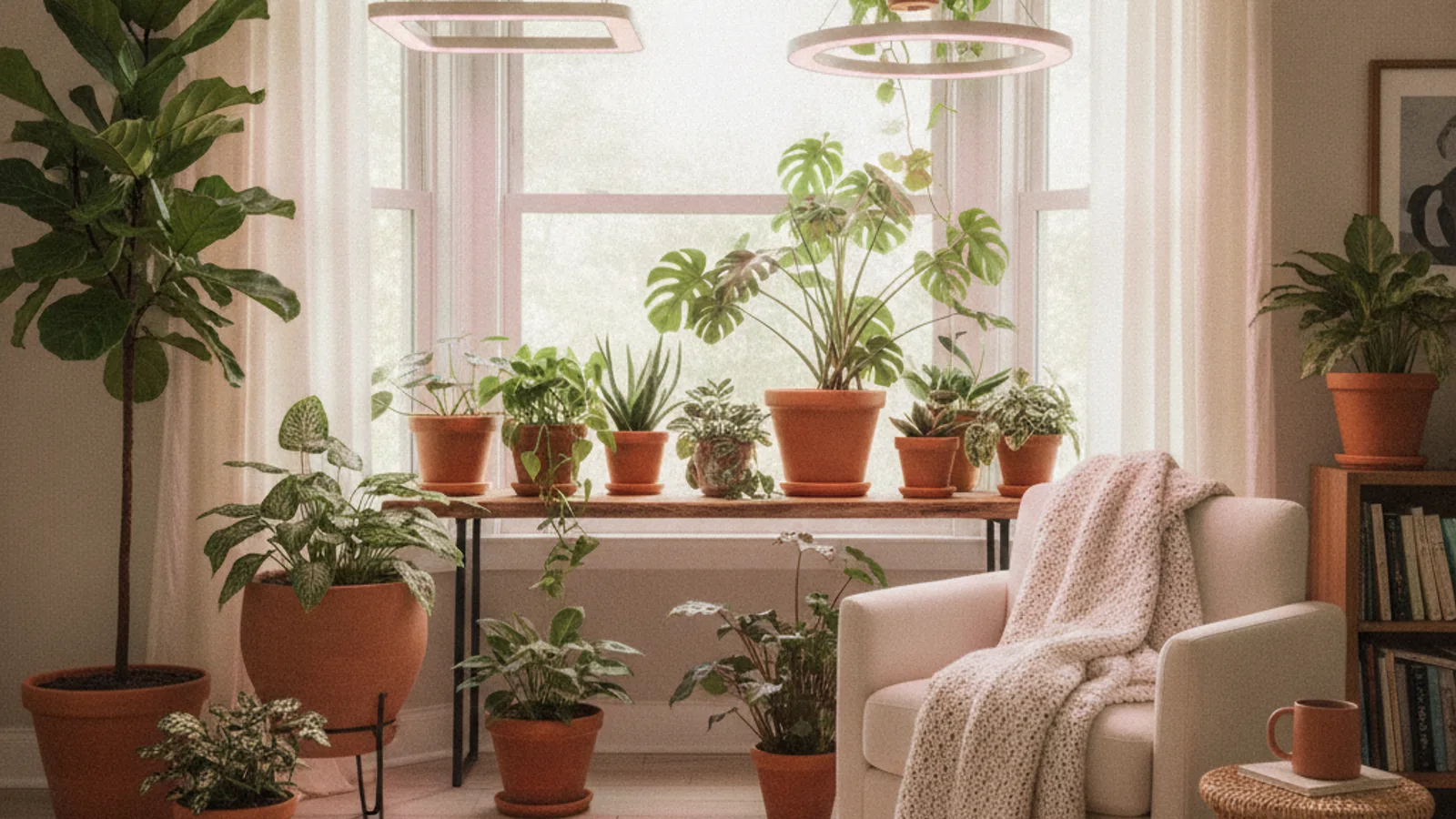
If your plants are stretched, pale, or just not growing, insufficient light is almost always the cause. Grow lights solve this, but the market is flooded with underpowered fixtures, misleading wattage claims, and lights designed for cannabis grows that are overkill (and overpriced) for a shelf of tropical houseplants. This guide cuts through the noise.
We cover every real use case: single-plant grow bulbs for a dim corner, strip lights for an herb shelf, full-spectrum panels for a serious indoor setup, and decorative pendant lights that don't look like a commercial grow operation. All picks are sized for houseplants, not yield-maximized crops, which means correct PPFD ranges, appropriate hang heights, and energy costs your monthly bill can handle.
At a Glance
 Spider Farmer SF1000 LED Grow Lights for Indoor Plants...
 Barrina T5 Grow Lights, Full Spectrum Plant Growing...
 SANSI Grow Lights for Indoor Plants, 15W Full Spectrum...
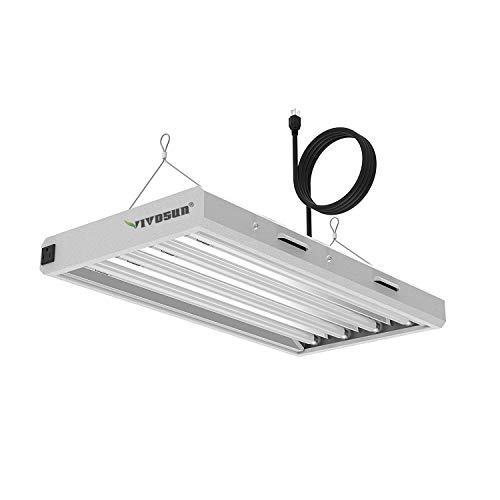 VIVOSUN T5 Grow Lights 2 ft., 96W(4 X 24W), T5 Light...
 MARS HYDRO 100W TS600 2x2ft Dimmable LED Grow Lights...
 Aspect Soltech Gen 2 – World’s First Decor Grow Light...
Product images and titles from Amazon. As an Amazon Associate we earn from qualifying purchases.
Quick Picks: Best Grow Lights for Indoor Plants
| Use Case | Top Pick | Why It Wins | Est. Price |
|---|---|---|---|
| Best overall | Spider Farmer SF-1000 | Samsung LM301B diodes, dimmable, covers 3×3 ft veg area | $90–130 |
| Best budget strips | Barrina T5 LED 4-Pack, 2ft | Affordable, daisy-chains, great for shelves & herbs | $35–50 |
| Best single bulb | SANSI 15W Full Spectrum Bulb | E26 base, no special fixture, works in any lamp | $22–32 |
| Best for seedlings | Vivosun T5 LED 2ft | 6500K spectrum, ideal light intensity for young seedlings | $35–55 |
| Best value panel | Mars Hydro TS 600 | Samsung diodes, 100W actual, dimmable, 2×2 bloom coverage | $65–85 |
| Best decorative | Soltech Solutions Aspect | Pendant lamp design, looks like real decor, not a grow tent | $90–120 |
| Best for succulents | Juhefa Full Spectrum LED Panel | High output, red/blue emphasis for sun-loving plants | $25–40 |
| Best premium | HLG 100 V2 Rspec | Commercial-grade quantum board, 95W actual, 2×2 ft intense coverage | $140–180 |
Best Overall: Spider Farmer SF-1000
Spider Farmer built its reputation on Samsung LM301B diodes, the same high-efficiency chips used in professional horticultural lighting. The SF-1000 puts them in a consumer-friendly package: dimmable from 0–100%, daisy-chainable up to 20 units on one controller, and fanless (silent) operation. For a collection of tropical houseplants, monsteras, pothos, or a seed-starting setup, it's the most balanced combination of quality and price in 2026.
Coverage is 3×3 feet for vegetative-stage plants and 2×2 for anything that needs high light intensity. At 18 inches above your plants, it delivers approximately 500–600 PPFD, well above what tropical houseplants need (50–300 PPFD) and in range for herbs and high-light plants like bird-of-paradise, citrus, and fiddle-leaf figs.
Spider Farmer SF-1000
The SF-1000 pairs a full-spectrum output (3000K + 5000K + 660nm red + IR) with efficient Samsung diodes that deliver more usable light per watt than most competing panels at this price. The dimming knob is a real differentiator, low-light houseplants can run at 30–40% intensity, which saves electricity and prevents light burn on shade-adapted species. The hanging kit and push-connect power cable make setup under a shelf or in a grow tent straightforward.
Pros
- Samsung LM301B diodes, best-in-class efficiency
- Completely silent (no fan)
- Dimmable, works for shade plants and high-light plants
- Daisy-chainable for multi-shelf setups
- 3-year warranty
Cons
- Overkill and overspend for a single small plant
- Requires a hang point, not plug-and-go like a bulb
Best Budget Strip Lights: Barrina T5 LED 4-Pack
For plant shelves, propagation stations, and herb gardens, LED strip lights are more practical than panels, they cover a wide, shallow area rather than a concentrated circle, and they mount flush under a shelf with included clips or zip ties. The Barrina T5 LED 4-pack is the category leader for houseplant use: four 2-foot fixtures that daisy-chain together on one power cord, covering a full 4-foot shelf uniformly.
At 6500K (cool white daylight spectrum), Barrina lights favor vegetative growth and root development. They won't trigger flowering in long-day plants the way red-heavy lights do, which is exactly what most tropical houseplant growers want. Herbs, basil, mint, parsley, do particularly well under these lights.
Barrina T5 LED Grow Lights, 2ft, 4-Pack
The four-pack covers a standard 4-foot shelving unit at roughly 1,200 lumens per fixture, enough for low- to medium-light houseplants at 6–10 inches below the lights. The power-linked design means one outlet runs all four fixtures; you can add a second 4-pack to the same cord for an 8-fixture shelf. For the price, no other product comes close to coverage-per-dollar for plant shelves.
Pros
- Excellent coverage for the price
- Daisy-chains on one outlet
- Low heat, safe directly under shelving
- Works for herbs, seedlings, low-light tropicals
Cons
- Cool white spectrum, less red light than full-spectrum options
- Not dimmable
- Too low-output for high-light succulents or citrus
Best Single Grow Bulb: SANSI 15W Full Spectrum
If you have one plant in a dim corner and you don't want to run wires or hang anything from the ceiling, a full-spectrum grow bulb in a standard floor or table lamp is the simplest solution. Screw it in like a normal bulb, plug in a timer, and you're done. The SANSI 15W full spectrum is the most consistent performer in this category, it produces both the red and blue wavelengths plants need, unlike standard warm- or cool-white LEDs, which are optimized for human vision and lack the photosynthetically active output your plants need.
The E26 base fits any standard lamp. At 10–12 inches above a small plant (pothos, ZZ plant, fern, orchid), the light output is sufficient to supplement a dim north-facing window or replace a window entirely for low-light species. Also works well for propagation vessels kept on a counter or bookshelf.
SANSI 15W Full Spectrum LED Grow Light Bulb
SANSI uses ceramic heat dissipation instead of a plastic housing, the bulb runs cooler than competitors, which translates to longer lifespan and more consistent output over time. The pinkish-purple light color is typical of red-blue spectrum grow lights, but SANSI also makes a warmer-spectrum version that's less visually intrusive in living spaces if the pink glow bothers you.
Pros
- Works in any standard E26 lamp, zero setup
- True full-spectrum with plant-relevant red and blue
- Ceramic heat sink, runs cooler than plastic alternatives
- Affordable single-plant solution
Cons
- Pinkish-purple light is visible to humans
- Limited coverage, good for 1–2 plants only
- Not dimmable
Best for Seedlings & Propagation: Vivosun T5 LED 2ft
Seedlings and cuttings have specific light needs: high blue output (6000–6500K) for compact growth, consistent intensity without hotspots, and low heat so tender roots and leaves aren't stressed. The Vivosun 2-foot T5 LED delivers on all three, it's a direct LED replacement for the classic T5 fluorescent fixture with no ballast or tube replacement needed, and it hangs by a chain so you can raise it as seedlings grow.
This is the go-to setup for winter seed starting: hang two fixtures 2–3 inches above your seed trays, run 14–16 hours/day on an outlet timer, and you'll get compact, stocky seedlings ready to transplant in 6–8 weeks. Also excellent for rooting cuttings from propagation vases kept on a counter.
Vivosun 2ft T5 LED Grow Light
The 6500K spectrum mimics overcast daylight, high in blue, which suppresses stretching (etiolation) and promotes thick stems. Pair with a 24-hour mechanical outlet timer to automate the 14-hour day cycle. The 2-year Vivosun warranty covers LED failure and electrical defects, good value at this price point.
Pros
- 6500K spectrum, ideal for compact seedling growth
- Chain hang adjusts height as plants grow
- Low heat, safe 2 inches from seedlings
- 2-year warranty
Cons
- Cool spectrum not ideal for flowering or fruiting stages
- Covers one seed tray (10×20 inches) optimally, buy two for wider setups
Best Value LED Panel: Mars Hydro TS 600
The Mars Hydro TS 600 is the best bang-for-dollar full-spectrum LED panel for indoor plant growing in 2026. Like the Spider Farmer SF-1000, it uses Samsung LM301B diodes, but at a lower price point, with a slightly smaller coverage area (2×2 feet at full intensity). For a dedicated plant corner, a shelf over 2 feet wide, or a small grow tent, the TS 600 provides excellent full-spectrum output at a price that's hard to argue with.
Dimmable from 0–100%, daisy-chainable with other TS-series lights, and running at 100W actual draw, it delivers roughly 400–500 PPFD at 18 inches, enough for virtually any tropical houseplant, and enough to grow herbs and leafy greens to harvest. The Mars Hydro TS 600 is frequently sold out, so also consider the Mars Hydro TS 1000 (I own this one; it has earned its spot.) (150W, 3×3 coverage) if you have a larger setup.
Mars Hydro TS 600 LED Grow Light
The full-spectrum output (3000K + 5000K + 660nm) covers the full range of photosynthetically active radiation. The included hanging ratchet straps let you position the light at 12–24 inches, depending on plant type. For a plant shelf or a dedicated corner with 4–8 medium-to-large tropical houseplants, the TS 600 covers the whole group rather than requiring multiple grow bulbs.
Pros
- Samsung diodes, same quality as pricier panels
- Full-spectrum output covers all growth stages
- Dimmable and daisy-chainable
- 3-year warranty
- Lower price than SF-1000 for similar coverage
Cons
- Smaller bloom coverage (2×2) than SF-1000 (2×2 bloom / 3×3 veg)
- Occasionally out of stock
Best Decorative Grow Light: Soltech Solutions Aspect
Most grow lights look utilitarian, industrial panels, strip fixtures, or purplish-pink bulbs that announce "I have a grow setup" to every visitor. The Soltech Solutions Aspect is different: it looks like a pendant lamp, ships with a white or black fabric cord, and hangs from a ceiling hook like any pendant light. When it's off, it's decor. When it's on, it delivers enough PPFD for most tropical houseplants at 2–4 feet below the light.
The Aspect produces a warm white light (unlike purple-spectrum bulbs) that doesn't create an obvious "grow light" look. Plant placement flexibility is the key advantage, you can position a large monstera, fiddle-leaf fig, or bird-of-paradise anywhere in a room, regardless of window location. The trade-off: no dimmer, fixed white spectrum, and a higher price than functional alternatives. This is a design decision as much as a plant decision.
Soltech Solutions Aspect Grow Light
At 2 feet above the canopy, the Aspect delivers approximately 200–400 PPFD, right in the range for medium-light tropicals (monsteras, fiddle-leaf figs, pothos, snake plants, bird-of-paradise). The warm, natural-looking light means you're not living in a pink-tinted room. For a statement plant in a living room or bedroom with inadequate window light, the Aspect is the most aesthetically integrated solution available.
Pros
- Looks like real home decor, not a grow op
- Warm white light, visually comfortable in living spaces
- Handles large floor plants elegantly
- Multiple cord color options
Cons
- Higher price than functional alternatives
- Not dimmable
- Requires ceiling hook for pendant installation
Best for Succulents & Cacti: Juhefa Full Spectrum Panel
Succulents and cacti need more light than any other common indoor plant, 500–1,500 PPFD for healthy, compact, deeply-colored growth. Without enough light, they etiolate (stretch toward the light source), losing the tight rosette form that makes them attractive. Moved outdoors in summer, they get this naturally. Kept indoors year-round, they need a high-output light close to the canopy, 6–10 inches, not 18–24 inches like tropical houseplants.
The Juhefa LED panel delivers high PPFD at close range with a red-and-blue emphasis spectrum that drives compact growth and color intensity in succulents, cacti, and other desert-adapted plants. It's not pretty, but for a utility grow shelf with a succulent collection, it outperforms aesthetically-driven options like the Aspect at a fraction of the price. Pair with a terracotta pot set and a gritty soil mix for the complete succulent setup.
Juhefa Full Spectrum LED Grow Light Panel
The combination of red (620–660nm) and blue (450–470nm) diodes targets the photosynthesis peaks most efficiently, red for growth and blue for compact form. A timer is essential; succulents should receive 14–16 hours of light per day from a grow light. Without a timer, it's easy to forget to turn off the light, and continuous illumination stresses even tough desert plants.
Pros
- High PPFD at close range, right for succulents
- Red/blue spectrum promotes compact, colorful growth
- Low price, affordable for a windowsill succulent shelf
Cons
- Purple light is visually prominent
- Too strong for low-light tropical plants at close range
- Limited coverage area
Best Premium: HLG 100 V2 Rspec
Horticulture Lighting Group (HLG) makes commercial-grade quantum board LEDs used in professional greenhouses. The HLG 100 V2 Rspec is their entry-level consumer product, and it outperforms most "value" LED panels by a significant margin. The Rspec tuning adds extra deep-red (660nm) and far-red (730nm) diodes to the base spectrum, which accelerates flowering and fruiting in houseplants that bloom seasonally (anthuriums, peace lilies, orchids, citrus).
At 95W actual draw, it delivers 600–800 PPFD at 18 inches, enough for the highest-light tropical plants, herbs grown to harvest, and orchids or anthuriums you want to keep in continuous bloom. This is the right choice if you're serious about indoor growing results and want a light that won't need to be replaced in two years.
HLG 100 V2 Rspec LED Grow Light
The Samsung LM301H diodes in the V2 are more efficient than the LM301B used in budget-tier panels, more light output per watt, which means lower electricity cost per unit of photosynthesis. The Rspec variant's far-red addition triggers the Emerson Enhancement Effect, where far-red wavelengths combined with red light produce more photosynthesis than either wavelength alone. For bloom-stage plants, this is a meaningful difference. For vegetative-only houseplant growing, the standard HLG 100 V2 is a more economical choice.
Pros
- Commercial-grade build quality and diodes
- Far-red spectrum accelerates blooming in flowering houseplants
- Highest efficiency per watt in this guide
- 3-year warranty from a reputable US manufacturer
Cons
- Premium price, 2–3× the cost of value panels with similar PPFD output
- Overkill for a basic houseplant collection
Essential Grow Light Accessories
The light itself is only part of the setup. A few low-cost accessories make a significant difference in results:
- Outlet timer, Automates the day/night cycle. A $10–15 mechanical timer is all you need; no Wi-Fi required. This is the single highest-impact accessory, consistent light schedules outperform inconsistent manual on/off every time.
- Lux meter or PPFD meter, Removes guesswork. A $15–25 light meter shows you actual foot-candles or lux at plant level, so you can position your light precisely. Especially useful when mixing grow lights with window light.
- Ratchet rope hangers, For panel lights, adjustable rope hangers let you raise the light as plants grow. Most panels include these, but having a spare set is useful when rearranging.
- Self-watering planters, Grow lights increase evaporation and plant growth rate, which means more frequent watering. Self-watering pots with reservoirs reduce the burden on heavily-lit setups.
Frequently Asked Questions
What wattage grow light do I need for houseplants?
For most tropical houseplants (pothos, philodendrons, monsteras, peace lilies), a 15–45W actual-draw LED is sufficient for one to four plants. A 45–100W LED panel covers a 2×2-foot shelf with several plants. Only high-light plants like succulents, cacti, citrus, or fruiting vegetables need 100W+. Always check actual wattage drawn from the wall, not misleading "equivalent" wattage numbers some manufacturers use.
How many hours per day should I run a grow light for indoor plants?
Most tropical houseplants do well with 12–14 hours of grow light per day. Succulents and cacti prefer 14–16 hours. Seedlings need 14–16 hours for compact, stocky growth. Use an outlet timer so you don't have to remember. Always give plants a dark period of at least 8 hours, continuous light stresses most species.
Is full-spectrum LED really better than regular white LED bulbs?
Yes, meaningfully so. Plants use red wavelengths (630–680nm) for growth and blue wavelengths (430–470nm) for compact vegetative form. Standard warm-white or cool-white LEDs are optimized for human vision and lack sufficient red and blue output. Full-spectrum grow lights are tuned to hit these peaks. For low-light houseplants, a good full-spectrum bulb makes a noticeable difference in growth rate and leaf size versus standard lighting.
Can I use a grow light too close to my plants?
Yes. High-output LED panels (100W+) positioned too close cause light burn, bleached, yellowing, or brown-spotted leaves at the top of the plant. Follow the manufacturer's recommended hanging height, typically 18–24 inches for 100W panels. For smaller grow bulbs (15–25W), 6–12 inches is usually fine. Signs of too much light: white or yellow bleaching on upper leaves, leaves curling upward or away from the light.
Do grow lights raise my electricity bill significantly?
For typical houseplant use, not significantly. A 45W LED running 14 hours/day costs about $2.30/month at the US average electricity rate. A 100W panel running the same schedule costs about $5/month. The savings from LED over older fluorescent or HID lighting are real, LEDs draw 50–70% less power for the same light output.
Related Articles
Best Low-Light Houseplants 10 plants that genuinely thrive in dim rooms, even without supplemental lighting. Overwatered vs. Underwatered Plants Yellow leaves, drooping, brown tips, diagnose and fix both problems before they kill your plant. Common Houseplant Pests Spider mites, mealybugs, fungus gnats, identify every common pest and treat infestations before they spread.- Know your plants 🌿 -
Upload a Photo