Best Low-Light Houseplants: 10 Plants That Actually Thrive in Dim Rooms
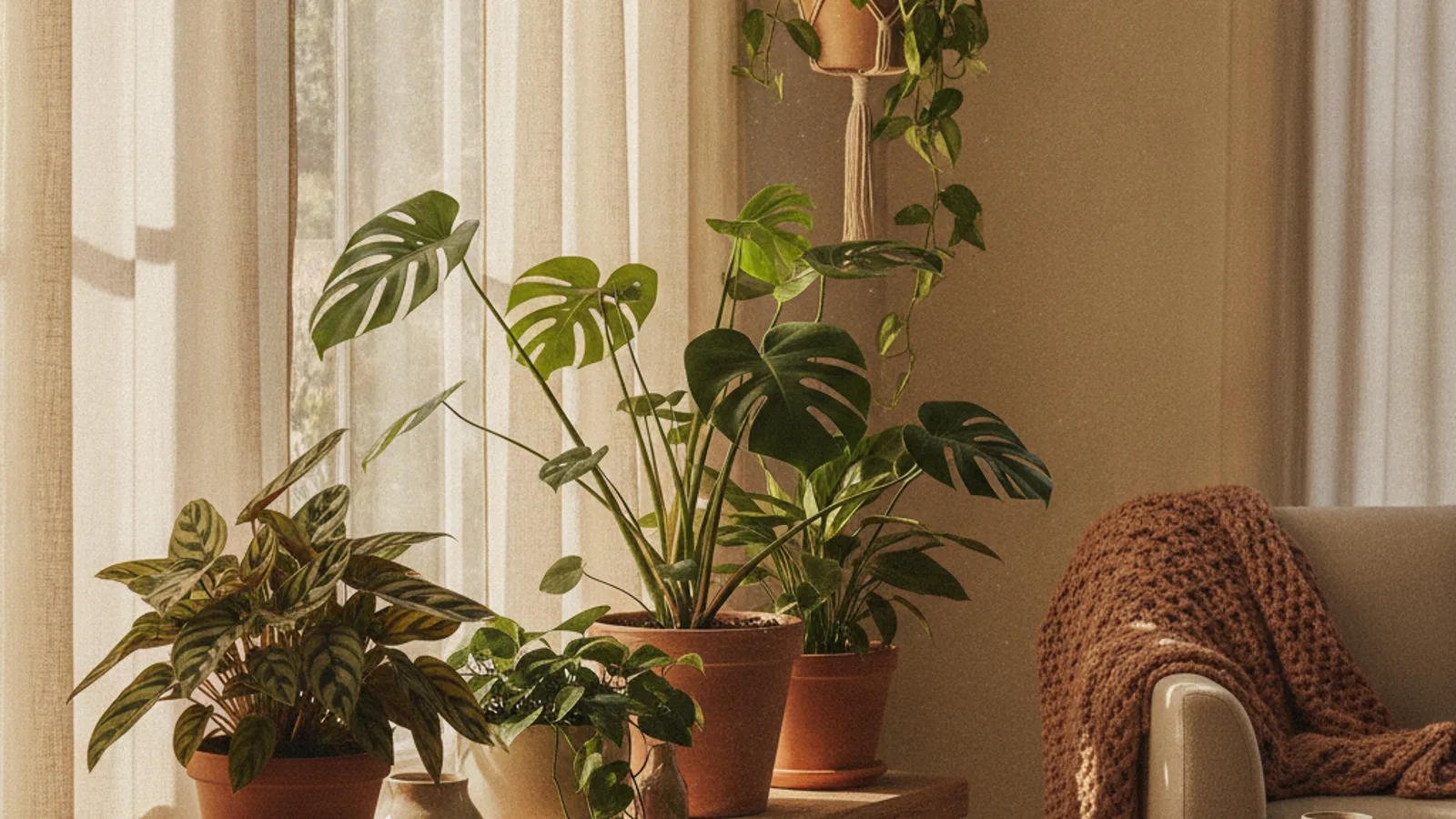
Most houseplant advice assumes you have a sunny south-facing window. But the reality of most homes and apartments is north-facing rooms, deep-set windows, office spaces with fluorescent overheads, and hallways that never see direct sun. The good news: a real class of plants evolved under the forest canopy, competing for every scrap of filtered light that trickled through the leaves above, and those plants are exactly what we want.
This guide focuses on plants that actually thrive in low light, not just survive it. We'll cover what low light really means (not just "no direct sun"), how to pick the right plant for your specific situation, complete care instructions for each species, and the most common mistakes people make with shade plants. All 10 species on this list have been selected because they deliver real growth, new leaves, spreading foliage, healthy color, in genuinely dim conditions, not because they "tolerate low light" for a month before slowly declining.
At a Glance
 SANSI 15W Full Spectrum Grow Light Bulb
 Barrina T5 Grow Lights, 4ft 80W, 4-Pack
 SONKIR MS02 3-in-1 Soil Moisture/Light/pH Meter
 homenote 6" Self Watering Planters, 6-Pack
Product images and titles from Amazon. As an Amazon Associate we earn from qualifying purchases.
What Counts as Low Light?
Plant labels use "low light," "indirect light," and "shade" interchangeably, which creates confusion. Here's a practical breakdown based on foot-candles (FC), the unit used to measure illuminance:
| Light level | Foot-candles | What it looks like in a home |
|---|---|---|
| Bright direct | 1,000–2,000+ FC | Plant in direct sun at a south/west window; sky visible from the pot |
| Bright indirect | 400–1,000 FC | Within 3 feet of a south/west window, shielded by sheer curtain or offset from direct rays |
| Medium indirect | 100–400 FC | 4–8 feet from a south/west window, or near a north-facing window with open sky view |
| Low light | 25–100 FC | Interior of room 8–12 ft from any window; north window with obstructions; hallway |
| Very low / artificial only | <25 FC | Deep office interior, interior bathroom; standard overhead lighting only |
Every plant on this list is rated for true low light: 25–100 FC. Some will manage at the upper end of "very low" (25–50 FC) with supplemental artificial light. None will thrive indefinitely below 25 FC without a grow light.
Quick Reference: Best Low-Light Houseplants
| Plant | Min. light (FC) | Watering | Pet safe? | Best for |
|---|---|---|---|---|
| Snake plant | 25 FC | Every 3–6 weeks | No | Extreme neglect, beginners |
| Pothos | 50 FC | Every 1–2 weeks | No | Fast growth, trailing displays |
| ZZ plant | 25 FC | Every 3–5 weeks | No | Drought + low light combined |
| Cast iron plant | 25 FC | Every 2–4 weeks | Yes | The darkest rooms, pet households |
| Peace lily | 50 FC | Every 1–2 weeks | No | Flowering in low light, humidity lovers |
| Chinese evergreen | 50 FC | Every 1–2 weeks | No | Colorful foliage in dim rooms |
| Heartleaf philodendron | 50 FC | Every 1–2 weeks | No | Fast-growing, easy vine |
| Dracaena (marginata/fragrans) | 50 FC | Every 2–3 weeks | No | Tall accent plant, office corners |
| Spider plant | 75 FC | Every 1–2 weeks | Yes | Pet-safe, easy propagation |
| Chinese money plant | 75 FC | Every 1–2 weeks | Yes | Compact, pet-safe, gifts |
1 Snake Plant (Dracaena trifasciata)
Why it works in low light
Snake plants are succulent-adjacent: they have thick, water-storing leaves and a metabolism (CAM photosynthesis) that allows them to fix carbon dioxide at night, reducing water loss during the day. This physiology means they can operate efficiently on very little light and water simultaneously, making them the gold standard for dim, neglected corners.
Appearance: Stiff, upright leaves that grow 1–4 feet tall in a rosette pattern. Comes in many varieties: the classic laurentii has yellow-edged leaves; moonshine is pale silver-green; cylindrica has round tubular leaves. All are equally tolerant of low light.
Light: 25–1,000 FC, one of the widest ranges of any houseplant. It will grow in a dim hallway (slowly) and equally well in bright indirect light (faster). Avoid prolonged direct midday sun, which bleaches leaves.
Watering: Every 3–6 weeks in low light (even less in winter). The most common cause of death in snake plants is overwatering, root rot sets in quickly in soggy soil. Let the soil dry completely before watering. In low light, the plant uses very little water, so a well-draining mix and infrequent watering are essential.
Soil: Succulent or cactus mix, or standard potting soil amended with 30–40% perlite. Good drainage is non-negotiable.
Toxicity: Toxic to cats and dogs, saponins cause vomiting, drooling, and lethargy if ingested. Keep elevated or out of reach.
Common mistake: Treating it like a tropical plant. Snake plants don't want to be misted, placed on pebble trays, or watered on a schedule. Check soil moisture by feel, not by calendar.
2 Pothos (Epipremnum aureum)
Why it works in low light
Pothos evolved in the forest understory of Southeast Asia, where it spends much of its life climbing tree trunks in deep shade, rarely reaching the sun-drenched canopy. Its large, waxy leaves maximize light capture at low intensities. It's one of the few plants that will produce new leaves at a reasonable rate (one per month or so) in genuinely dim conditions.
Appearance: Heart-shaped leaves on trailing vines that can reach 10 feet or more indoors. The most common variety, golden pothos, has yellow-green marbling on a medium green leaf. Marble queen is heavily white-variegated; neon is chartreuse. Note: variegated varieties like marble queen need more light to hold their pattern, in very low light, they'll revert to solid green.
Light: 50–500 FC for solid-green varieties. Variegated types: 100 FC minimum to retain their pattern.
Watering: Every 7–14 days in low light. Let the top 1–2 inches of soil dry before watering. Pothos are drought-tolerant for short periods but will tell you when they need water, leaves get slightly wrinkled and limp. Water thoroughly until it drains from the bottom.
Soil: Standard well-draining potting mix. No amendments needed for healthy growth, but adding 20% perlite improves drainage and reduces overwatering risk.
Toxicity: Toxic to cats and dogs, calcium oxalate crystals cause oral irritation, drooling, and vomiting.
Pro tip: Pothos is one of the best natural air quality indicators. Yellowing lower leaves usually mean overwatering. Long gaps between leaves (etiolation) mean the light level is too low even for pothos, move it closer to a window.
3 ZZ Plant (Zamioculcas zamiifolia)
Why it works in low light
ZZ plants store water in large underground rhizomes that look like potato tubers. In their native East Africa, they survive seasonal drought by drawing on these reserves. Indoors, this means they're extraordinarily drought-resistant and, crucially, can tolerate the periods of low metabolic activity that come with very dim conditions. A ZZ won't grow fast in low light, but it won't decline either. It's the longest-lived low-light option in most homes.
Appearance: Glossy, waxy, dark green leaves on graceful arching stems. The plant grows in a clump, typically reaching 2–3 feet. The cultivar Raven starts green and matures to nearly black, striking and equally low-light tolerant. Zenzi is a compact dwarf variety good for small spaces.
Light: 25–400 FC. One of the lowest minimum light requirements of any houseplant. In very dim conditions (25–50 FC), growth essentially stops but the plant maintains itself. It will grow measurably at 50–100 FC.
Watering: Every 3–5 weeks in low light. Let the soil dry completely between waterings. The rhizomes store enough water to bridge 6+ weeks without watering if necessary, don't feel guilty about forgetting it.
Soil: Well-draining mix with perlite. ZZ plants are very susceptible to root rot if kept in waterlogged soil, their roots and rhizomes need excellent drainage.
Toxicity: Toxic to cats, dogs, and humans, contains calcium oxalate. Wash hands after handling and keep away from pets.
Common mistake: Overwatering in response to slow growth. Slow growth in low light is normal, it doesn't mean the plant needs more water or fertilizer.
4 Cast Iron Plant (Aspidistra elatior)
Why it works in low light
The name says it all. Cast iron plants have been growing in dim Victorian parlors and shaded Japanese gardens for over a century. They evolved under dense forest canopy in China and Japan, adapted to very low light intensities. They're also tolerant of low humidity, temperature fluctuations, irregular watering, and neglect, making them the true "unkillable" option. Notably, they're non-toxic to pets, making them a rare combination of low-light tolerance and pet safety.
Appearance: Long, strap-like dark green leaves, 18–24 inches tall, growing directly from the base in a clump. Growth is slow, expect 3–4 new leaves per year in low light. The variegated form (Asahi, with cream-tipped leaves) is beautiful but even slower-growing.
Light: 25–250 FC. Tolerates the lowest light levels of any plant on this list. Will survive in north-facing rooms with minimal daylight. Avoid direct sun, which scorches leaves.
Watering: Every 2–4 weeks. Let the top half of the soil dry before watering. Very drought-tolerant once established. The thick root system stores water between periods of drought.
Soil: Well-draining potting mix. Cast iron plants prefer slightly acidic to neutral soil (pH 5.5–7). They grow slowly in all conditions, don't over-fertilize.
Toxicity: Non-toxic to cats, dogs, and humans, one of the safest large-leaved plants for pet households.
Best use: The absolute darkest corners where other plants fail. North-facing rooms, hallways without windows, interiors of large offices. If you've killed every other plant in a dim spot, try a cast iron plant.
5 Peace Lily (Spathiphyllum)
Why it works in low light
Peace lilies are native to tropical rainforest floors in Central and South America, exactly the low-light, high-humidity environment that the floor of a closed-canopy forest provides. They're adapted to grow in the diffuse light that filters through multiple layers of foliage, which makes them genuinely productive in dim indoor spaces. The bonus: they're one of the only flowering plants that will bloom in low light, producing their distinctive white spathe flowers even in dim conditions (though blooming is more prolific with medium light).
Appearance: Dark glossy green leaves, 12–24 inches, with white flower spathes that emerge in spring (and occasionally fall in good conditions). Peace lilies communicate clearly, leaves droop visibly when they need water, then recover within an hour of watering.
Light: 50–500 FC. Will survive at 50 FC; blooms more freely at 100–300 FC. At very low light, it may produce no flowers but will maintain healthy foliage.
Watering: Every 7–14 days. Peace lilies are more water-demanding than the succulent-adjacent plants on this list. They like consistently moist (not wet) soil. The droop signal is useful but don't let it reach full wilt repeatedly, that stresses the root system over time.
Humidity: Prefers 50%+ humidity. In dry winters, brown leaf tips appear, mist occasionally or use a pebble tray with water. See our pest guide if you notice webbing alongside dry conditions (spider mites love dry, warm air).
Toxicity: Toxic to cats and dogs, calcium oxalate crystals cause oral irritation and potential swelling.
Common mistake: Ignoring the droop. New owners often assume drooping means root rot and withhold water, but drooping in peace lilies almost always means thirst. Check the soil: if it's dry, water immediately. If it's wet and the plant droops, then suspect root rot.
6 Chinese Evergreen (Aglaonema)
Why it works in low light
Chinese evergreens are rainforest understory plants from Southeast Asia, naturally growing in deep shade beneath towering tropical trees. They've been cultivated as shade plants for so long (over 100 years in Western horticulture) that breeders have developed hundreds of cultivars with striking pink, red, silver, and cream patterns. Crucially, the darker-leafed varieties (deep green) tolerate the lowest light; lighter and pink-red cultivars need more light to hold their color.
Appearance: Oval leaves on short stems in a compact bushy habit, typically 12–24 inches tall. Dark green varieties like Silver Bay, Maria, and Tigress are best for true low light. Pink varieties like Siam Aurora or Creta need medium indirect light to maintain their color.
Light: 50–400 FC for dark-leafed varieties. 150–500 FC for pink/red varieties.
Watering: Every 7–14 days. Let the top 1–2 inches dry before watering. Chinese evergreens are moderately drought-tolerant but don't like extended dryness. They're more forgiving than peace lilies if you skip a week.
Soil: Well-draining, peat-free potting mix. Slightly acidic pH (5.6–6.5) preferred.
Toxicity: Toxic to cats and dogs, calcium oxalate crystals.
Pro tip: Chinese evergreens are excellent office plants because they tolerate fluorescent lighting, air conditioning, and irregular watering, all common office conditions. The Silver Bay variety in particular has been standard in commercial interior landscaping for decades for exactly this reason.
7 Heartleaf Philodendron (Philodendron hederaceum)
Why it works in low light
Heartleaf philodendrons are fast-growing vines from the Caribbean and Central American rainforests, where they spend their early lives as ground-cover in deep forest shade before climbing toward brighter conditions. This dual-environment adaptation means they're genuinely productive in low light, outpacing pothos in growth rate in some conditions, with equally tolerant care requirements.
Appearance: Heart-shaped, velvety green leaves (3–4 inches) on trailing or climbing vines. Unlike pothos, the leaves have a matte texture and a richer, darker green. The variety Brasil has yellow-green variegation and needs slightly more light. The standard heartleaf is more low-light tolerant.
Light: 50–400 FC. One of the fastest-growing plants in this range, can push a new leaf every 2–3 weeks even in 100 FC conditions when watering and temperature are right.
Watering: Every 7–14 days. Similar to pothos, let the top 1–2 inches dry, then water thoroughly. Philodendrons are slightly more sensitive to root rot than pothos, so err toward slightly drier conditions.
Soil: Standard, well-draining potting mix. Philodendrons like slightly moist, airy soil, perlite additions help.
Toxicity: Toxic to cats and dogs, calcium oxalate crystals.
Difference from pothos: A common confusion, heartleaf philodendron and pothos look similar but are different genera. Philodendron leaves are more heart-shaped at the base with a matte texture; pothos leaves are more asymmetric with a slightly waxy finish. Both are excellent low-light plants with nearly identical care requirements.
8 Dracaena (Dracaena marginata, D. fragrans)
Why it works in low light
Dracaenas are native to tropical Africa and Canary Islands, where many species grow as understory plants in dry forest environments. They've evolved to be very efficient with both light and water. Two varieties stand out for low-light tolerance: D. marginata (dragon tree, with narrow red-edged leaves on tall canes) and D. fragrans (corn plant, with broad glossy leaves in a rosette at the top of a thick cane). Both can grow 6+ feet tall indoors over several years, making them excellent room-filling accent plants for dim corners.
Light: 50–400 FC. Dracaenas do best at the middle of this range (100–200 FC) but manage in dimmer conditions. In low light they grow slowly, which is often desirable for large plants.
Watering: Every 14–21 days. Dracaenas are sensitive to fluoride in tap water, which causes brown leaf tips. Use filtered water or allow tap water to sit overnight before using. Let the top half of the soil dry before rewatering.
Soil: Well-draining potting mix. Avoid heavy soils that compact over time.
Toxicity: Toxic to cats and dogs, saponins cause vomiting and lethargy in pets.
Special care note: Dracaenas push out dead lower leaves as they grow, this is normal. A palm-like look with a bare lower cane and a rosette of leaves at the top is healthy, not sick. If the newest top leaves look good, the plant is fine.
9 Spider Plant (Chlorophytum comosum)
Why it works in low light
Spider plants are among the most adaptable houseplants ever domesticated. Native to tropical and southern Africa, they naturally grow in a wide range of light conditions, from forest edges to open rocky slopes. Indoors, they're genuinely pet-safe, fast-growing, and remarkably tolerant. The bonus: they produce "babies" (small plantlets on long runners) that can be propagated in water and potted up as free new plants, making them one of the most rewarding plants for new houseplant owners.
Appearance: Long, arching, grass-like leaves (12–18 inches) in a rosette, typically green with a white or cream center stripe. The variety Vittatum has a white center stripe; Variegatum has white edges. Both are tolerant of low light, though variegation is bolder in brighter conditions.
Light: 75–500 FC. Spider plants prefer the middle of the low-light range, they manage at 75 FC but thrive at 100–200 FC. They won't do as well as snake plants or ZZ plants at the very dim end.
Watering: Every 7–14 days. Let the top inch dry before watering. Spider plants are slightly sensitive to fluoride, brown leaf tips often indicate fluoride buildup from tap water. Use filtered water and flush the soil thoroughly every few months.
Toxicity: Non-toxic to cats and dogs, one of the safest choices for pet households. (Note: spider plants have a mild hallucinogenic effect on cats, similar to catnip, which may make cats more likely to chew on them, but they're not harmful.)
Propagation: The plantlets that dangle on long runners can be rooted in water (takes 2–3 weeks) then potted up in standard potting mix. A single spider plant can produce dozens of baby plants per year.
10 Chinese Money Plant (Pilea peperomioides)
Why it works in low light
The Chinese money plant is native to Yunnan province in China, where it grows in moist, shaded rock faces under forest canopy. This origin makes it well-adapted to filtered, indirect light indoors. It's compact (6–12 inches), produces round pancake-like leaves on long petioles, and generates "pups", offsets at the base, that can be separated and potted as new plants. It's also non-toxic, making it safe for homes with curious pets.
Appearance: Distinctive round, flat leaves (1–3 inches in diameter) on long individual stems, giving it a whimsical, coin-like appearance. The central stem grows upright and the leaves radiate outward horizontally to maximize light capture, a perfect adaptation for low light.
Light: 75–500 FC. Prefers bright indirect light but manages well in low light. One care note: rotate the pot a quarter turn each week, Pilea will lean strongly toward its light source and becomes lopsided without rotation.
Watering: Every 7–14 days. Let the top 1–2 inches dry before watering. Overwatering causes yellowing leaves and root rot quickly. The flat leaves begin to cup and curl slightly when the plant is thirsty, a useful signal.
Soil: Well-draining, peat-free potting mix. Good drainage matters, Pilea doesn't like wet feet.
Toxicity: Non-toxic to cats, dogs, and humans.
Pro tip: Pilea is one of the most "Instagrammable" low-light plants and has been hugely popular since around 2016. If you want a plant that looks striking on a shelf or in a dim corner without requiring a sunny window, this is an excellent choice.
How to Maximize Growth in Low-Light Conditions
Even the most shade-tolerant plants will do better with a few environmental optimizations:
Clean the Leaves
Dust accumulates on indoor plant leaves over weeks and months, blocking light absorption. A dusty leaf can absorb 20–30% less light than a clean one. Wipe large-leafed plants (snake plant, ZZ, cast iron, dracaena) with a damp soft cloth monthly. Spider plants and philodendrons can be rinsed under a gentle shower.
Maximize Window Proximity
Light intensity drops dramatically with distance. Moving a plant from 10 feet to 6 feet from a north-facing window can double the foot-candles it receives, a significant difference at low absolute levels. Position plants as close to windows as possible, even if the window doesn't face south.
Use Reflective Surfaces
Light-colored walls, mirrors, and white furniture reflect ambient light back toward plants. In a dim room, moving a plant near a white wall or placing a mirror on the opposite wall from the window meaningfully increases the light the plant receives.
Supplement with Grow Lights
For genuinely dark spaces (interior rooms, windowless offices), a basic LED grow light running 12–14 hours per day will support any plant on this list. A 15W full-spectrum grow bulb in a standard lamp ($22–32) is the simplest approach, screw it in, add a timer, done. For a shelf of several plants, a Barrina T5 strip light 4-pack ($35–50) covers a full 4-foot shelf. See our full grow lights guide for all options by use case.
Reduce Watering Proportionally
Plants in low light use water much more slowly than those in bright conditions. If you're following the care instructions for "bright indirect light" on a plant label, you're likely overwatering in low light by 50% or more. Adjust to how fast the soil actually dries, not the label's schedule.
Fertilize Less, Not More
A common mistake: trying to compensate for dim light by fertilizing more. Plants can only use nutrients in proportion to their growth rate, which is limited by light. Excess fertilizer in low light causes salt accumulation in the soil and root burn. Fertilize once monthly at half strength during spring and summer; skip fall and winter entirely.
Common Mistakes With Low-Light Houseplants
- Buying high-light plants labeled as "low light." Many garden centers label plants like fiddle-leaf figs, most succulents, and money trees as "adaptable to low light", they aren't. If the tag says "prefers bright indirect light," treat it as a medium-light plant at minimum.
- No light = low light. True darkness doesn't sustain plants. If you can't read a book comfortably without a lamp, you need a grow light regardless of plant species.
- Assuming a declining plant needs more water. A slowly declining low-light plant usually has too much water (root rot), not too little. Check the roots if in doubt, healthy roots are white and firm; rotted roots are brown, mushy, and may smell bad. See our guide on overwatered vs. underwatered plants for the full diagnosis.
- Using heavy potting soil without amendments. Standard potting mixes are often too dense for low-light plants that need good drainage. Add 20–30% perlite to any standard mix.
- Not rotating the plant. Plants grow toward light, which creates lopsided growth in static positions. Rotate plants a quarter turn every 2 weeks for even, symmetrical growth.
- Expecting fast growth. Low-light plants grow slowly even under ideal conditions. A ZZ plant producing 3–4 leaves per month in bright indirect light might produce 1 leaf per month in low light. That's success, not failure.
Frequently Asked Questions
What qualifies as low light for houseplants?
Low light means a room's interior, north-facing window, or a spot 8–12 feet from any other window, roughly 25–100 foot-candles of illuminance. It's bright enough to read without a lamp but dim by plant standards. True darkness (no windows) requires a grow light for any plant.
What is the easiest low-light houseplant?
Snake plant (Dracaena trifasciata), it tolerates drought, low light, low humidity, and neglect simultaneously. For pet-safe options, cast iron plant is the most tolerant, followed by spider plant.
Can low-light plants survive in a room with no windows?
Not indefinitely on natural light. Even the most tolerant varieties (snake plant, ZZ plant, cast iron plant) need some ambient daylight or a grow light. A basic LED grow light running 12–14 hours per day will support all plants on this list in windowless spaces.
Do low-light plants grow slower?
Yes, all plants grow slower in low light, even shade-adapted ones. This is normal and not a problem. It means less frequent watering and repotting, and a more stable plant overall. Don't over-fertilize trying to compensate.
How do I know if my low-light plant isn't getting enough light?
Signs: long gaps between leaves (etiolation, the plant stretching toward light), new leaves noticeably smaller than older ones, variegated leaves reverting to solid green, very slow or no new growth for months, and potting soil staying wet for weeks because the plant isn't photosynthesizing enough to use the water.
Should I fertilize low-light houseplants?
Yes, but sparingly. Use a balanced liquid fertilizer at half the recommended dose once monthly in spring and summer only. Skip fertilizer in fall and winter. Over-fertilizing in low light causes salt buildup and root burn, it doesn't compensate for dim conditions.
Essential Supplies for Low-Light Plant Care
These are the tools that make a measurable difference when caring for shade plants, not a "nice to have" list, but the items that prevent the most common failures:
- Soil moisture meter (SONKIR MS02, ~$12–15), The single most useful tool for low-light plant care. In dim conditions, plants use water slowly, and the surface dries before the root zone does. A moisture meter tells you what's actually happening at root level before you decide to water. The 3-in-1 version also measures light intensity, put it in your "low-light" corner to see the actual foot-candle reading. See our full moisture meter guide.
- Perlite for drainage (~$10–15 for a large bag), Low-light plants are overwatered more than any other type. Mixing 20–30% perlite into any standard potting mix dramatically improves drainage and air circulation around roots, making root rot far less likely. This single amendment changes the care calculus for every plant on this list.
- Self-watering planter ($15–35), For moisture-sensitive species like peace lilies and Chinese evergreens, a self-watering pot with a bottom reservoir maintains consistent moisture without waterlogging. The plant draws water upward as needed. Paired with a moisture meter, this almost eliminates overwatering as a failure mode.
- Balanced liquid fertilizer ($8–15), Low-light plants are often under-fertilized because slow growth makes owners assume they don't need feeding. A half-strength balanced fertilizer (10-10-10 or similar) once monthly in spring and summer provides the nutrients these plants can't get from exhausted potting mix. Don't skip it for the 6+ months during active growth.
Related reading: Overwatered vs. Underwatered Plants: How to Tell the Difference · Common Houseplant Pests: Identify, Treat, and Prevent Every One · Houseplant Care Guide for Beginners
Related Articles
Houseplant Care Guide for Beginners Everything you need to keep your first plants alive, watering, light, soil, and the easiest plants to start with. Overwatered vs. Underwatered Plants Yellow leaves, drooping, brown tips, learn to diagnose and fix both problems before they kill your plant. Common Houseplant Pests Spider mites, mealybugs, fungus gnats, identify every common pest and treat infestations before they spread.- Know your plants 🌿 -
Upload a Photo