Best Self-Watering Planters 2026: Set-and-Forget Pots for Busy Plant Parents
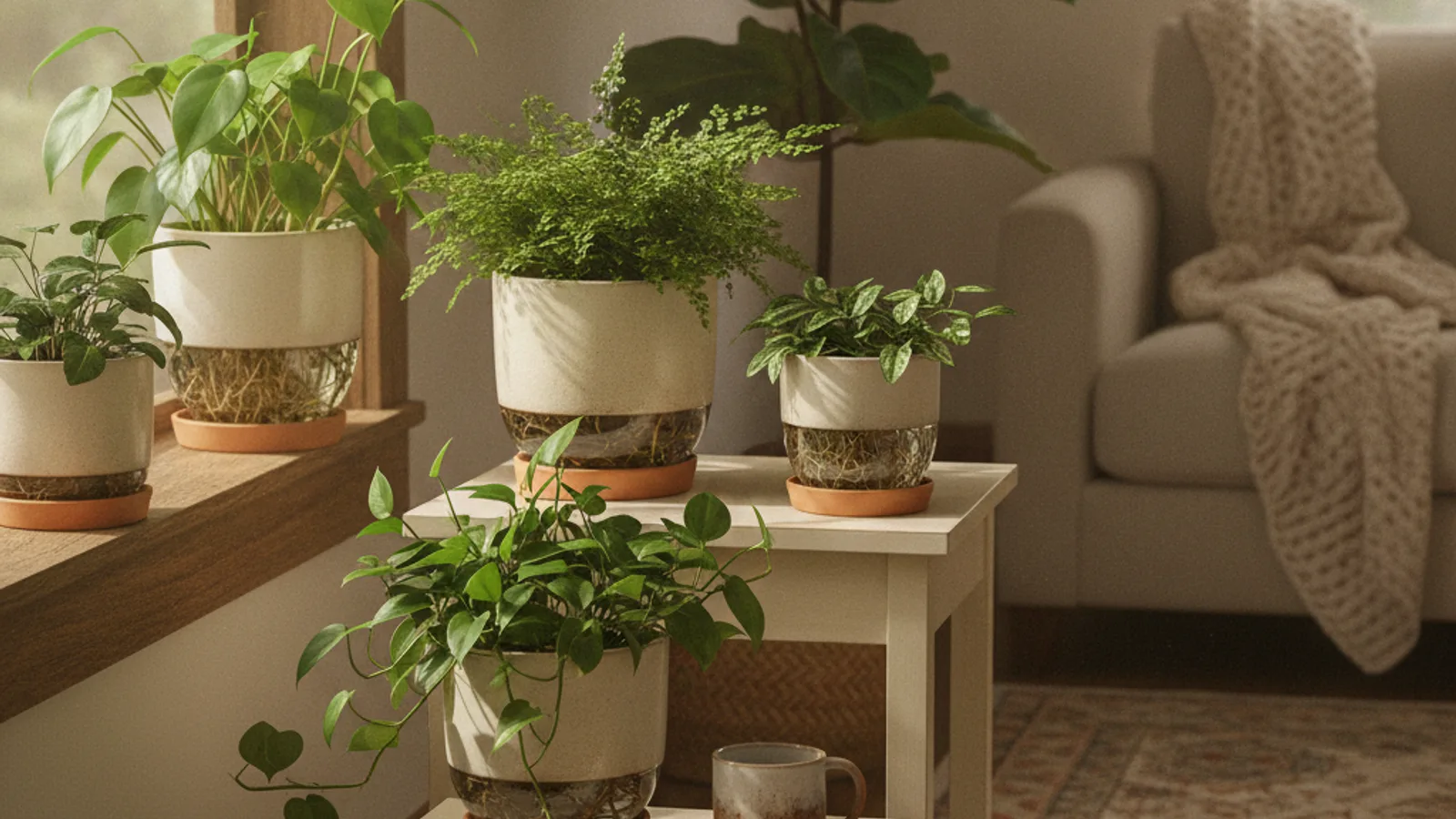
Self-watering planters solve the most common reason houseplants die: inconsistent watering. A sub-irrigation reservoir at the base of the pot draws water into the root zone only as the plant needs it, eliminating both overwatering and the dry-soil emergencies that happen when life gets busy. The plant waters itself between refills, and a water level indicator tells you exactly when the reservoir needs topping up.
The right self-watering planter depends on what you're growing and where. A 6-inch desktop pot for a pothos is a completely different product than a 24-inch balcony window box for tomatoes. This guide covers the best picks across every use case, from a first apartment succulent to a full outdoor herb garden.
At a Glance
 homenote 6" Bottom Watering Plant Pots, 6Pcs Self...
 Elho Brussels Herbs Station Flowerpot, White, 19 cm
 Lechuza CUBICO Color 22 White, Self-Watering Tall...
 Elho 7432423039700 Corsica Flower Bridge Planter,...
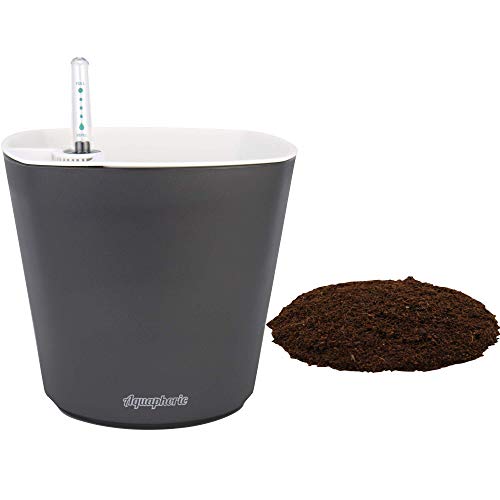 Window Garden Aquaphoric Self Watering Planter 7” Plus...
 Lechuza Self Watering Plant Pot Classico 21 LS Garden...
Product images and titles from Amazon. As an Amazon Associate we earn from qualifying purchases.
Quick Picks by Use Case
| Use case | Best Pick | Reservoir | Price |
|---|---|---|---|
| Best overall | Lechuza Classico LS 21 | ~0.5 gal | $45–65 |
| Best budget set | HOMENOTE Self-Watering Pots 6-pack | Small wick | $25–35 |
| Best for herbs | Elho Brussels Twin-Wall Herb Set | Per-pod wick | $25–40 |
| Best large floor planter | Lechuza Cubico Color 22 | ~1 gal | $70–100 |
| Best hanging basket | Mkono 3-pack Hanging Planters | Drip tray | $28–38 |
| Best outdoor/balcony | Elho Corsica Balcony Window Box | ~0.8 gal | $30–50 |
| Best for succulents | Aquaphoric Self-Watering Trainer Pot | Drainable | $30–45 |
| Best premium | Lechuza PURO Color 30 | ~1.5 gal | $80–110 |
How Sub-Irrigation Actually Works
Standard pots water from the top down: you pour water in, it saturates the topsoil, drains through, and the top dries out while the roots may stay wet (leading to root rot) or dry out (causing stress if you miss a watering day). Sub-irrigation reverses this. A reservoir at the bottom stores water, and a wick or porous insert draws moisture upward into the potting mix at the rate the plant's roots absorb it. The top layer of soil stays drier, reducing fungus gnat problems, while the lower root zone has consistent access to moisture.
Most quality designs include: (1) a water level indicator so you know when to refill without guessing, (2) an air gap between the pot base and the reservoir so lower roots don't sit in standing water, and (3) a drainage overflow port that lets excess water escape if the reservoir overfills. These three features separate quality sub-irrigation pots from cheap planters that just have a dish attached to the bottom.
The 8 Best Self-Watering Planters of 2026
Lechuza Classico LS 21 Self-Watering Planter
Lechuza is the gold standard in sub-irrigation planters, a German brand that's been refining the reservoir design for over 25 years. The Classico LS 21 (8.3 inches) uses a separable inner grow pot and outer reservoir with a built-in water level indicator that reads from above without tipping the pot. The wick system uses a specially shaped substrate (pon clay granules or soil over a wicking insert) that draws moisture upward reliably. The Classico handles pothos, peace lilies, philodendrons, ferns, and most tropical houseplants that do well with consistent moisture.
What sets it apart from budget self-watering pots: the drainage plug lets you empty the reservoir completely when needed (useful when repotting or for any plant that needs a dry rest), and the indicator clearly distinguishes "Optimum" fill level from "Max." The Classico comes in a range of sizes from 6.5 to 19 inches and is available in over a dozen colors. It's the correct choice if you want a self-watering planter that actually works as advertised for 5+ years.
Pros
- 25-year track record of sub-irrigation design
- Water level indicator built-in (reads from above)
- Separable inner pot for easy repotting
- Drainage plug for complete reservoir emptying
- Multiple sizes available (6.5"–19")
Cons
- 2–3× the price of budget alternatives
- Best with Lechuza pon substrate (sold separately) for optimal wicking
- Heavier build, not for shelves with weight limits
HOMENOTE Self-Watering Pots 6-Pack
If you're just getting started with self-watering planters or want to equip a shelf of small houseplants without spending $50 per pot, the HOMENOTE 6-pack is the best value option available. The 6.5-inch pots (and available in 5-inch or 7-inch) have a double-layer design: the inner pot sits above a water reservoir, and a cotton wick threads through the drainage hole to draw moisture upward. The design is simple, no indicator, no air gap system, but it works reliably for smaller, moisture-loving plants like pothos cuttings, spider plants, peace lilies, and herbs.
The pots are made from PP plastic that's BPA-free and thick enough to not crack from casual handling. The set includes drainage holes that double as the wick channel. At this price, don't expect 10 years of use, expect 2–4 years and a simple, functional self-watering system for plants that are easy to please. Perfect for an apartment window sill with four or five small plants.
Pros
- 6 pots for the price of one Lechuza
- Multiple colors available
- Simple cotton-wick design that works
- BPA-free plastic
Cons
- No water level indicator
- No air gap, lower roots can sit closer to water
- Shorter lifespan than premium brands
- Small reservoir (frequent refills for thirsty plants)
Elho Brussels Twin-Wall Herb Planter Set
Elho is the Dutch answer to Lechuza, a serious European planter brand with excellent build quality at a better price. The Brussels Twin-Wall herb set is designed specifically for windowsill herb growing: individual compartments with per-pod wicking mean basil, mint, chives, and parsley each control their own moisture uptake without one plant robbing the reservoir from another. The double-wall construction provides light insulation that keeps roots from overheating on a south-facing window sill. The connected design fits on most kitchen windowsills as a single unit.
Elho uses 100% recycled plastic across its entire range, which doesn't affect performance but matters for buyers choosing between similar products. The wicking inserts last for several seasons before needing replacement. If you've ever killed a basil plant from the grocery store because you forgot to water it, an Elho herb set solves the problem permanently, check the reservoir, refill every week or two, and harvest continuously.
Pros
- Per-pod wicking, each herb waters independently
- Twin-wall insulation reduces heat stress on sun-facing sills
- 100% recycled plastic
- Fits standard kitchen windowsills as a unit
Cons
- Smaller reservoir per pod than single pots
- Mint and basil have very different water needs, pairing them requires monitoring
- Less available in US than European markets
Lechuza Cubico Color 22 Self-Watering Floor Planter
Large floor plants, monsteras, fiddle-leaf figs, bird of paradise, tall snake plants, strelitzia, are particularly hard to water consistently because their root zones are deep and the pots are heavy enough that moving them to a sink is impractical. The Lechuza Cubico 22 (8.7 inches, cube form) solves this with a ~1-gallon reservoir and a water level indicator that's visible from eye level without bending over. The inner planting basket fits snugly in the outer reservoir shell, which means you can lift the plant out for seasonal repotting without draining the pot entirely.
The reservoir at this size gives 2–4 weeks between refills for established plants that have grown roots into the lower zone. The Cubico 22 handles soil or Lechuza pon (the clay granule substrate Lechuza sells that works particularly well with their wicking system). If you have a large monstera deliciosa, rubber plant, or bird of paradise that you've been hand-watering on a weekly schedule, this planter eliminates most of that labor.
Pros
- ~1 gallon reservoir, 2–4 weeks between refills
- Separable inner basket for easy repotting
- Water level indicator visible from standing height
- Cube shape fits corners and modern interiors
- Handles very large plants up to 8.7" pot width
Cons
- High price point for a single pot
- Heavy when full (reservoir + large plant)
- Lechuza pon substrate sold separately for best results
Mkono 3-pack Self-Watering Hanging Planters
Hanging plants are the hardest to water consistently, they dry out faster than grounded pots (more airflow, smaller soil volume), and climbing a step stool every other day to water a trailing pothos is unsustainable. The Mkono 3-pack hanging planters use a drip tray design that catches overflow and wicks it back into the soil over time. The three-tone rope hangers are adjustable in length, and the plastic pots are UV-resistant for window use. The 6-inch size is perfect for pothos, spider plants, string of pearls, and small trailing philodendrons.
These aren't as sophisticated as Lechuza's sub-irrigation system, the wicking is more passive than active, but they extend time between waterings from every 2–3 days to every 5–7 days for trailing houseplants, which is genuinely useful for high-up plants. The set of three is priced well for filling a living room or sunroom without the cost of individual planters.
Pros
- 3-pack value for filling multiple hanging spots
- Adjustable rope length, works in rooms with different ceiling heights
- UV-resistant for bright window spots
- Extends watering frequency by 2–3 days vs standard hanging pots
Cons
- Drip-tray design is less effective than true sub-irrigation
- 6-inch size limits plant choices
- Small reservoir, still needs checking every 5–7 days in summer
Elho Corsica Balcony Window Box Self-Watering
Balcony gardening with traditional pots means watering every day in summer heat, sometimes twice on hot days. The Elho Corsica Balcony Window Box stores ~0.8 gallons in its reservoir and uses a sub-irrigation system that keeps tomatoes, petunias, basil, and trailing plants consistently moist through the hottest days without you standing over them with a hose. The box is made from 100% recycled plastic, is UV-stabilized to resist fading, and includes a railing bracket kit for standard European and US balcony railings.
The overflow slot prevents the reservoir from flooding in heavy rain (critical for outdoor use), and the water level indicator is visible from the side. Available in 60 cm (24 inches) and 80 cm (31 inches) lengths. For a balcony herb garden with basil, parsley, chives, and a cherry tomato plant, the 80 cm version handles 4–6 plants and needs a refill roughly every 5–10 days in peak summer, compared to daily watering without a reservoir.
Pros
- ~0.8 gal reservoir, significantly reduces balcony watering frequency
- UV-stabilized for years of outdoor use
- Overflow slot prevents flooding in rain
- Railing bracket kit included
- 100% recycled plastic
Cons
- Not ideal for very large plants (limited depth)
- Reservoir needs emptying and drying before winter storage
- Less common in US retail vs Europe
Aquaphoric Self-Watering Trainer Pot
Most self-watering pots are bad for succulents because the reservoir keeps the lower soil zone constantly moist, exactly what causes root rot in cacti, echeveria, and haworthias. The Aquaphoric trainer pot solves this with a removable reservoir plug: during the winter dry period, pull the plug and the reservoir drains freely, letting the soil dry completely between waterings. During the growing season (spring and summer), reinsert the plug and use the reservoir as a normal sub-irrigation system. The clear reservoir sides let you see the water level without an indicator.
The leca/expanded clay hydroponics option works particularly well in this planter, the porous clay balls wick moisture upward when the plant needs it and air-out completely at the surface. For beginning succulent growers who tend to overwater, the Aquaphoric is one of the few self-watering pots that adapts to a succulent's actual needs rather than forcing constant moisture.
Pros
- Removable drain plug, empties reservoir for dry-period succulents
- Clear reservoir side panel, see water level without indicator
- Works with leca/clay ball substrate as well as soil
- Inner pot separates cleanly for repotting
Cons
- Smaller size options than other brands
- Clear plastic shows algae growth in bright light, needs occasional cleaning
- Plug removal can drip; do it over a sink
Lechuza PURO Color 30 Self-Watering Planter
The Lechuza PURO 30 (11.8 inches) is the choice when you want a planter that doubles as a design object. Available in matte soft-touch colors (Scarlet Red, Midnight Blue, Pearl White, Espresso), the PURO's exterior finish is genuinely different from the shiny plastic of most planters. The sub-irrigation system is the same Lechuza quality: ~1.5-gallon reservoir, indicator that reads from above, inner planting basket that separates completely, and a drainage plug. At this size it comfortably houses a large monstera, mature snake plant, olive tree, or fiddle-leaf fig.
The PURO is the planter to buy when the pot is visible in a living room, entryway, or office and needs to look as good as the plant. The soft-touch matte finish doesn't scratch easily and hides fingerprints. If you've ever looked at a beautiful plant in an ugly plastic grow pot and thought "that needs a real planter", this is the answer, with the functional advantage of never overwatering again.
Pros
- Matte soft-touch finish, looks like ceramic, weighs less
- ~1.5 gallon reservoir, very long time between refills
- Full Lechuza sub-irrigation system (indicator, plug, separable basket)
- Multiple premium colorways
- Works as a statement piece in living spaces
Cons
- Highest price point on this list
- Limited to one size (30cm)
- Soft-touch finish can show scuffs over years with heavy use
What to Look for in a Self-Watering Planter
| Feature | Why It Matters | Budget pots | Quality pots |
|---|---|---|---|
| Water level indicator | Know when to refill without guessing or tipping | Usually absent | Always included |
| Air gap | Prevents standing water contact with lower roots | Rare | Standard |
| Drainage/overflow port | Prevents flooding in rain (outdoor) or overfilling | Sometimes | Standard |
| Reservoir size | Larger = fewer refills; match to plant's thirst | Very small | 0.5–2 gal |
| Separable inner pot | Repot without emptying or dismantling | Rare | Common (Lechuza) |
| Drain plug | Complete emptying for succulents or repotting | Absent | Some models |
Essential Accessories for Self-Watering Planters
- Lechuza PON clay substrate (I own this one; it has earned its spot.), Inorganic clay granules that wick moisture better than standard potting mix in Lechuza planters. Completely reusable (rinse and dry), never compacts, and eliminates fungus gnats (which need organic soil to breed). Best choice for Lechuza planters specifically.
- Perlite for potting mix amendment, Add 20–30% perlite to standard potting mix to improve drainage and aeration. Critical for self-watering planters: loose mix with perlite wicks moisture upward better than dense, peat-heavy soil that compacts over time.
- LECA clay pebbles, Expanded clay hydroponics medium that works exceptionally well in self-watering pots. Eliminates fungus gnats, never compacts, fully reusable, and creates a clear visual signal of moisture level (look at the color change at the waterline). Requires a transitional adjustment period for soil-grown plants.
- Liquid fertilizer for top-watering, Don't add fertilizer to the reservoir (salt buildup). Instead, top-water once a month during the growing season with diluted liquid fertilizer. Bonide Liquid Plant Food or similar balanced NPK formula works across most houseplants.
- Turkey baster or watering syringe, The practical tool for refilling self-watering planters that don't have a fill port. A standard turkey baster reaches the reservoir opening on most pot designs without spilling on the soil surface. Essential for Lechuza planters and others with small fill openings.
Plants That Thrive in Self-Watering Planters
The following plants do exceptionally well with consistent sub-irrigation and benefit the most from self-watering pots:
- Pothos (Epipremnum aureum), The most forgiving moisture-lover; roots develop faster in sub-irrigated pots
- Peace lily (Spathiphyllum), Droops dramatically when thirsty; self-watering pots eliminate the sag-rescue cycle
- Spider plant (Chlorophytum comosum), Fast-growing and thirsty; reservoir extends watering to 1–2 weeks
- Calathea / Maranta, Needs consistent moisture without waterlogging; sub-irrigation matches their needs exactly
- Ferns, Notoriously hate inconsistent moisture; a self-watering pot can be the difference between thriving and crispy
- Herbs (basil, mint, parsley, chives), High moisture demand in summer; reservoir prevents the mid-day wilt that cuts herb production
- Tomatoes and peppers (outdoor containers), Need daily watering in summer; a large self-watering planter extends this to every 2–5 days
- African violet (Saintpaulia), Hates water on its leaves; sub-irrigation is the preferred method for African violet growers
Plants to Avoid Putting in Self-Watering Planters
Succulents, cacti, rosemary, lavender, and snake plants (Sansevieria) do better in pots that allow complete drying between waterings. If you want to use a self-watering planter for succulents, choose one with a drainable reservoir (like the Aquaphoric above) and empty the reservoir completely in winter. Standard self-watering pots will cause root rot in true drought-tolerant plants.
Frequently Asked Questions
How do self-watering planters work?
A reservoir at the bottom stores water. A wick or porous insert draws moisture upward into the root zone only as the plant takes it up. The top of the soil stays drier (reducing fungus gnats), roots grow downward seeking moisture, and a water level indicator shows when to refill, typically every 1–4 weeks depending on plant and season.
Are self-watering pots good for all plants?
Best for moisture-loving plants (pothos, peace lily, ferns, herbs, tomatoes). Not suitable for succulents, cacti, or drought-tolerant herbs (rosemary, lavender) that need full dry periods. Use a model with a drainable reservoir if you want self-watering for succulents.
What soil do I use in a self-watering planter?
A light potting mix with 20–30% perlite added. Dense garden soil or heavily peat-based mix compacts over time and loses wicking ability. Lechuza PON clay granules are the best medium for Lechuza planters specifically. LECA clay pebbles work in any self-watering pot and eliminate fungus gnats entirely.
Can I fertilize through the reservoir?
Don't, mineral salt buildup from fertilizers damages roots over time. Top-water once a month with diluted liquid fertilizer during the growing season instead, letting the water flush through the soil and out the overflow port.
How do I clean a self-watering planter?
Flush the reservoir 2–3 times per year to prevent algae and mineral deposits. Use a diluted white vinegar solution (1 part vinegar to 3 parts water), fill and drain twice, then rinse with plain water. If algae is already present, a weak bleach solution (1 tsp per gallon) followed by thorough rinsing works well.